Geothermal Heating & Cooling 2026: 50% More Efficient for US Homes
In an era increasingly defined by climate consciousness and the relentless pursuit of sustainability, the conversation around home energy solutions is shifting dramatically. For many years, traditional heating and cooling methods have dominated, but their environmental footprint and escalating operational costs have spurred innovation. Enter geothermal heating and cooling, a technology that harnesses the stable temperatures beneath the Earth’s surface to provide incredibly efficient climate control. As we look towards 2026, projections indicate that these systems are not just an alternative; they are becoming a leading solution, promising up to 50% more efficiency for US homes. This article will delve into the profound impact of this geothermal heating efficiency, exploring its mechanics, benefits, and the exciting future it holds for American households.
Understanding Geothermal Heating and Cooling: The Core Technology
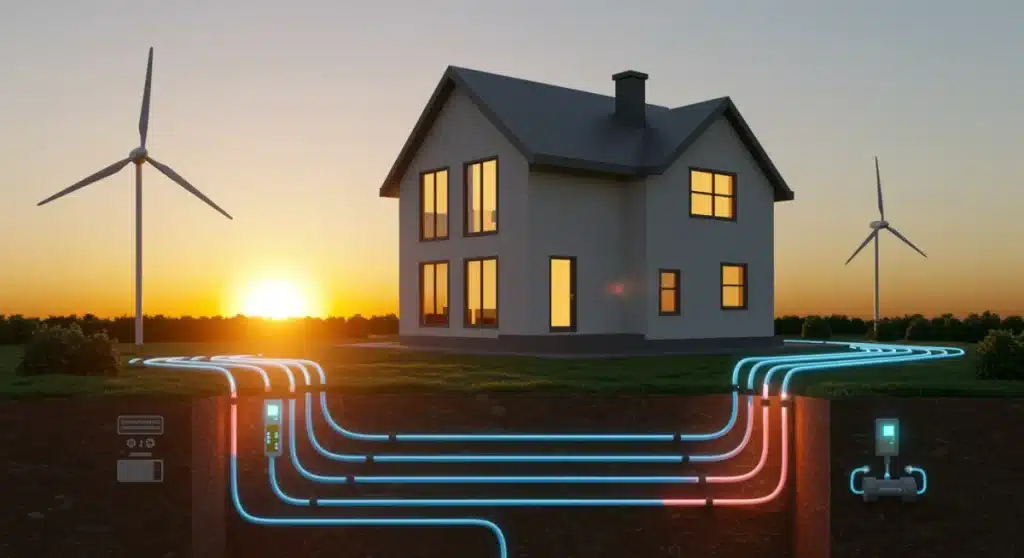
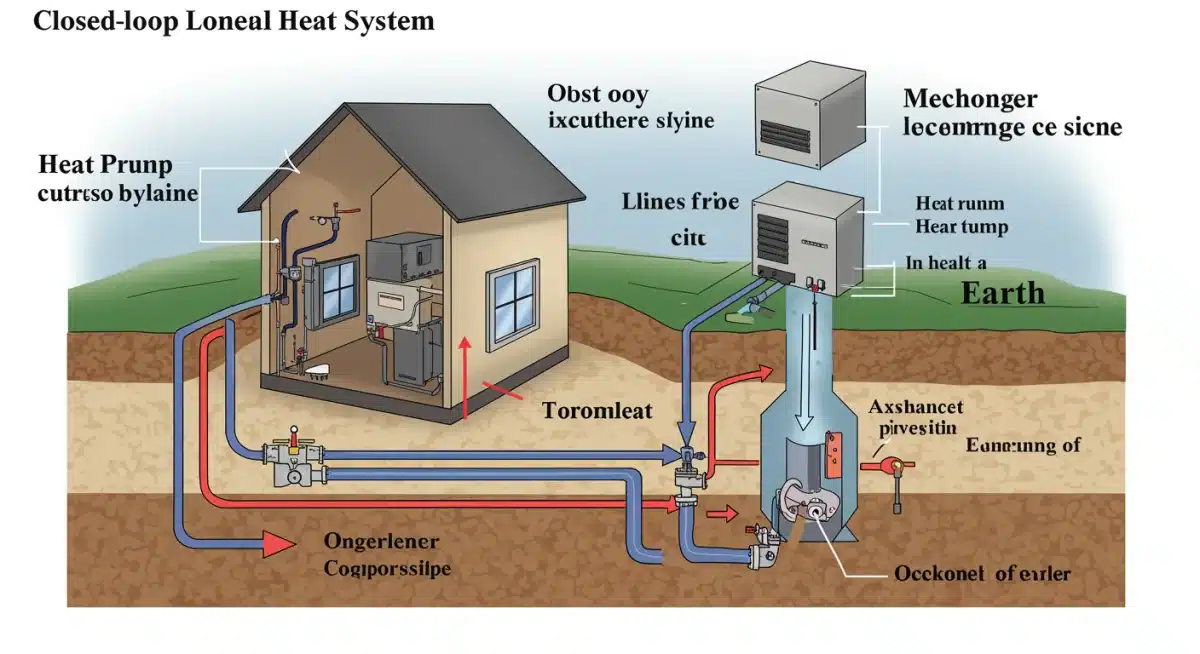
At its heart, geothermal heating and cooling relies on a simple yet ingenious principle: the Earth’s subsurface maintains a relatively constant temperature year-round, regardless of the fluctuating air temperatures above ground. This stability provides a natural, renewable heat source and sink that traditional HVAC systems simply cannot match. A geothermal system, often referred to as a ground-source heat pump (GSHP), consists of three primary components: the ground loop, the heat pump unit, and the air delivery system (ductwork) within the home.
The Ground Loop: Tapping into Earth’s Constant Temperature
The ground loop is arguably the most critical and distinct component of a geothermal system. It’s a network of pipes buried underground, typically made of durable polyethylene. These pipes circulate a fluid (usually water or a water-antifreeze solution) that acts as a heat exchanger. In winter, the fluid absorbs heat from the warmer earth and carries it to the heat pump. In summer, the process reverses: the fluid extracts heat from the home and dissipates it into the cooler ground. There are several configurations for ground loops:
- Closed-Loop Systems: These are the most common. The fluid circulates in a sealed loop. They can be installed horizontally (requiring more land area but shallower trenches) or vertically (requiring less land but deeper drilling).
- Open-Loop Systems: These use a well or body of water as the heat exchange fluid source. Water is drawn from the source, passes through the heat pump, and is then discharged back into the same source or another approved location. While highly efficient, they depend on an adequate water supply and local regulations.
- Pond/Lake Systems: A specific type of closed-loop system where the piping is submerged in a body of water, offering excellent heat exchange properties.
The efficiency of these loops is paramount to overall geothermal heating efficiency. Advances in piping materials, installation techniques, and geological surveying have significantly improved their performance over the years, contributing to the projected 50% efficiency increase.
The Heat Pump Unit: The Brain of the Operation
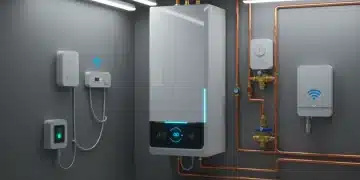
The heat pump unit itself is located inside the home and is similar in function to a conventional air-source heat pump, but with a crucial difference: it exchanges heat with the ground loop rather than the outside air. The heat pump uses a small amount of electricity to transfer a large amount of heat. During heating, it compresses the absorbed heat from the ground loop, raising its temperature, and then distributes it throughout the home via the ductwork. For cooling, it reverses the process, extracting heat from the indoor air and transferring it to the cooler ground. Modern heat pumps incorporate variable-speed compressors and advanced controls, further enhancing their geothermal heating efficiency and comfort.
Air Delivery System: Distributing Comfort
Once the heat pump has conditioned the air, it’s distributed throughout the home using standard ductwork, much like a traditional forced-air system. This seamless integration means homeowners don’t need to drastically alter their existing infrastructure in many cases, making the transition to geothermal smoother. The quiet operation of geothermal systems is also a significant advantage, as the heat pump unit is typically located indoors, away from living spaces.
The 50% Efficiency Leap by 2026: What’s Driving It?
The claim of 50% more efficiency by 2026 isn’t hyperbole; it’s a realistic projection based on several converging factors:
- Technological Advancements: Continuous research and development in compressor technology, heat exchanger design, and refrigerant improvements are pushing the boundaries of what’s possible. Variable-speed compressors, for example, allow the system to precisely match the heating or cooling load, avoiding inefficient on/off cycles.
- Improved Installation Practices: Better understanding of soil mechanics, thermal conductivity, and optimal ground loop design means installers can now deploy systems that maximize heat exchange with minimal disruption. Advanced drilling techniques also reduce installation time and cost.
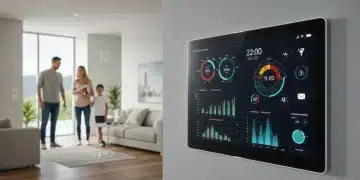
- Smart Controls and IoT Integration: The integration of smart thermostats and Internet of Things (IoT) devices allows for unprecedented control and optimization. Homeowners can program their systems for peak efficiency, and the systems can learn usage patterns, further reducing energy consumption. Predictive maintenance capabilities also minimize downtime and maintain optimal performance.
- Government Incentives and R&D Funding: Federal and state governments are increasingly recognizing the environmental and economic benefits of geothermal. Tax credits, grants, and research funding accelerate innovation and make these systems more accessible and affordable, driving wider adoption and further technological refinement.
- Increased Manufacturing Scale: As demand grows, manufacturers can achieve economies of scale, leading to more standardized, higher-quality components at lower costs. This competition also fosters innovation.
These factors collectively contribute to a significant boost in geothermal heating efficiency, making it an even more compelling option for homeowners seeking both comfort and sustainability.
Benefits Beyond Efficiency: Why Geothermal is a Game Changer
While the exceptional geothermal heating efficiency is a primary draw, the advantages of these systems extend far beyond mere energy savings:
Substantial Cost Savings
Although the initial installation cost of a geothermal system can be higher than conventional HVAC, the long-term savings are profound. Homeowners typically see a 30-70% reduction in their heating and cooling utility bills. With the projected 50% efficiency increase by 2026, these savings will become even more significant, often leading to a payback period of 5-10 years, followed by decades of reduced energy expenses. Furthermore, many utilities offer special rates or rebates for geothermal users, further sweetening the deal.
Environmental Stewardship
Geothermal systems are a cornerstone of sustainable living. They use a renewable energy source (the Earth’s heat) and produce zero direct greenhouse gas emissions. By significantly reducing reliance on fossil fuels for home climate control, homeowners contribute directly to combating climate change and improving air quality. This commitment to environmental responsibility is becoming a key decision-making factor for many families.
Exceptional Comfort and Quiet Operation
Unlike traditional furnaces or air conditioners that can produce blasts of hot or cold air, geothermal systems provide consistent, even temperatures throughout the home. This leads to superior comfort without the hot and cold spots often found with conventional systems. Additionally, because the main heat pump unit is indoors and there’s no noisy outdoor compressor unit, geothermal systems operate with remarkable quietness, enhancing the tranquility of your home environment.
Durability and Longevity
Geothermal systems are built to last. The underground piping, insulated from the elements, has an estimated lifespan of 50 years or more. The indoor heat pump unit typically lasts 20-25 years, significantly longer than conventional HVAC units (10-15 years). This longevity translates to fewer replacements and lower maintenance costs over the system’s lifetime, adding to the overall value proposition and boosting the long-term geothermal heating efficiency.
Increased Home Value
Installing a geothermal system can significantly increase a home’s resale value. As energy efficiency becomes a more prominent concern for homebuyers, a property with a state-of-the-art geothermal system stands out. Appraisers and real estate agents are increasingly recognizing the value of these sustainable upgrades.
Reduced Maintenance
Because most of the system components are underground or indoors, they are protected from harsh weather, vandalism, and dirt, leading to fewer breakdowns and less frequent maintenance compared to outdoor conventional units. Regular filter changes and periodic professional check-ups are generally all that’s needed to keep a geothermal system running optimally.
Is Geothermal Right for Your US Home? Considerations for Homeowners
While the benefits are compelling, deciding to install a geothermal system involves several considerations:
Initial Investment
The upfront cost for a geothermal system can be higher than conventional HVAC, ranging from $20,000 to $30,000 or more, depending on home size, ground loop type, and local geology. However, federal tax credits (currently 30% through 2032), state incentives, and utility rebates can significantly offset this cost. Financing options are also becoming more widely available, often allowing the energy savings to effectively pay for the system over time.
Site Suitability
The type of ground loop (horizontal, vertical, pond) will depend on your property’s land area, soil conditions, and geology. Horizontal loops require more space, while vertical loops require drilling but less surface area. A professional site assessment is crucial to determine the most suitable and cost-effective installation method. While most properties are suitable, some extreme conditions might pose challenges.
Qualified Installers
Geothermal installation is a specialized field. It’s essential to work with certified and experienced contractors who understand the unique aspects of ground loop design, drilling, and heat pump integration. Look for contractors accredited by organizations like the International Ground Source Heat Pump Association (IGSHPA).
Ductwork Compatibility
If your home already has a forced-air duct system, it’s likely compatible with a geothermal heat pump. However, older or undersized ductwork might need modifications or upgrades to ensure optimal airflow and geothermal heating efficiency.
The Future is Bright: Geothermal’s Role in a Sustainable America
The trajectory for geothermal heating and cooling in the US is undeniably upward. As energy prices continue to fluctuate and environmental concerns intensify, the demand for stable, efficient, and clean energy solutions will only grow. The projected 50% increase in geothermal heating efficiency by 2026 positions this technology as a frontrunner in the movement towards a greener, more energy-independent nation.
Policy and Economic Drivers
Supportive government policies, including extended tax credits and potential new incentive programs, will play a crucial role in accelerating adoption. The economic benefits, both at the household level through reduced bills and at the national level through job creation in green industries, are powerful motivators. Furthermore, the decreasing cost of installation due to improved techniques and economies of scale will make geothermal accessible to a broader demographic.
Integration with Smart Home Technologies
The synergy between geothermal systems and smart home technologies will continue to evolve. Imagine systems that not only learn your preferences but also dynamically adjust based on weather forecasts, utility prices, and even the real-time energy demands of your home’s other appliances. This level of intelligent integration will maximize comfort while pushing geothermal heating efficiency to unprecedented levels.
Hybrid Systems and Community Geothermal
We may also see a rise in hybrid geothermal systems, combining ground-source heat pumps with other renewable technologies like solar PV for an even more self-sufficient home. Community-scale geothermal systems, where multiple homes share a centralized ground loop field, offer another promising avenue for widespread adoption, reducing individual upfront costs and maximizing collective efficiency.
Conclusion: Embracing the Geothermal Revolution
The promise of geothermal heating and cooling reaching 50% more efficiency for US homes by 2026 is not just an incremental improvement; it represents a paradigm shift in how we think about residential climate control. It’s a testament to human ingenuity and our capacity to harness natural resources responsibly. For homeowners, it offers a compelling blend of significant cost savings, unparalleled comfort, and a profound commitment to environmental stewardship. As we move closer to 2026, now is the opportune time to explore how this remarkable technology can transform your home into a beacon of sustainability and efficiency. The Earth’s stable embrace is ready to provide comfort, and the future of home energy is undoubtedly beneath our feet.