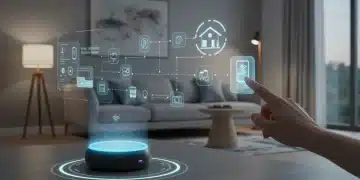
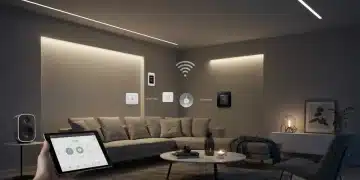
Advanced Lighting Automation: 4 Scenes for Smart Homes
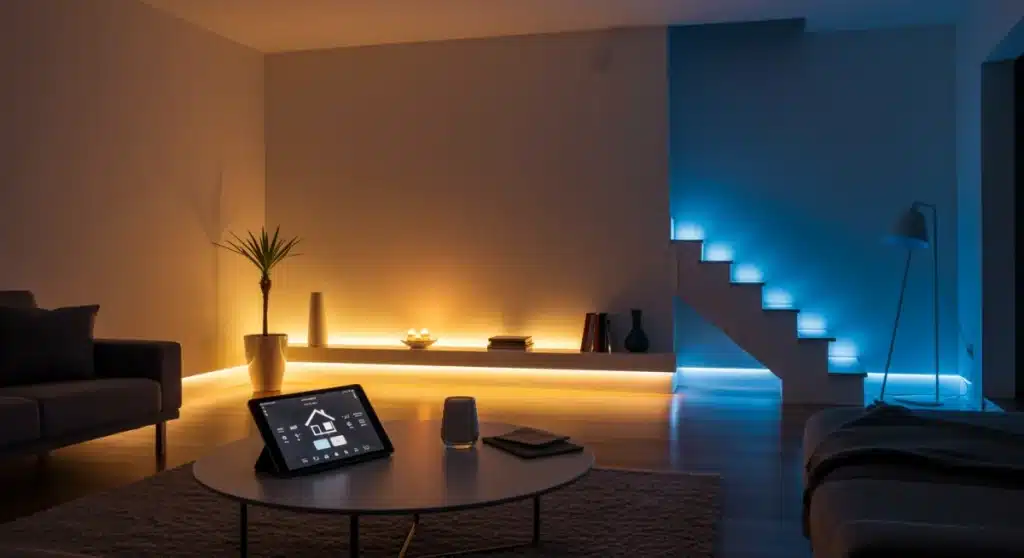
Implementing advanced lighting automation transforms a smart home from merely convenient to truly intuitive, enhancing security, optimizing energy, and creating personalized ambiances effortlessly.
Moving beyond basic lighting: 4 advanced automation scenes to implement this quarter can revolutionize your smart home experience. No longer is smart lighting just about turning lights on and off with your voice or a tap on an app. Today’s technology allows for sophisticated, dynamic scenes that respond to your presence, schedule, and even external conditions, offering unparalleled convenience, security, and energy efficiency. This guide will walk you through practical, time-sensitive solutions to elevate your home’s intelligence.
The Evolution of Smart Lighting: From Simple Switches to Intelligent Scenes
Smart lighting has come a long way since its inception. Initially, it offered basic remote control, allowing users to switch lights on or off from their phones. While convenient, this barely scratched the surface of what smart technology could achieve. The true power of smart lighting lies in its ability to integrate with other smart devices and create complex, automated scenes that adapt to your lifestyle.
These intelligent scenes leverage sensors, schedules, and even weather data to orchestrate lighting in a way that enhances comfort, security, and energy savings. Understanding this evolution is key to appreciating the value of implementing advanced automation in your home.
The Foundations of Smart Lighting Automation
Before diving into advanced scenes, it’s crucial to grasp the foundational elements that make them possible. These include smart bulbs, smart switches, hubs, and the underlying communication protocols.
- Smart Bulbs: Offer color changing, dimming, and scheduling capabilities directly from the bulb.
- Smart Switches: Control traditional light fixtures, turning them into smart devices without replacing bulbs.
- Smart Hubs: Act as the central brain, connecting various devices and enabling complex automations.
- Communication Protocols: Technologies like Zigbee, Z-Wave, and Wi-Fi facilitate communication between devices.
By mastering these basics, homeowners can build a robust foundation for more sophisticated lighting scenarios. The right combination of hardware and software unlocks a world of possibilities for truly intuitive home illumination.
Why Advanced Automation Matters
Beyond the obvious cool factor, advanced lighting automation brings tangible benefits. It’s about more than just convenience; it’s about creating a living environment that actively works to improve your daily life. From waking up gently with simulated sunrise to deterring potential intruders, the applications are vast.
Furthermore, these systems can contribute significantly to energy efficiency. By ensuring lights are only on when needed and at optimal brightness levels, advanced automation helps reduce electricity consumption and lower utility bills. This intelligent management of light resources is a cornerstone of modern smart homes.
Scene 1: The Dynamic Circadian Lighting System for Well-being
One of the most impactful advanced lighting automation scenes you can implement is a dynamic circadian lighting system. This goes far beyond simple dimming; it mimics the natural progression of sunlight throughout the day, influencing your body’s natural rhythms and promoting better sleep and increased alertness.
Our bodies are naturally attuned to the sun’s cycle. Exposure to bright, cool light in the morning helps us wake up and feel energized, while warmer, dimmer light in the evening signals our bodies to prepare for sleep. A circadian lighting system replicates this, adjusting color temperature and brightness automatically.
Implementing Circadian Lighting
Setting up a circadian system requires smart bulbs capable of changing color temperature (measured in Kelvin) and a smart home hub that can schedule these changes based on the time of day or even your local sunrise/sunset times. Many popular smart lighting brands, such as Philips Hue, Lifx, and some Wi-Fi-enabled bulbs, offer this functionality.
The key is to define specific scenes for different times. For instance, a cool white light (around 5000K-6500K) in the morning for productivity, transitioning to a neutral white (3000K-4000K) during the day, and finally to a warm, amber glow (2200K-2700K) in the evening.
- Morning Scene: Gradual increase in brightness with cool white light, simulating sunrise.
- Daytime Scene: Balanced, neutral white light for general activities and focus.
- Evening Scene: Warm, dim light to promote relaxation and prepare for sleep.
- Nightlight Scene: Ultra-dim, very warm light for safe navigation without disrupting sleep.
This subtle yet powerful automation supports your natural sleep-wake cycle, contributing to overall well-being. It’s a proactive step towards a healthier home environment that leverages technology for biological harmony.
Scene 2: Enhanced Security with Presence Simulation and Deterrent Lighting
Beyond basic motion-activated lights, advanced security lighting uses intelligent algorithms to simulate occupancy, making your home appear lived-in even when you’re away. This acts as a powerful deterrent to potential intruders, who often target vacant properties.
Presence simulation involves randomly turning lights on and off in different rooms, adjusting brightness, and even changing colors to mimic actual human activity. It’s far more convincing than a simple timer that switches a single light on at the same time every day.
Creating Effective Presence Simulation
To set up an effective presence simulation scene, integrate your smart lights with occupancy sensors, door/window sensors, and even smart cameras. The automation can then learn your typical patterns and replicate them, or you can program random variations within a set timeframe.
Consider using lights in various rooms, including living areas, bedrooms, and even bathrooms, to create a believable illusion. Combining this with smart blinds or curtains that open and close can further enhance the effect, making your home truly appear occupied.
- Randomized Schedules: Lights turn on/off at unpredictable times within a window.
- Multi-Room Activity: Different lights activate in various rooms, simulating movement.
- Motion Sensor Integration: Exterior lights triggered by motion, but also randomly interior to appear active.
- Vacation Mode: A dedicated setting that automatically activates these complex simulations when you’re away.
In addition to simulation, deterrent lighting can also involve a sudden, bright flash of all exterior lights if a security sensor is triggered, disorienting and alarming an intruder. This immediate, aggressive response can significantly reduce the risk of a break-in.
Scene 3: Automated Ambiance for Every Mood and Occasion
One of the most enjoyable aspects of advanced lighting automation is the ability to create personalized ambiances that perfectly match your mood, activity, or special occasion. Forget fumbling with multiple switches; a single command or schedule can transform your space instantly.
From a cozy movie night to a vibrant party atmosphere, your lighting can adapt dynamically. This capability extends beyond simple color changes to include brightness, saturation, and even light patterns, creating truly immersive environments.
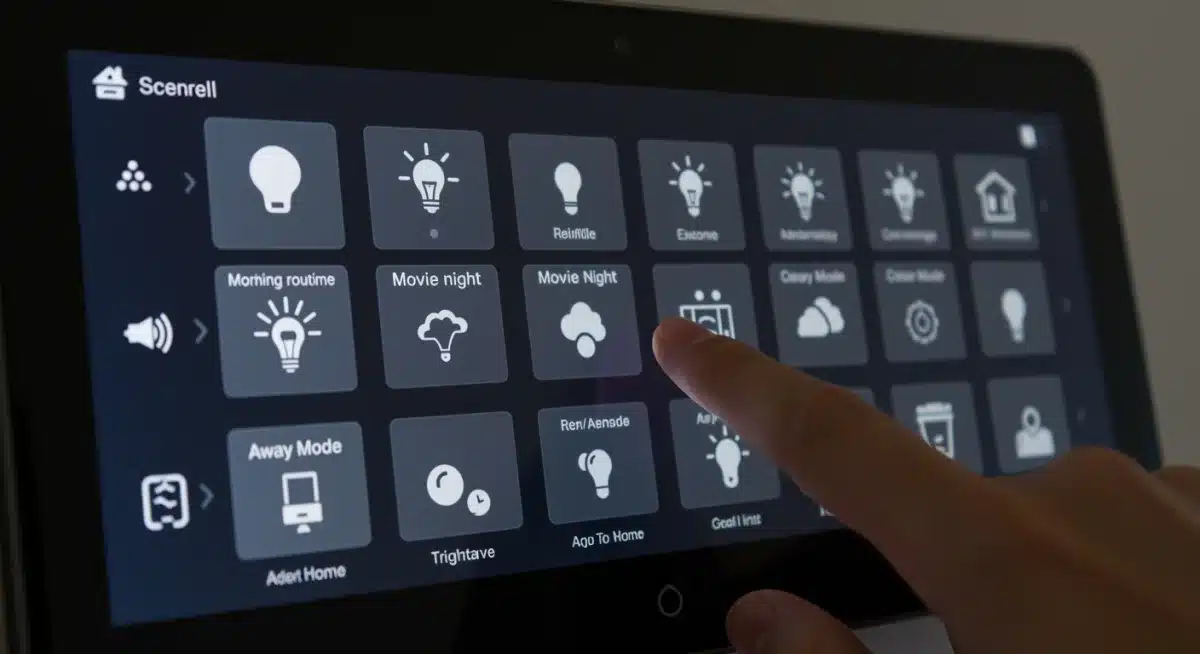
Crafting the Perfect Lighting Moods
Achieving automated ambiance involves defining specific scenes that combine color, brightness, and sometimes even dynamic effects. These scenes can be triggered by voice commands, specific times, or even the playing of certain media.
Imagine a ‘Movie Night’ scene that dims the main lights, turns on accent lighting behind your TV in a warm glow, and closes the blinds. Or a ‘Dinner Party’ scene that provides bright, inviting light over the dining table while softening the surrounding areas.
- Movie Night: Dims overheads, activates accent lighting, potentially closes smart blinds.
- Reading Mode: Focuses bright, neutral light on a specific reading area, dims others.
- Dinner Party: Brightens dining area, sets ambient mood lighting in entertaining spaces.
- Relaxation/Meditation: Soft, warm, very dim lighting often with slow color transitions.
The integration with voice assistants like Alexa or Google Assistant makes activating these scenes effortless. Simply saying “Alexa, activate dinner party mode” can instantly transform your space. This level of seamless control enhances both convenience and the overall enjoyment of your home.
Scene 4: Energy-Efficient Lighting with Occupancy and Daylight Harvesting
For those focused on sustainability and cost savings, implementing energy-efficient lighting scenes driven by occupancy sensors and daylight harvesting is a must. This advanced automation ensures lights are only on when needed and at the optimal brightness, minimizing waste.
Daylight harvesting leverages natural light. Sensors detect the amount of ambient light entering a room and automatically adjust artificial lighting to maintain a consistent, desired brightness level. If there’s ample sunlight, artificial lights will dim or turn off completely.
Optimizing for Energy Savings
Combining occupancy sensors with daylight harvesting creates a highly efficient lighting system. Occupancy sensors detect presence, turning lights on when someone enters a room and off when it’s vacant after a set delay. This prevents lights from being left on unnecessarily.
The integration of these two technologies means that lights will only be on when a room is occupied, AND they will only be as bright as needed, supplementing natural light rather than overriding it. This dual approach maximizes energy savings without compromising comfort or functionality.
- Occupancy-Based Control: Lights activate upon entry, deactivate upon exit after a delay.
- Daylight Sensing: Artificial light output adjusts based on natural light levels.
- Zoned Lighting: Different areas of a large room can have independent lighting control based on occupancy/daylight.
- Scheduled Dimming: Lights automatically dim to a lower percentage during non-peak hours or late at night.
This approach is particularly effective in areas like hallways, bathrooms, and utility rooms, where lights are often left on by mistake. By intelligently managing light usage, you not only save money but also contribute to a greener lifestyle.
Integration and Future-Proofing Your Smart Lighting Setup
Implementing these advanced lighting scenes isn’t just about individual automations; it’s about creating a cohesive, integrated smart home ecosystem. The true power emerges when your lighting communicates seamlessly with other smart devices, from thermostats to security cameras.
Consider how your smart lighting could integrate with your smart thermostat, dimming lights when you leave the house and the temperature adjusts. Or how it could flash red if a smoke detector goes off, guiding you to safety in an emergency. Planning for these integrations from the outset will make your smart home truly intelligent.
Choosing the Right Ecosystem
When selecting smart lighting components, consider the broader ecosystem. Are you committed to Apple HomeKit, Google Home, Amazon Alexa, or a more open platform like Home Assistant? Compatibility across devices is paramount for seamless automation.
Investing in devices that support universal standards or have strong integration capabilities will ensure your system remains flexible and expandable. This foresight helps future-proof your setup, allowing you to incorporate new technologies as they emerge without having to overhaul your entire system.
- Platform Compatibility: Ensure devices work with your chosen smart home ecosystem.
- Open Standards: Prioritize Zigbee or Z-Wave devices for broader compatibility.
- API Access: For advanced users, devices with open APIs allow for custom integrations.
- Scalability: Choose systems that can easily expand with more lights and sensors.
Regular firmware updates are also crucial for maintaining security and unlocking new features. Staying informed about updates from your chosen manufacturers will keep your advanced lighting system performing at its best.
Tips for a Successful Advanced Automation Implementation
Embarking on the journey of advanced lighting automation can seem daunting, but with a structured approach, it’s entirely achievable within a quarter. Start small, plan meticulously, and test rigorously to ensure a smooth transition to a smarter, more responsive home.
One of the biggest mistakes people make is trying to automate everything at once. This often leads to frustration and a sense of being overwhelmed. Instead, focus on one or two key scenes that will bring the most immediate benefit or address a specific pain point.
Best Practices for Implementation
Begin by mapping out your current lighting setup and identifying areas where automation would have the greatest impact. Prioritize scenes that align with your lifestyle. For example, if you struggle to wake up, the circadian lighting system might be your first priority.
As you implement each scene, document your settings and configurations. This will be invaluable for troubleshooting or making adjustments later. Don’t be afraid to experiment with different brightness levels, colors, and timing to find what works best for you and your family.
- Start Small: Implement one scene at a time to learn and refine.
- Plan Ahead: Map out desired outcomes and necessary devices.
- Test Thoroughly: Ensure automations work reliably in various conditions.
- Review and Refine: Periodically assess scenes for effectiveness and make adjustments.
Finally, involve other members of your household in the process. Their feedback is crucial for creating a system that truly enhances everyone’s living experience. A smart home is only truly smart if it serves the needs of its occupants effectively.
| Key Automation Scene | Brief Description |
|---|---|
| Circadian Lighting | Mimics natural sunlight to improve sleep and alertness by adjusting light color and brightness. |
| Enhanced Security | Simulates occupancy with random light activity and provides deterrent flashes for intruders. |
| Automated Ambiance | Creates personalized lighting moods for various activities and occasions with a single command. |
| Energy Efficiency | Optimizes light usage with occupancy sensors and daylight harvesting, reducing energy consumption. |
Frequently Asked Questions About Advanced Lighting Automation
Circadian lighting mimics the sun’s natural cycle, adjusting light color and brightness throughout the day. It helps regulate your body’s sleep-wake rhythms, promoting better sleep at night and increased alertness during the day, leading to improved well-being and productivity.
It enhances security by simulating occupancy. Lights turn on and off randomly in different rooms, making your home appear lived-in even when vacant. This acts as a powerful deterrent to potential intruders, reducing the risk of break-ins compared to static timer lights.
Essential devices include smart bulbs capable of color and brightness changes, smart switches, a reliable smart home hub, and various sensors like occupancy, motion, and daylight sensors. Compatibility with your chosen smart home ecosystem (e.g., Alexa, Google Home) is also crucial for seamless integration.
Yes, significantly. By integrating occupancy sensors and daylight harvesting, lights only turn on when a room is occupied and adjust brightness based on natural light availability. This prevents unnecessary energy consumption, ensuring lights are only used when needed and at their optimal level, leading to lower utility bills.
Start with one scene that offers the most immediate benefit, such as circadian lighting for better sleep or enhanced security while away. Plan your devices, test thoroughly, and refine settings based on your experience. Gradual implementation ensures a smoother, more successful transition to a fully automated smart home.
Conclusion
Embracing advanced lighting automation moves your smart home beyond simple convenience into a realm of sophisticated control and intuitive living. By implementing dynamic circadian lighting, robust security simulations, personalized ambiance scenes, and intelligent energy-saving strategies, you’re not just upgrading your lights; you’re enhancing your entire home environment. These practical, time-sensitive solutions offer significant returns in comfort, safety, and efficiency, truly making your living space smarter and more responsive to your needs. This quarter, take the leap and transform your basic lighting into an intelligent, integrated system that works for you.