Gesture & Biometric Home Automation: 2026 Innovations Explored
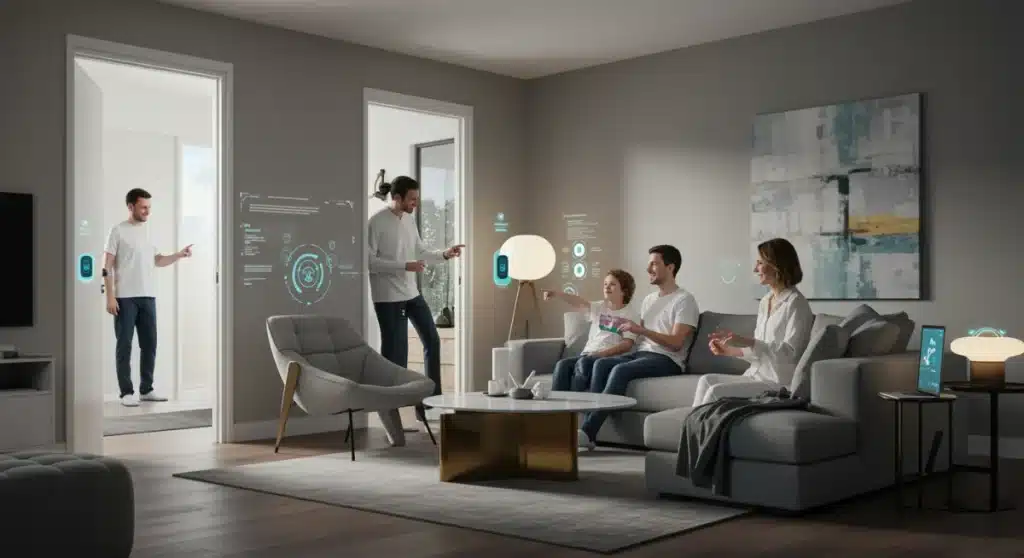
The future of smart homes in 2026 is rapidly evolving beyond voice commands, integrating sophisticated gesture and biometric control to offer enhanced security, intuitive interaction, and personalized experiences for every homeowner.
The landscape of smart home technology is undergoing a revolutionary transformation. While voice assistants once dominated, the year 2026 heralds a new era where gesture biometric home automation is taking center stage, offering unprecedented levels of convenience, security, and personalization.
The evolution from voice to intuitive interaction
For years, voice commands offered a hands-free way to interact with our smart homes. However, their limitations, such as privacy concerns, ambient noise interference, and the need for explicit commands, paved the way for more natural and less intrusive methods. The shift towards gesture and biometric control represents a significant leap in intuitive interaction, making smart homes feel less like technology and more like an extension of ourselves.
This evolution is driven by advancements in sensor technology and artificial intelligence, allowing systems to understand nuanced human actions and characteristics. The goal is to create environments that anticipate our needs rather than merely responding to verbal cues. This leads to a more seamless and personalized living experience.
Beyond verbal commands: The rise of subtle gestures
Imagine adjusting your thermostat with a simple wave of your hand or dimming the lights with a subtle flick of your wrist. This is no longer science fiction. In 2026, gesture recognition systems are becoming highly sophisticated, moving beyond large, obvious movements to interpret delicate cues.
- Micro-gestures: Small, almost imperceptible movements that control specific functions, like a finger tap in the air to pause music.
- Contextual gestures: Actions understood based on location and time, such as a hand sweep near the kitchen counter turning on task lighting.
- Personalized gesture profiles: Systems learning individual user gestures for customized control, enhancing accessibility for all residents.
These systems leverage advanced cameras and radar sensors, often embedded discreetly within walls or furniture, ensuring they blend seamlessly into the home aesthetic. The precision and responsiveness of these controls are rapidly improving, minimizing false positives and maximizing user satisfaction.
The move to gesture control signifies a desire for more natural and less audible interactions. It allows for quiet control in situations where voice commands might be disruptive or inappropriate, fostering a more harmonious living space. This silent command capability is particularly valued in open-plan living areas or during late-night hours.
Biometric security: The ultimate personalized access
Security and personalized access are paramount in the modern smart home. Biometric technologies are offering unparalleled levels of both, moving far beyond traditional keypads and passwords. By 2026, these systems are integrated deeply into the home’s infrastructure, providing seamless and robust protection.
Fingerprint scanners and facial recognition are just the beginning. Advanced smart homes are now employing multi-modal biometrics, combining several identifiers for enhanced accuracy and security. This layered approach ensures that access is granted only to authorized individuals, significantly reducing vulnerabilities.
Advanced biometric integration points
The integration of biometric sensors is becoming increasingly sophisticated, extending to various access points and functionalities within the home. This creates a comprehensive security ecosystem that is both effective and unobtrusive.
- Door and gate access: Integrated facial recognition and palm vein scanners for hands-free entry, replacing traditional locks.
- Device authentication: Fingerprint or iris scans to unlock sensitive devices or access personal settings on shared smart displays.
- Environmental personalization: Biometric identification triggering personalized climate control, lighting preferences, and entertainment profiles upon entry into a room.
These systems often incorporate liveness detection to prevent spoofing, using thermal imaging or 3D mapping to confirm the presence of a living person. The data is typically processed locally with robust encryption, addressing privacy concerns and ensuring data security for homeowners.
Biometric authentication not only enhances security but also simplifies daily routines. Imagine walking into your home and having the lights, temperature, and music adjust automatically to your preferences, all without lifting a finger or uttering a word. This level of personalization defines the smart home experience of 2026.
Seamless integration: The smart home ecosystem of 2026
The true power of gesture and biometric control lies in its seamless integration within a holistic smart home ecosystem. In 2026, devices are no longer siloed but work in concert, creating an intelligent environment that responds fluidly to its occupants. This interconnectedness is facilitated by advanced AI and interoperability standards.
Centralized hubs, often invisible, act as the brain of the home, coordinating actions across all connected devices. This ensures that a gesture recognized by one sensor can trigger a chain of events involving multiple systems, from climate control to entertainment. The emphasis is on creating an intuitive and responsive living space.
Interoperability and AI-driven intelligence
The key to this seamless experience is universal interoperability standards, allowing devices from different manufacturers to communicate effortlessly. Coupled with sophisticated AI algorithms, the smart home learns and adapts to user behaviors, making interactions even more intuitive.
- Unified platforms: Single dashboards and mobile apps that manage all gesture and biometric settings, offering a consolidated control experience.
- Predictive analytics: AI learning routines and preferences to anticipate needs, such as adjusting lighting based on typical evening activities detected via gestures.
- Cross-device communication: Biometric entry triggering pre-set scenarios involving lighting, music, and security systems across the entire home.
This level of integration ensures that the smart home acts as a coherent entity rather than a collection of disparate gadgets. The user experience is elevated, making technology recede into the background, focusing instead on comfort and convenience. The smart home becomes truly intelligent, anticipating and serving its inhabitants’ needs proactively.
Enhanced privacy and security considerations
While the benefits of gesture and biometric control are undeniable, the discussion around privacy and security remains crucial. As these technologies become more pervasive, ensuring the protection of personal data is paramount. Developers in 2026 are focusing on robust solutions to address these concerns head-on.
Manufacturers are implementing advanced encryption protocols and local processing of biometric data, minimizing the risk of data breaches. Users are also given greater control over their data, with clear consent mechanisms and options for data deletion. Transparency is a key principle in building trust with consumers.
Safeguarding personal data in a connected world
The responsible implementation of biometric and gesture technologies requires a multi-faceted approach to data security. This includes not only technological safeguards but also clear policies and user education.
- Edge computing: Processing biometric data on-device rather than in the cloud, limiting exposure and enhancing speed.
- Anonymization and encryption: Techniques to scramble and protect personal data, making it unreadable to unauthorized parties.
- User control dashboards: Interfaces allowing users to manage data permissions, review access logs, and opt-out of data collection for specific features.
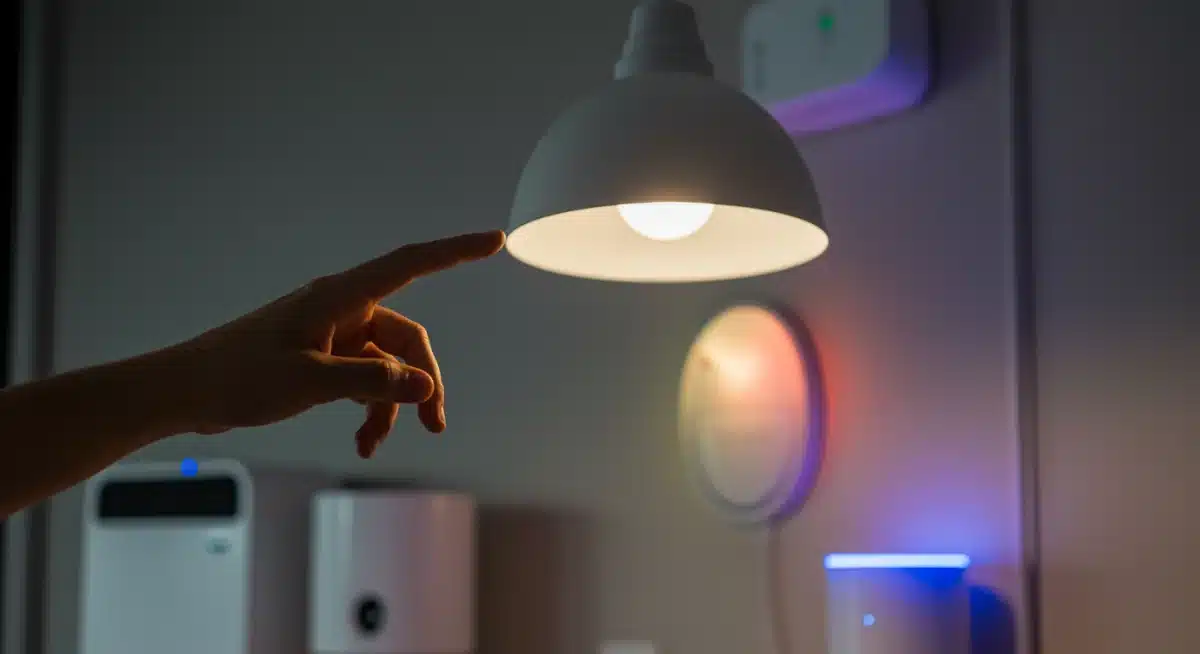
Furthermore, ethical guidelines for AI development in smart homes are becoming standard, ensuring that these systems are designed with privacy by design principles. Regular security audits and software updates are also critical to address emerging threats and maintain the integrity of the systems. The industry understands that user trust is the foundation for widespread adoption.
The impact on accessibility and user experience
Beyond convenience and security, the advancements in gesture and biometric home automation are profoundly impacting accessibility. These technologies offer new ways for individuals with diverse needs to interact with their environment, fostering greater independence and inclusion. The focus is on creating universally designed smart homes.
For those with mobility impairments, gesture control can replace the need for physical interaction with switches or devices. Biometric access eliminates the fumbling with keys, providing effortless entry. This inclusive design philosophy is a core tenet of smart home development in 2026, ensuring technology serves everyone.
Designing for everyone: Inclusive smart home solutions
- Customizable gesture sensitivity: Adjusting the required effort or range of motion for gesture recognition, accommodating various physical abilities.
- Multi-modal input: Offering a choice between gesture, voice, and touch, allowing users to select their preferred interaction method.
- Biometric profiles for caregivers: Securely granting temporary or limited access to support staff without compromising primary resident security.
The user experience is also significantly enhanced by the naturalness of these interactions. Instead of learning complex commands, users can rely on intuitive movements and their unique biological identifiers. This reduces the cognitive load and makes interacting with technology feel more natural and less like operating a machine. The goal is to make technology disappear into the background, focusing on the human experience.
Future outlook: What’s next for gesture and biometric control?
The innovations in gesture and biometric home automation are far from peaking. Researchers and developers are continuously pushing the boundaries, exploring even more sophisticated and integrated solutions. The trajectory points towards even more seamless, predictive, and personalized smart home experiences.
Anticipate advancements in haptic feedback for gesture confirmation, further miniaturization of sensors, and the integration of emotional AI that can subtly adjust home environments based on detected moods. The future promises a home that not only responds to us but truly understands us.
Emerging technologies and research directions
The pace of innovation is accelerating, with several exciting technologies on the horizon that will further refine gesture and biometric control. These developments aim to make interactions even more subtle, secure, and integrated into our daily lives.
- Neural interfaces: Early research into direct brain-computer interfaces for ultimate hands-free control, offering profound implications for accessibility.
- Predictive biometrics: Systems that can anticipate user needs based on subtle physiological cues, such as heart rate or gaze direction.
- Environmental sensing fusion: Combining gesture and biometric data with environmental factors (e.g., air quality, light levels) for holistic home management.
The future smart home will be a truly adaptive and responsive living space, capable of anticipating needs and executing commands with minimal conscious effort from its occupants. This will free up mental space and allow residents to focus on what truly matters, enhancing quality of life through advanced technological integration. The journey beyond voice commands is just beginning, promising an exciting and transformative future for our homes.
| Key Innovation | Brief Description |
|---|---|
| Advanced Gesture Control | Subtle movements and micro-gestures replace verbal commands for intuitive device interaction. |
| Multi-modal Biometrics | Combines facial, fingerprint, and other scans for enhanced security and personalized access. |
| AI-Driven Integration | Smart homes learn and adapt to user behavior, coordinating devices seamlessly across the ecosystem. |
| Enhanced Accessibility | Inclusive design allows diverse users to interact with their environment easily and independently. |
Frequently asked questions about 2026 home automation
Gesture control offers a more private and silent interaction method compared to voice commands. It’s ideal for situations where speaking aloud might be disruptive or impractical, and it can also provide a more intuitive and natural user experience, reducing the need for specific verbal cues.
Biometric systems in 2026 utilize multi-modal identification like facial recognition, fingerprint, and palm vein scans for robust security. They offer hands-free, personalized access while incorporating liveness detection to prevent spoofing, making unauthorized entry significantly more difficult than with traditional methods.
Yes, privacy is a major focus. Manufacturers are employing edge computing to process data locally, advanced encryption, and anonymization techniques. Users also have greater control through dashboards to manage data permissions and opt-out options, ensuring personal information remains secure and private.
In 2026, interoperability is key. Many new gesture and biometric systems are designed to integrate seamlessly with existing smart home platforms and devices through unified hubs and universal communication standards. This allows for a cohesive and upgraded smart home experience without replacing all your current tech.
AI is crucial for making these systems truly smart. It enables predictive analytics, allowing the home to learn user routines and anticipate needs. AI also facilitates cross-device communication and contextual understanding of gestures, leading to a more responsive, personalized, and efficient living environment.
Conclusion
The journey beyond voice commands into the realm of gesture and biometric home automation marks a pivotal moment in smart living. The innovations of 2026 are not merely about technological advancement but about creating homes that are more intuitive, secure, and deeply personalized. By embracing these cutting-edge controls, homeowners can look forward to an environment that seamlessly adapts to their presence and preferences, offering unparalleled convenience and a truly futuristic living experience. This evolution underscores a commitment to making technology an invisible, yet indispensable, part of our daily lives, enhancing both comfort and security with every subtle interaction.