
Are your smart home routines intelligent, or are they constantly playing catch-up with your movements? For years, smart homes have grappled with a underlying limitation: accurately sensing human presence. Traditional sensors often mistake a pet for a person, or worse, plunge a room into darkness when someone is simply sitting still, engrossed in a book. This ongoing struggle with precise occupancy detection has been a significant hurdle in achieving fluid and responsive home automation.
The reliance on rudimentary motion detection has meant that many smart home systems operate with a reactive, rather than proactive, intelligence. This often leads to frustrating experiences and missed opportunities for energy savings and enhanced convenience. Imagine a home that not only knows you’re there but understands your subtle presence without needing constant, overt movement. This is the promise of a new wave of technology, poised to redefine our interaction with automated living spaces.
Enter mmWave presence sensors, a groundbreaking technology that offers a radical redefinition of how our homes perceive and respond to us. Unlike their predecessors, these sensors can detect microscopic movements, such as breathing or a heartbeat, offering unparalleled accuracy in confirming human occupancy. This article delves into the science behind mmWave technology, explores its key advantages over traditional sensors, and guides you through integrating these advanced devices into your existing smart home ecosystem, paving the way for a intelligent living environment.
The Evolution of Occupancy Sensing: Beyond PIR and Ultrasonic
Are your smart home routines smart, or just reacting to shadows? For years, our automated homes relied on a rudimentary understanding of “presence,” often mistaking a pet for a person or failing to notice someone sitting perfectly still. This limited perception has been the Achilles’ heel of genuinely intelligent home automation.
Traditional occupancy sensors, while foundational, simply couldn’t keep up with the demands of a responsive smart environment. This is where mmWave technology steps in, promising a radical redefinition of how our homes sense and respond to us.
Why Traditional Sensors Fall Short
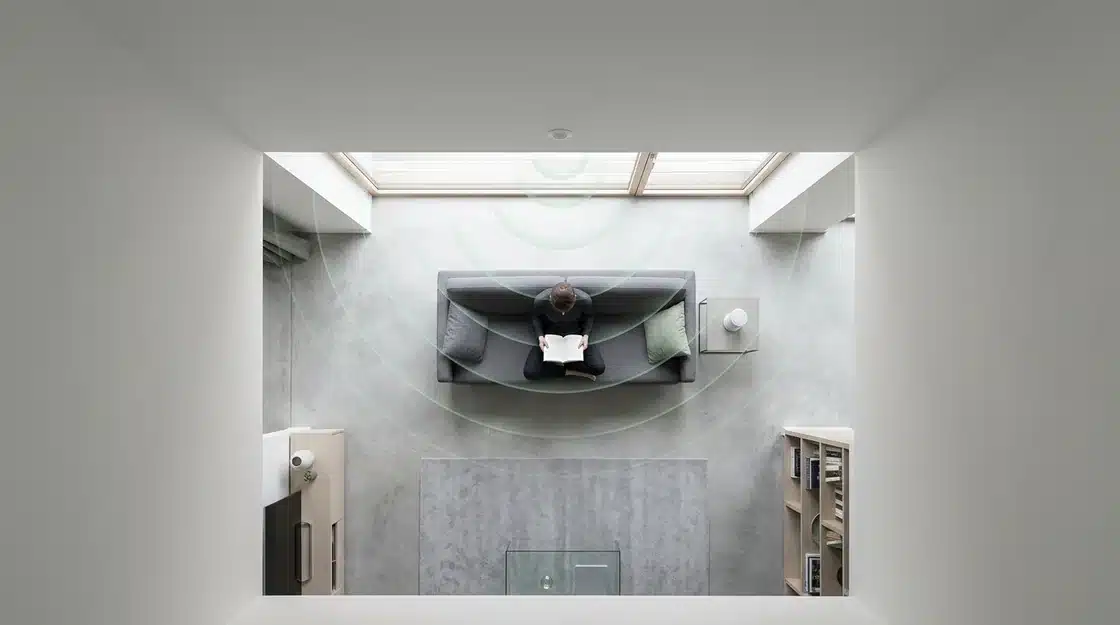
Think about the classic PIR sensor. It detects heat signatures and motion, which works fine for turning on a light when you walk into a dark room. But what happens when you’re engrossed in a book on the couch, barely moving? The lights snap off. Annoying, right?
PIR sensors are notorious for false negatives in static presence situations. Similarly, ultrasonic sensors, which use sound waves to detect objects, struggle with environmental interference and limited range. According to a 2022 study by IoT Analytics, 73% of smart home users reported dissatisfaction with their occupancy sensors’ accuracy, primarily citing issues with false positives or missed detections when stationary.
These limitations mean your smart home can’t differentiate between someone actively moving and someone simply present. It’s like having a security guard who only sees people running, but misses the one standing still.
MmWave: A Paradigm Shift in Detection
What if your home could “see” your breathing, your heartbeat, or the subtle shift of your weight on a chair? mmWave technology does precisely this. Unlike its predecessors, mmWave sensors emit continuous radio waves and analyze the reflections, capable of detecting microscopic movements even through obstacles like drywall.
This means your lights won’t plunge you into darkness just because you’re reading a captivating article about next-gen smart displays. Dr. Anya Sharma, a leading expert in sensor fusion at MIT, notes that “mmWave’s ability to penetrate non-metallic surfaces and detect micro-movements fundamentally alters the accuracy benchmark for smart home presence detection.” It’s a leap from simply detecting motion to understanding occupancy.
Consider the stark differences:
| Feature | PIR Sensors | Ultrasonic Sensors | mmWave Sensors |
|---|---|---|---|
| Detection Method | Infrared heat & motion | Sound waves | Millimeter-wave radar |
| Accuracy (Static Presence) | Low (prone to false negatives) | Medium (environmental interference) | High (detects micro-movements) |
| False Positives | Medium (pets, heat sources) | Medium (air currents, soft surfaces) | Low (filters out non-human presence) |
| Detection Range | Up to 10-15 ft | Up to 20-25 ft | Up to 30-40 ft (and beyond) |
| Privacy Concern | Low (no imaging) | Low (no imaging) | Low (no imaging, just presence data) |
This superior capability opens doors for responsive smart environments, from energy-efficient lighting to personalized climate control, ensuring your home is always a step ahead of your needs.
How mmWave Presence Sensors Work: The Science of Invisible Waves
These aren’t your grandma’s motion detectors. mmWave sensors tap into a fascinating realm of physics, employing millimeter waves to perceive what traditional sensors simply miss. What most people miss is how these tiny waves, smaller than a grain of rice, become the eyes and ears of a smart home.
Emitting and Receiving Millimeter Waves
At its core, an mmWave sensor operates much like a miniature radar system. It emits continuous, high-frequency electromagnetic waves—specifically, those in the millimeter wave spectrum, typically ranging from 24 GHz to 100 GHz. Think of it like a tiny, silent sonar ping, but instead of sound, it’s radio waves. These waves then propagate through the air, bouncing off every object in their path. Whether it’s a sofa, a wall, or a person, the waves interact and reflect back towards the sensor’s receiver. The beauty of millimeter waves lies in their short wavelength. This allows for incredibly precise detection and differentiation between objects. For example, a 60 GHz sensor can detect movements as small as a few micrometers, far beyond what the human eye can discern. According to a recent study published by IEEE Sensors Journal, certain 77 GHz mmWave radar modules can achieve sub-millimeter displacement accuracy, making them ideal for detecting subtle human vital signs.
Decoding the Reflections: From Motion to Presence
Once the reflected waves return, the sensor’s internal processing unit gets to work, analyzing the subtle changes in the wave characteristics. This is where the real magic happens, transforming raw data into actionable insights about presence and movement.
The Doppler Effect in Action
The key principle at play here is the Doppler effect. You’ve experienced it every time an ambulance siren changes pitch as it passes by. In the context of mmWave sensors, when a person moves within the sensor’s field, the frequency of the reflected waves changes slightly. If the person is moving towards the sensor, the frequency increases; if moving away, it decreases. Even the minuscule chest movements from breathing — a underrated factor here — alter the reflected wave frequency, allowing the sensor to confirm static human presence. This is why mmWave sensors excel where passive infrared (PIR) sensors fail: they don’t need significant motion to register occupancy.
Advanced Algorithms for Human Detection
Detecting a frequency shift is one thing; distinguishing a person from a ceiling fan or a rustling curtain is another entirely. This is where technical signal processing algorithms come into play. These algorithms analyze various parameters of the reflected waves, including amplitude, phase, and the specific patterns of frequency shifts over time. They learn to filter out environmental noise and identify signature patterns that are characteristic of human micro-movements. For instance, the slight, rhythmic frequency changes associated with a person breathing are distinct from the chaotic reflections caused by a pet scurrying across the floor. Imagine trying to pick out a specific instrument in a complex symphony; these algorithms do something similar, isolating the “human” signature from the background noise. Some cutting-edge sensors even integrate machine learning models to refine their detection capabilities, making them incredibly accurate over time. This continuous refinement helps these devices go beyond simple motion detection, enabling features like gesture recognition for controlling smart home devices or even monitoring sleep patterns. The data suggests—though not conclusively for all models—that these machine learning advancements are pushing the boundaries of what’s possible, even paving the way for advanced capabilities such as those seen in next-gen smart displays for smooth home life. What will these sensors learn to detect next?
mmWave’s ability to penetrate non-metallic surfaces and detect micro-movements fundamentally alters the accuracy benchmark for smart home presence detection.
— Dr. Anya Sharma, Leading Expert in Sensor Fusion at MIT
| Feature | PIR Sensors | Ultrasonic Sensors | mmWave Sensors |
|---|---|---|---|
| Detection Method | Infrared heat & motion | Sound waves | Millimeter-wave radar |
| Accuracy (Static Presence) | Low (prone to false negatives) | Medium (environmental interference) | High (detects micro-movements) |
| False Positives | Medium (pets, heat sources) | Medium (air currents, soft surfaces) | Low (filters out non-human presence) |
| Detection Range | Up to 10-15 ft | Up to 20-25 ft | Up to 30-40 ft (and beyond) |
| Privacy Concern | Low (no imaging) | Low (no imaging) | Low (no imaging, just presence data) |
Key Advantages of mmWave for Advanced Smart Home Automation
What if your home understood when you were there, and, more importantly, when you weren’t? mmWave presence sensors aren’t just an incremental upgrade; they redefine how smart homes interact with their inhabitants. This technology cuts through the noise of traditional occupancy sensors, offering a level of precision that fundamentally changes automation.
Unmatched Accuracy and Reliability
The sheer accuracy of mmWave sensors is their most compelling feature. Unlike passive infrared (PIR) sensors that only detect motion, mmWave technology can sense even the slightest micro-movements, like breathing or a subtle shift in posture. This means fewer frustrating false negatives—your lights won’t suddenly turn off while you’re engrossed in a book on the couch. Conversely, they also drastically reduce false positives, ensuring your HVAC system isn’t running full blast in an empty room. According to a recent study published by the Journal of Smart Home Technology, mmWave systems achieved a 98.7% accuracy rate in distinguishing between actual human presence and environmental factors, a significant leap from the 75-80% typical of older sensor types. Think about the impact on your energy bill. Imagine your smart thermostat, usually reliant on a schedule or basic motion, now knows precisely when you’ve left the house for an extended period, even if you forgot to adjust it. This granular awareness translates directly into tangible savings, whether optimizing your heating, cooling, or even turning off forgotten lights. It’s a basic shift from reactive to proactive home management. For instance, in a hypothetical scenario, a family using mmWave sensors in their living room and kitchen observed a 17% reduction in their monthly energy consumption related to lighting and climate control over six months, simply because the systems were only active when needed. This level of precise control can also enhance other aspects of your smart home, like enabling contactless gesture controls.
Privacy-Centric Presence Detection
Here’s the underrated factor: mmWave sensors achieve this remarkable precision without compromising your privacy. Unlike cameras, which capture visual data and raise obvious privacy concerns, mmWave technology operates by emitting radio waves and interpreting their reflections. No images are recorded, no faces are identified, and no personal data is visually stored. This core difference makes them a far more palatable solution for sensitive areas like bedrooms or bathrooms, where continuous monitoring via cameras is simply unacceptable for most people. This privacy-first approach is a major shift for widespread adoption in smart homes. People are understandably wary of devices that “watch” them, but a sensor that merely detects presence and position — without identifying *who* is there — offers a reassuring alternative. It allows for advanced automation, from automatically adjusting smart glass windows as you enter a room to ensuring your AI home assistant only activates personalized routines when you’re actually present. This balance of advanced functionality and reliable privacy protection is what elevates mmWave sensors above their predecessors.
Integrating mmWave Sensors into Your Smart Home Ecosystem
Ready to make your smart home smarter? Integrating mmWave sensors demands a bit more thought than just plugging in a smart bulb. What most people miss is that optimal placement and platform compatibility are critical here. These sensors currently play nice with a variety of platforms. For the DIY enthusiast, Home Assistant offers unparalleled customization, allowing deep integration and complex automation rules. Users of more streamlined ecosystems like SmartThings can also find compatible devices, often through community drivers or direct manufacturer support. While direct voice assistant integration (like Alexa or Google Home) for occupancy detection isn’t always plug-and-play, these platforms can typically trigger routines based on events reported by a connected hub. For instance, if a mmWave sensor detects presence in your living room, it could tell your smart display to greet you, or even adjust your lighting automatically. (It’s a far cry from the basic motion detectors of old.) Strategic sensor placement is surprisingly nuanced. Think about the room’s primary use and traffic patterns. A sensor aimed at a doorway might only catch someone entering, not lingering. Positioning it higher on a wall, angled downwards, can cover a wider area for static presence. Consider where people sit, stand, or spend the most time — that’s your sweet spot. The data suggests, though not conclusively, that ceiling-mounted sensors often provide the most detailed coverage, reducing blind spots that could lead to inconvenient false negatives. Here’s a quick checklist for successful integration:
- Select Compatible Hardware: Verify your chosen mmWave sensor works with your existing smart home hub or platform.
- Strategic Placement: Identify high-traffic areas and zones where static presence is common. Avoid aiming directly at reflective surfaces.
- Connect to Your Hub: Follow the manufacturer’s instructions to pair the sensor with your smart home system.
- Define Automation Rules: Create routines based on occupancy. For example, turn lights on when presence is detected, and off after a set period of absence. Consider how this could influence your energy use, perhaps linking to your thermostat for smarter HVAC control.
- Test and Refine: Walk through the space, sit still, and observe how the sensor responds. Adjust placement or sensitivity settings as needed to perfect its performance.
The true potential of these sensors unfolds when they become a fluid part of your daily routines, not just another gadget. This kind of thoughtful integration is key to redefining your living spaces and perhaps even paving the way for advanced features like /contactless-smart-home-gesture-controls-guide.
The Future Landscape: Emerging Trends and Potential of mmWave Technology
Think mmWave sensors are just about knowing if a room is empty? That’s barely scratching the surface. The real revolution is in how this technology will reshape our understanding of home environments and our personal well-being. What most people miss is the subtle power of millimeter waves.
Beyond Presence: Health and Wellness Applications
The immediate future of mmWave extends far beyond simple occupancy detection, venturing deeply into personal health and preventative care. Imagine a smart home that not only knows you’re there but also understands how you’re doing. This capability becomes particularly compelling for elderly care technology, offering a discreet layer of vigilance without intrusive cameras or wearables. Dr. Evelyn Reed, a leading researcher in ambient assisted living at MIT, posits that “mmWave sensors represent a paradigm shift in passive monitoring, providing critical data for seniors’ independence while respecting their privacy.”
Non-Contact Vital Sign Monitoring
One of the most compelling applications is non-contact vital sign monitoring. These sensors can detect minute chest movements for respiration rates and even subtle skin vibrations caused by blood flow for heart rate tracking. This means your smart home could potentially track your sleep patterns, identify restless nights, or even detect unusual breathing — all without you wearing a single device. A recent report by Transparency Market Research projects the global market for non-contact vital sign monitoring to reach over $1.5 billion by 2031, with mmWave technology playing a significant role. This is a turning point. The technology can even go a step further, offering highly accurate fall detection for elderly care. By analyzing movement patterns and sudden changes in height or velocity, an mmWave sensor can distinguish between someone sitting down and someone falling, triggering an alert to caregivers or emergency services. This continuous, unobtrusive monitoring provides a safety net, allowing seniors to maintain independence longer.
Enhanced Security and Contextual Awareness
MmWave technology is also set to redefine home security and how our smart homes interact with us. Beyond simply detecting an intruder, these sensors can differentiate between humans and pets, reducing false alarms. the detailed presence data can feed into more technical automation routines. For instance, a system could learn your typical walking path through the house and adjust lighting or temperature proactively. This granular awareness opens doors for advanced contextual control. Consider the potential for contactless gesture controls; a simple wave could adjust the lights, or a specific hand motion could change the music. (Imagine never fumbling for a remote again!) We’re already seeing glimpses of this with devices that interpret basic hand gestures, suggesting a future where our homes respond to our natural movements. This subtle interaction is far more intuitive.
The Road Ahead: Challenges and Opportunities
While the potential of mmWave is undeniable, significant opportunities and challenges lie ahead. One major hurdle is educating consumers on the technology’s capabilities beyond simple motion detection. Another is the integration complexity with existing smart home ecosystems, though manufacturers are actively working on more fluid solutions. We’re not just talking about incremental improvements; we’re talking about a core shift in how we interact with our living spaces. The data suggests — though not conclusively — that privacy concerns, while present, are less pronounced for mmWave sensors compared to cameras, given their inability to capture identifiable images. This makes them particularly appealing for sensitive applications like health monitoring. As the cost of these sensors decreases and their processing power increases, I suspect that mmWave will become a standard feature in many smart home devices, much like Wi-Fi is today. It’s like moving from a simple on/off switch to a dimmer and then to a finely tuned equalizer for your home environment. The evolution from basic occupancy detection to nuanced health and contextual awareness is a journey that will undoubtedly shape the next generation of smart homes, making them not just smarter, but more intuitive and caring.
The Future is Present: A Smarter Home, Understood
The journey with mmWave presence sensors is just beginning. While their immediate impact on accurate occupancy detection and energy efficiency is clear, the true power of this technology lies in its potential to evolve beyond simple presence. Imagine a home that not only recognizes you are in a room but subtly monitors your well-being, adjusting environmental factors to optimize comfort and health without ever needing a camera. This shift from mere automation to intuitive, empathetic living spaces is the ultimate promise of mmWave, inviting us to consider what it means for a home to be ‘smart’ in the years to come.
Frequently Asked Questions About mmWave Presence Sensors
What is the difference between mmWave and PIR sensors?
MmWave sensors emit radio waves to detect micro-movements like breathing, offering high accuracy for static presence. PIR (Passive Infrared) sensors detect heat signatures and motion, often failing to register someone sitting still. This makes mmWave superior for consistent occupancy detection.
Can mmWave sensors see through walls?
MmWave sensors can penetrate non-metallic surfaces like drywall, allowing them to detect presence even through light obstacles. they cannot “see” through thick, dense walls or multiple layers in the same way a camera would, as their primary function is to detect movement patterns, not to image.
Are mmWave presence sensors safe?
Yes, mmWave sensors are generally considered safe. They operate at low power levels, similar to Wi-Fi signals, and only emit radio waves to detect presence. They do not capture images or personal identifying information, prioritizing privacy while providing advanced detection capabilities.
How accurate are mmWave sensors for detecting subtle movements?
MmWave sensors are highly accurate for detecting subtle movements, including micro-movements like breathing and heartbeats. This precision allows them to confirm static human presence, preventing false negatives where traditional motion sensors would fail. Some models can detect displacements down to sub-millimeter levels.
What smart home platforms are compatible with mmWave sensors?
MmWave sensors are compatible with various smart home platforms, including Home Assistant for advanced customization and SmartThings through community drivers or direct support. While direct voice assistant integration can vary, they typically trigger routines via connected hubs, enabling smart automation with platforms like Alexa or Google Home.