In an era where energy costs are constantly fluctuating and environmental concerns are paramount, optimizing home energy consumption has never been more critical. For many households, the heating, ventilation, and air conditioning (HVAC) system represents the largest portion of their energy bill. This is where the evolution of the Smart Thermostat AI comes into play, offering revolutionary strategies to not only manage but significantly reduce these costs. By 2026, the integration of predictive artificial intelligence (AI) into smart thermostats is poised to deliver an unprecedented 20% or more in HVAC savings, transforming how we interact with our home environments.
The journey towards smarter home climate control began with programmable thermostats, allowing users to set basic schedules. However, these early models lacked the adaptability required to truly optimize energy usage in dynamic living situations. The advent of smart thermostats brought connectivity, remote control, and some level of learning capability. Now, as we look towards 2026, the next frontier is predictive AI, a technology that moves beyond simple learning to anticipate needs, react to external factors, and proactively optimize HVAC performance for maximum efficiency and comfort. This article will delve into the advanced strategies and technological breakthroughs that will enable homeowners to achieve substantial HVAC savings through the power of Smart Thermostat AI.
The Evolution of Smart Thermostats: From Basic Programming to Predictive AI
Understanding the journey of thermostat technology helps appreciate the leap that predictive AI represents. Initially, mechanical thermostats simply turned heating or cooling on and off based on a set temperature. Programmable thermostats introduced the ability to set different temperatures for different times of the day, a significant improvement but still rigid. Smart thermostats, such as early Nest and Ecobee models, added Wi-Fi connectivity, allowing remote control via apps and the ability to ‘learn’ user preferences over time, adjusting schedules based on occupancy and historical data. While innovative, these systems often reacted to patterns rather than proactively predicting needs.
The next generation, fueled by advanced algorithms and machine learning, transitions from reactive learning to predictive intelligence. This means a Smart Thermostat AI system in 2026 won’t just learn your habits; it will anticipate them. It won’t just react to the weather forecast; it will integrate it with your home’s thermal properties, local energy prices, and even your personal calendar to create an optimal, dynamic climate control strategy. This proactive approach is what unlocks the potential for significant, often double-digit, energy savings.
Key Technological Pillars Driving Predictive AI in Thermostats
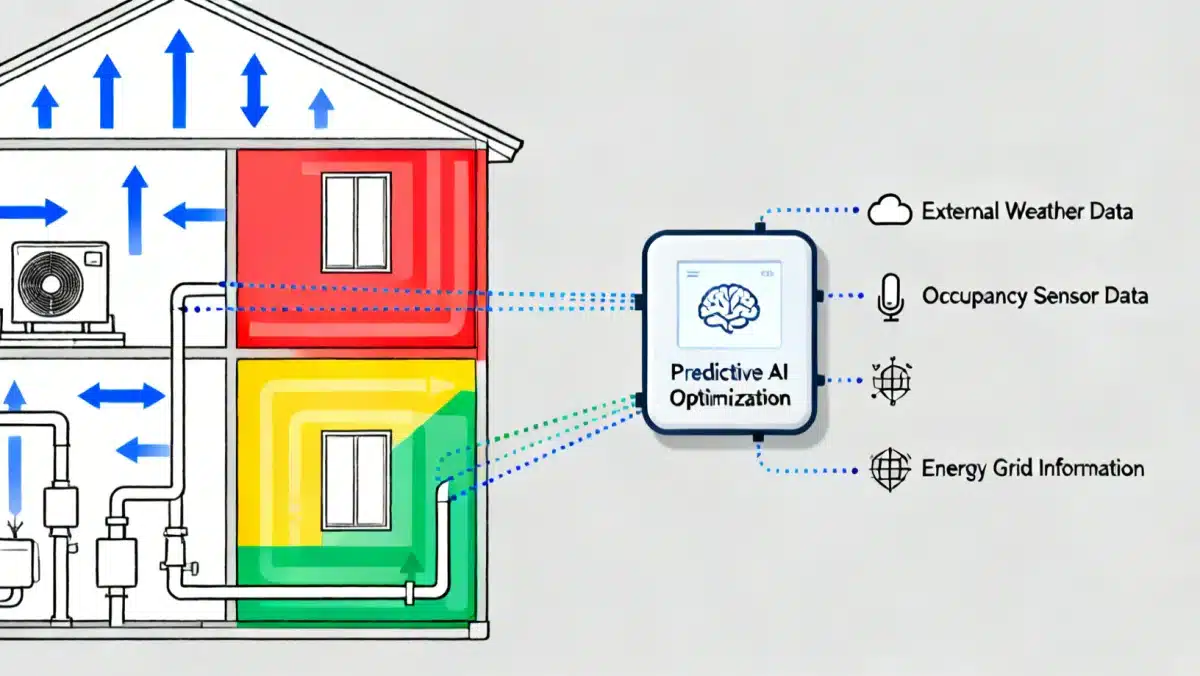
- Machine Learning Algorithms: At the core of predictive AI are sophisticated machine learning models. These algorithms analyze vast datasets, including historical temperature settings, occupancy patterns, local weather forecasts, energy consumption data, and even utility pricing signals. Over time, they identify complex correlations and patterns that are impossible for humans to discern, leading to highly optimized operational strategies.
- Sensor Integration: Modern smart thermostats are no longer standalone devices. They seamlessly integrate with a network of sensors throughout the home – occupancy sensors, door/window sensors, humidity sensors, and even air quality monitors. This rich stream of real-time data provides the AI with an accurate picture of the home’s environment and how it’s being used, enabling more precise and responsive control.
- External Data Feeds: Beyond internal sensors, predictive AI thermostats leverage external data. This includes highly granular weather forecasts (temperature, humidity, wind, solar radiation), local energy grid demand, peak pricing alerts from utility companies, and even traffic data (to estimate commute times and home arrival).
- Cloud Computing Power: The computational demands of processing and analyzing such vast amounts of data in real-time require significant processing power. Cloud-based AI platforms provide the necessary infrastructure, allowing thermostats to tap into powerful algorithms and continuously improve their predictive capabilities without relying solely on on-device processing.
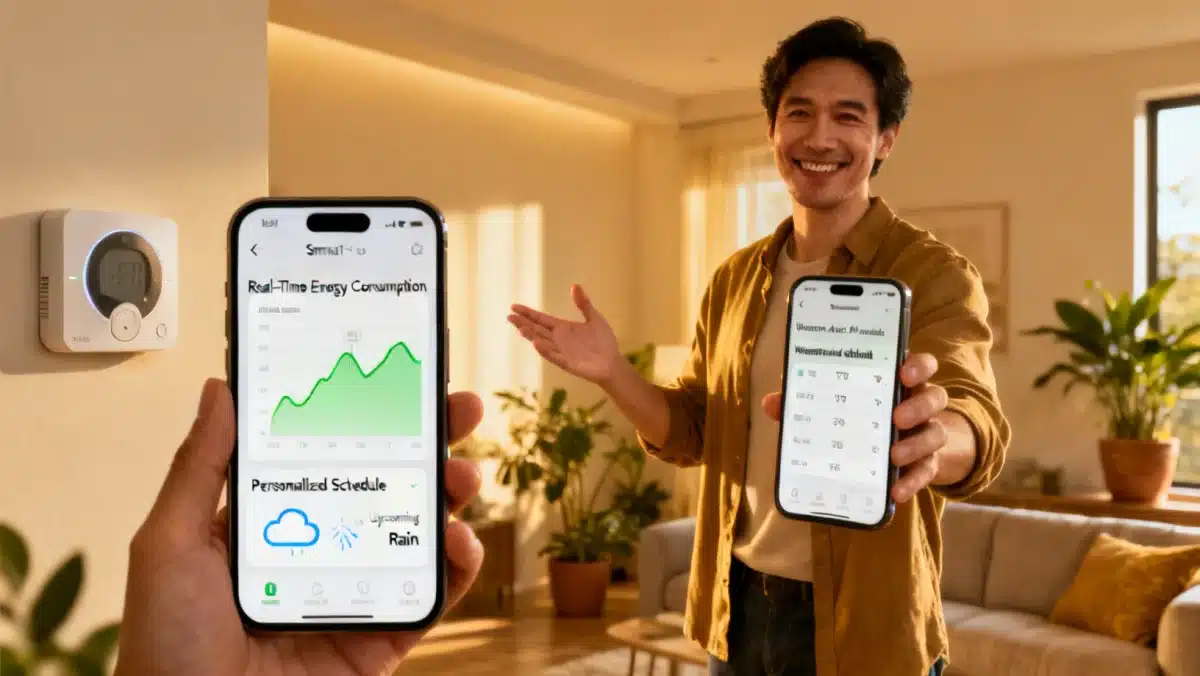
- User Interface and Feedback Loops: While highly autonomous, the best Smart Thermostat AI systems will still offer intuitive user interfaces and feedback mechanisms. Users can override settings, provide preferences, and receive insights into their energy usage, further refining the AI’s learning process and ensuring comfort remains a priority.
Achieving 20% HVAC Savings: The Predictive AI Advantage
The promise of 20% HVAC savings by 2026 isn’t just an aspiration; it’s a realistic target achievable through the strategic deployment of predictive AI. Let’s break down how this technology delivers such significant efficiencies.
1. Optimized Pre-heating and Pre-cooling
Traditional thermostats wait until the scheduled time or desired temperature before kicking in. Predictive AI, however, anticipates. If it knows you arrive home at 6 PM and the outside temperature is soaring, it can begin pre-cooling your home at 5:30 PM, but not in a wasteful way. It will calculate the most energy-efficient time to start, considering your home’s insulation, thermal mass, and the current weather. This avoids sudden, energy-intensive bursts of HVAC activity, instead opting for gentler, more sustained temperature adjustments that consume less power.
2. Dynamic Scheduling Based on Occupancy and Habits
Early smart thermostats learned your schedule over a few weeks. Predictive AI goes much further. By integrating with occupancy sensors, geofencing (using your phone’s location), and even connected calendars, it can dynamically adjust the schedule in real-time. If you leave for work unexpectedly early, the thermostat can immediately switch to an away mode. If your meeting runs late, it can delay heating or cooling until closer to your actual arrival. This eliminates conditioning an empty house, a major source of energy waste.
3. Weather-Responsive Climate Control
Weather forecasts are a goldmine for predictive AI. A Smart Thermostat AI system can analyze hourly forecasts, not just daily highs and lows. If a sudden cold front is expected, it might slightly lower the temperature setpoint an hour before to leverage the cooler air, reducing the need for active cooling later. Conversely, if solar gain is predicted through south-facing windows, it might adjust internal temperatures or even integrate with smart blinds to mitigate heat build-up, reducing cooling demand.
4. Integration with Utility Demand Response Programs
Many utility companies offer incentives for customers to reduce energy consumption during peak demand periods, often referred to as demand response programs. Predictive AI thermostats can automatically enroll in and manage participation in these programs. During peak times, the thermostat can subtly adjust temperatures by a degree or two, or briefly pre-cool/pre-heat before the peak, minimizing discomfort while maximizing savings and utility credits. This ‘load shifting’ is a powerful tool for both consumers and the energy grid.
5. Zoned Climate Control and Individual Preferences
For homes with multiple zones, predictive AI can optimize each zone independently. It learns the thermal characteristics of each room, its occupancy patterns, and individual preferences. This means you’re not heating or cooling unused rooms to the same degree as occupied ones. Advanced systems can even learn individual preferences for different family members, adjusting zones based on who is present and where.
Implementing Smart Thermostat AI: What to Look For in 2026
As you consider upgrading your home’s climate control system to leverage Smart Thermostat AI, here are key features and considerations to look for in the market by 2026:
Advanced Learning Capabilities
Seek out thermostats that explicitly market advanced machine learning and predictive analytics. Look for features beyond simple ‘learning schedules,’ such as ‘predictive optimization,’ ‘weather-adaptive scheduling,’ or ‘thermal profiling.’ The more sophisticated the AI, the better its ability to identify and exploit energy-saving opportunities.
Comprehensive Sensor Integration
A truly smart system will integrate with a variety of sensors. Ensure the thermostat supports external room sensors for accurate temperature readings across different areas, occupancy sensors to detect presence, and potentially door/window sensors to prevent heating/cooling when windows are open. Compatibility with smart home platforms (like Apple HomeKit, Google Home, Amazon Alexa) is also crucial for broader sensor integration.
Robust External Data Feeds
Verify that the system accesses high-quality, granular external data. This includes hyper-local weather forecasts, real-time energy pricing (if available in your area), and potentially even air quality indexes. The more data points the AI can analyze, the more intelligent its decisions will be.
User-Friendly Interface and Control
While the AI operates autonomously, you should still have clear visibility and control. Look for intuitive apps that provide insights into energy usage, explain AI decisions, and allow easy overrides. Voice control integration with smart assistants is also a valuable feature for convenience.
Security and Privacy
As these devices collect significant data about your home and habits, robust security and privacy features are paramount. Research the manufacturer’s commitment to data protection, encryption, and user privacy policies. Ensure you understand what data is collected, how it’s used, and whether it’s shared with third parties.
Professional Installation and Calibration
While many smart thermostats are DIY-friendly, for optimal performance with advanced AI features, professional installation and calibration can be beneficial. An HVAC professional can ensure the thermostat is correctly wired, integrated with your specific HVAC system, and that all sensors are strategically placed for accurate data collection.
Challenges and Considerations for Widespread Adoption
While the benefits of Smart Thermostat AI are clear, several challenges and considerations need to be addressed for widespread adoption:
Initial Cost
Advanced AI-powered smart thermostats, especially those with extensive sensor networks, can have a higher upfront cost than basic models. Educating consumers on the long-term energy savings and ROI will be essential to overcome this barrier.
Installation Complexity
While some basic smart thermostats are easy to install, integrating a comprehensive system with multiple sensors and potentially zoned HVAC can be more complex, requiring professional assistance. Simplifying installation processes or providing robust support will be key.
Data Privacy Concerns
The collection of personal data – occupancy, schedules, temperature preferences – raises privacy concerns for some users. Manufacturers must be transparent about data usage and implement strong security measures to build trust.
Interoperability and Ecosystem Lock-in
Ensuring seamless integration with other smart home devices and avoiding proprietary ecosystems that limit choices will be important for consumer acceptance. Open standards and broad compatibility will foster innovation and user flexibility.
User Education and Trust
Many users are accustomed to direct control over their thermostats. Explaining how AI makes decisions, demonstrating its effectiveness, and building trust in its autonomous operation will be crucial. Features that allow users to understand and override AI suggestions will be important for comfort and reassurance.
The Future Landscape: Beyond 2026
The trajectory of Smart Thermostat AI extends far beyond the 2026 horizon. We can anticipate even more sophisticated integrations and capabilities:
Proactive Maintenance and Diagnostics
AI will not only optimize energy but also monitor HVAC system health. By analyzing performance data, it can detect anomalies, predict potential failures before they occur, and even schedule preventative maintenance with local technicians, further extending the lifespan and efficiency of your system.
Integration with Renewable Energy Sources
For homes with solar panels or other renewable energy sources, the AI can intelligently shift energy consumption to periods when renewable generation is highest or when grid electricity is cheapest, maximizing self-consumption and minimizing reliance on fossil fuels.
Personalized Wellness and Air Quality
Future systems will integrate with wearable devices and personal health monitors to adjust climate settings not just for comfort, but for optimal sleep, allergy relief, or general wellness. Air quality sensors will become standard, allowing the AI to activate ventilation or filtration systems proactively.
Community-Level Energy Optimization
Imagine neighborhoods where smart thermostats, in conjunction with smart grids, coordinate to collectively reduce energy demand during peak times, leading to more stable grids and potentially lower energy costs for entire communities. This macro-level optimization represents the ultimate goal of intelligent energy management.
Conclusion: Embracing the Intelligent Home Climate
The promise of Smart Thermostat AI is clear: significant HVAC savings, enhanced comfort, and a more sustainable way of living. By 2026, the convergence of advanced machine learning, comprehensive sensor networks, and external data integration will empower these devices to deliver a minimum of 20% savings on your heating and cooling bills. This isn’t just about saving money; it’s about creating a truly intelligent home environment that anticipates your needs, adapts to the world around it, and contributes to a greener future.
Investing in a predictive AI-powered smart thermostat is an investment in your home’s efficiency, your comfort, and your financial well-being. As technology continues to advance, the intelligent management of our home climate will become an indispensable part of modern living. Prepare your home for 2026 and beyond by embracing the transformative power of Smart Thermostat AI.
The journey towards an ultra-efficient home starts with understanding and adopting these cutting-edge strategies. The future of comfort and savings is intelligent, predictive, and within reach.