Top 5 Home Automation Protocols for Seamless Integration in 2026
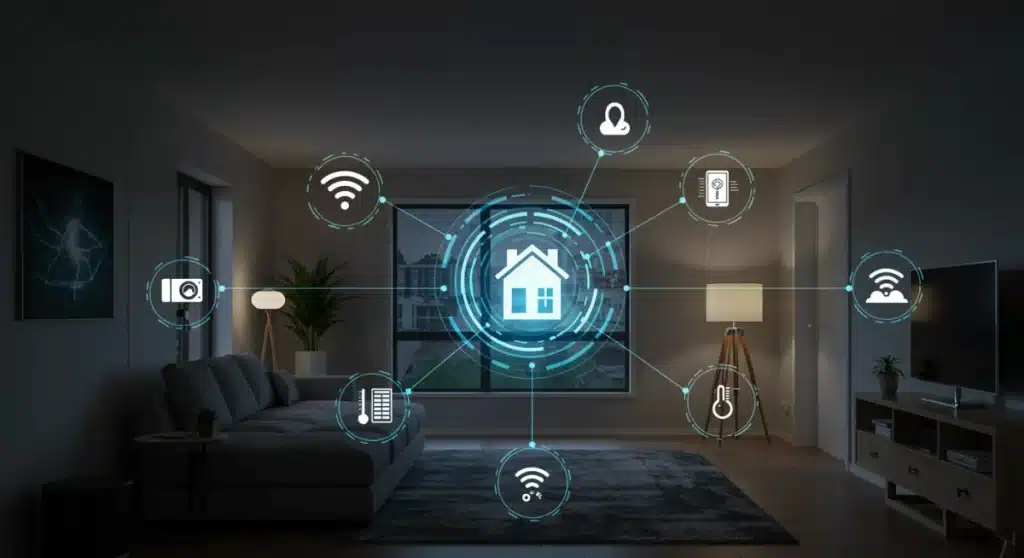
Understanding current home automation protocols like Z-Wave, Thread, Matter, Zigbee, and Wi-Fi is essential for achieving seamless smart home integration and ensuring future-proof connectivity in 2026.
As we navigate the complexities of modern living, the promise of a truly smart home, where devices communicate effortlessly, remains a compelling vision. In 2026, achieving this seamless integration hinges on understanding the underlying communication technologies. This guide delves into The Top 5 Home Automation Protocols for Seamless Integration in 2026: An Insider’s Guide to Z-Wave vs. Thread, offering insights into their strengths, limitations, and what they mean for your connected living space.
the evolving landscape of home automation protocols
The world of home automation is constantly evolving, with new technologies emerging and existing ones refining their capabilities. In 2026, the foundation of any robust smart home system lies in its chosen communication protocol. These protocols dictate how devices speak to each other, influencing everything from reliability and security to energy efficiency and interoperability. Understanding this landscape is crucial for making informed decisions when building or upgrading your smart home.
The choice of protocol isn’t just about connecting devices; it’s about creating an ecosystem that works harmoniously. A well-chosen protocol ensures that your smart lights, thermostats, security cameras, and sensors can all interact without friction, providing a truly intelligent and responsive environment. As technology advances, the demand for more efficient, secure, and user-friendly protocols grows, pushing innovation in this dynamic field.
the importance of standardization
- Interoperability: Standardized protocols allow devices from different manufacturers to communicate effectively.
- Future-Proofing: Adopting widely supported standards protects your investment by ensuring compatibility with future devices.
- Ease of Use: Standardized interfaces often lead to simpler setup and management for end-users.
The push for standardization, particularly with the emergence of new initiatives, aims to simplify the smart home experience. This means less time troubleshooting compatibility issues and more time enjoying the benefits of automation. Consumers are increasingly looking for systems that ‘just work,’ and robust protocols are the backbone of that expectation. This evolution is driven by both technological advancements and consumer demand for greater simplicity and reliability in their smart home setups.
Ultimately, a deep dive into the various protocols available in 2026 reveals a landscape rich with options, each designed to address specific needs and preferences. From low-power mesh networks to high-bandwidth streaming capabilities, the right protocol can unlock the full potential of your smart home, providing comfort, convenience, and peace of mind. The ongoing competition and collaboration among these technologies promise an even more integrated future.
z-wave: the established low-power mesh network
Z-Wave has long been a cornerstone of home automation, renowned for its reliability and dedicated frequency band. Operating on a sub-1 GHz frequency, Z-Wave avoids interference from crowded 2.4 GHz Wi-Fi and Bluetooth networks, contributing to its stable performance. This protocol is particularly favored for devices that require low power consumption and consistent communication over relatively long distances, making it ideal for sensors, locks, and lighting controls.
The mesh networking capability of Z-Wave means that devices don’t just connect to a central hub; they can also relay signals to one another. This extends the network’s range and creates a more robust system, as a signal can find multiple paths to its destination. This self-healing aspect is a significant advantage, ensuring that even if one device goes offline, the network can reroute communication through others.
security and reliability
- Dedicated Frequency: Less interference means more reliable connections for critical devices like security sensors.
- AES 128 Encryption: Industry-standard encryption protects data transmission, enhancing security.
- Certification Program: All Z-Wave devices must pass a rigorous certification process, ensuring interoperability.
The strong emphasis on security and interoperability has made Z-Wave a trusted choice for many smart home enthusiasts and professionals alike. Its closed ecosystem, while sometimes seen as a limitation, also guarantees a certain level of quality and compatibility that open standards sometimes struggle to maintain. This controlled environment fosters a predictable user experience, which is highly valued in home automation.
Despite the emergence of newer protocols, Z-Wave continues to innovate, adapting its technology to meet modern demands without sacrificing its core strengths. Its proven track record and extensive device ecosystem ensure its relevance in the 2026 smart home landscape. For those prioritizing stability and a broad range of certified devices, Z-Wave remains a top contender.
thread: the future of IP-based mesh networking
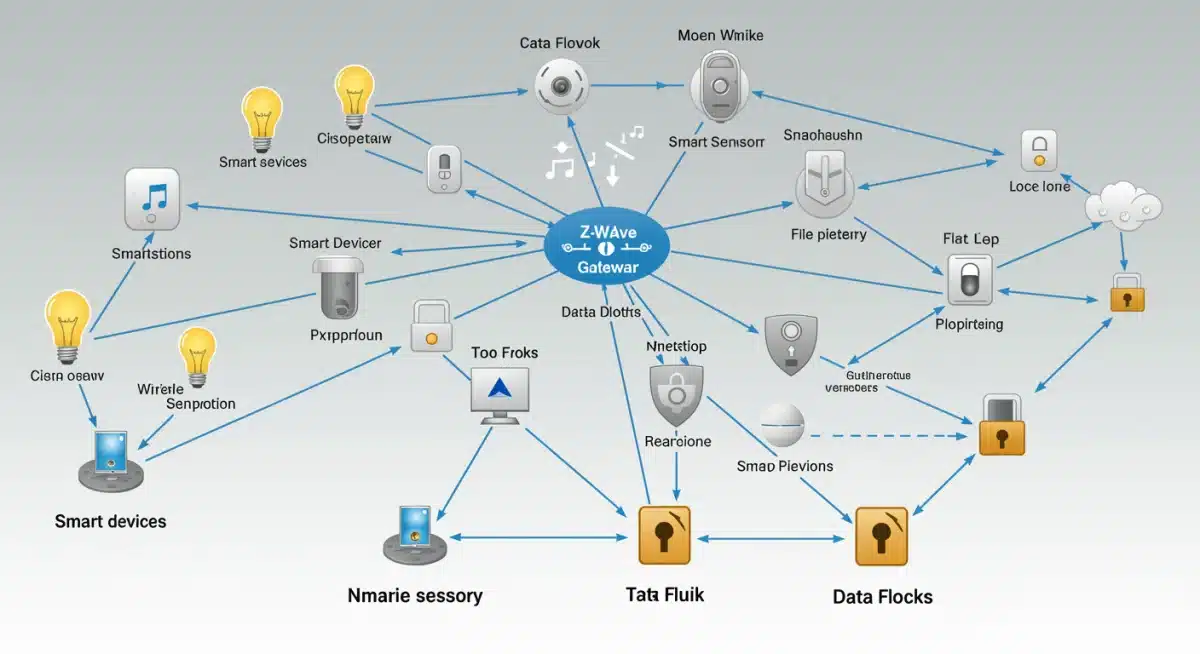
Thread represents a significant leap forward in home automation, offering an IP-based mesh networking protocol specifically designed for smart devices. Unlike Z-Wave, Thread operates on the 2.4 GHz band, similar to Wi-Fi, but with a crucial difference: it creates a self-healing mesh network where every device can act as a router. This architecture eliminates single points of failure and significantly extends the network’s reach and reliability.
What truly sets Thread apart is its native IP connectivity. This means that devices on a Thread network can communicate directly with the internet without needing a proprietary gateway to translate protocols. This streamlines communication, reduces latency, and opens up new possibilities for device interaction and remote control. It’s a foundational technology that promises to simplify smart home ecosystems.

key advantages of thread
- IP-based Connectivity: Direct internet access for devices, simplifying network architecture.
- Self-Healing Mesh: Increased reliability and range as devices route messages for each other.
- Low Power Consumption: Designed for battery-powered devices, extending battery life.
- Security: Built-in encryption for secure communication between devices.
Thread’s focus on low power consumption makes it ideal for a wide array of battery-operated sensors and small devices, allowing them to participate actively in the mesh network without frequent battery changes. This efficiency, combined with its robust mesh capabilities, positions Thread as a highly scalable and resilient solution for the smart home of today and tomorrow. Its open standard nature also encourages broader adoption and innovation.
As more manufacturers integrate Thread into their products, its ecosystem is rapidly expanding. Its role as a foundational technology for future smart home standards, such as Matter, further solidifies its importance. For users looking for a modern, scalable, and highly interoperable smart home experience, Thread offers a compelling vision for seamless integration.
matter: the universal language of smart homes
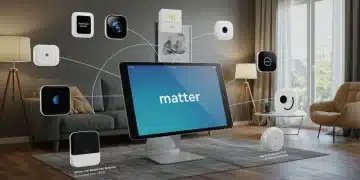
Matter, formerly known as Project CHIP (Connected Home over IP), is an industry-unifying standard that aims to create a universal language for smart home devices. Backed by major tech giants like Apple, Google, Amazon, and Samsung, Matter seeks to simplify the user experience by ensuring seamless interoperability across different brands and ecosystems. It’s not a new wireless protocol itself, but rather an application layer that runs over existing IP-based networks like Wi-Fi, Thread, and Ethernet.
The core promise of Matter is incredible simplicity: any Matter-certified device will work with any Matter-certified controller or platform, regardless of the manufacturer. This eliminates the headache of compatibility issues and fragmented ecosystems, which have long been a barrier to widespread smart home adoption. Imagine buying a smart light bulb from one brand and knowing it will instantly connect and work with your smart home hub from another brand.
matter’s impact on integration
Matter’s impact on home automation integration cannot be overstated. By providing a common application layer, it allows devices to communicate not just at the network level, but at a functional level. This means a smart thermostat from Company A can tell a smart fan from Company B to turn on, even if they use different underlying wireless protocols, as long as both are Matter-certified and connected to an IP network.
- Simplified Setup: Easy pairing and configuration across devices and platforms.
- Increased Interoperability: Devices from different brands work together seamlessly.
- Local Control: Many Matter functions can operate locally, reducing reliance on the cloud.
- Enhanced Security: Strong security features built into the standard.
The focus on local control is particularly appealing for privacy-conscious users and for situations where internet connectivity might be intermittent. While cloud services will still enhance functionality, basic operations can continue reliably within the home network. This resilience is a key differentiator and a major step towards truly robust smart home systems.
In 2026, Matter is expected to be a dominant force, driving mass adoption of smart home technology by removing complexity. Its ability to bridge different protocols and platforms makes it a game-changer for seamless integration, promising a future where your smart home just works, intelligently and reliably, regardless of the brands you choose.
zigbee: the versatile short-range option
Zigbee has been a workhorse in the smart home industry for many years, known for its versatility and low-power consumption. Operating on the 2.4 GHz band, Zigbee also employs a mesh networking topology, similar to Thread, allowing devices to extend the network’s reach and improve reliability. It’s particularly well-suited for a wide array of battery-powered devices such as sensors, switches, and small appliances due to its efficient use of energy.
One of Zigbee’s primary strengths lies in its mature ecosystem and broad adoption by numerous manufacturers. This has led to a vast selection of compatible devices, from smart lighting systems (like Philips Hue, which uses a modified Zigbee) to smart plugs and environmental sensors. Its open standard nature has fostered innovation and competition, benefiting consumers with diverse product choices.
zigbee’s role in diverse ecosystems
While Zigbee operates on the 2.4 GHz band, it’s designed to coexist with Wi-Fi, employing techniques to avoid interference. However, in heavily congested Wi-Fi environments, some performance issues can arise. Despite this, its mesh capabilities often compensate, providing multiple communication paths and maintaining network stability. Its integration into various smart home hubs, including Amazon Echo and Samsung SmartThings, highlights its widespread acceptance.
- Mature Ecosystem: Extensive range of devices from various manufacturers.
- Low Power Consumption: Ideal for battery-operated sensors and switches.
- Mesh Networking: Extends range and improves reliability.
- Cost-Effective: Generally more affordable device options compared to some proprietary protocols.
The ongoing evolution of Zigbee includes efforts to enhance its interoperability and security features, ensuring its continued relevance in the competitive smart home market. While Matter is poised to become the overarching application layer, Zigbee will likely continue to serve as a robust underlying wireless protocol for many devices, especially those prioritizing energy efficiency and cost-effectiveness.
For users seeking a wide variety of affordable and energy-efficient smart devices, Zigbee remains a strong contender. Its proven track record and continuous development ensure it will continue to play a significant role in enabling diverse and integrated home automation solutions in 2026.
wi-fi: the ubiquitous high-bandwidth solution
Wi-Fi, the most ubiquitous wireless technology, plays a critical role in home automation, particularly for devices requiring high bandwidth or direct internet access. Unlike mesh protocols like Z-Wave, Thread, or Zigbee, Wi-Fi devices typically connect directly to a central router (or access point). This direct connection simplifies setup for many users, as most homes already have a Wi-Fi network in place.
Devices such as smart TVs, streaming devices, high-resolution security cameras, and smart speakers heavily rely on Wi-Fi due to its ability to handle large data transfers. The constant evolution of Wi-Fi standards, like Wi-Fi 6 (802.11ax) and Wi-Fi 7 (802.11be), continues to improve speed, reduce latency, and enhance efficiency, making it suitable for even more demanding smart home applications.
challenges and advantages of wi-fi in smart homes
While Wi-Fi offers unparalleled bandwidth and ease of use, it also presents certain challenges in a dense smart home environment. Each Wi-Fi device typically requires its own IP address, and a large number of devices can overwhelm a standard home router, leading to network congestion and slower performance. Moreover, Wi-Fi devices generally consume more power than their low-energy counterparts, making them less suitable for battery-operated sensors.
- High Bandwidth: Ideal for video streaming, smart speakers, and other data-intensive devices.
- Ubiquitous: Most homes already have a Wi-Fi network, simplifying initial setup.
- Direct Internet Access: Many devices can connect directly to the cloud without a separate hub.
Despite these challenges, Wi-Fi’s widespread adoption and continuous advancements ensure its crucial role in the smart home ecosystem. For specific device types and for integrating with existing home networks, Wi-Fi remains indispensable. Its capability to handle high-definition video and audio seamlessly makes it the go-to choice for entertainment and advanced security systems.
In 2026, Wi-Fi will continue to be a foundational technology, often working in conjunction with other low-power protocols. The integration of Matter over Wi-Fi will further enhance its interoperability, allowing high-bandwidth devices to participate in a unified smart home experience. Understanding its strengths and limitations is key to leveraging Wi-Fi effectively in your automated home.
choosing the right protocol for your smart home in 2026
Selecting the optimal home automation protocol in 2026 is less about choosing a single winner and more about understanding how different technologies complement each other. The ideal smart home often leverages a combination of protocols, each playing to its strengths to create a robust and efficient system. Your choice will depend heavily on the types of devices you plan to use, your home’s layout, and your priorities regarding security, energy efficiency, and cost.
For critical, low-bandwidth devices like door locks, smart thermostats, and motion sensors, Z-Wave offers unparalleled reliability and security on an uncongested frequency. Its mesh network ensures widespread coverage without straining your Wi-Fi. On the other hand, Thread, with its IP-based mesh and low power, is rapidly gaining traction as a future-proof solution, especially for battery-powered sensors and lights, offering native integration with emerging standards like Matter.
strategic protocol deployment
When planning your smart home, consider a strategic deployment of protocols. High-bandwidth devices such as smart cameras, video doorbells, and media streamers are best served by Wi-Fi. For the backbone of your sensor and control network, consider Z-Wave or Thread for their robust mesh capabilities and low power consumption. Zigbee continues to be a viable and cost-effective option for a wide range of devices, particularly if you’re already invested in its ecosystem.
- Assess Device Needs: Match protocols to device requirements (e.g., high bandwidth for cameras, low power for sensors).
- Consider Ecosystems: Evaluate existing smart home hubs and devices for compatibility.
- Prioritize Security and Reliability: Choose protocols with strong encryption and stable networks for critical functions.
- Plan for Scalability: Ensure your chosen protocols can accommodate future device additions.
The advent of Matter is poised to simplify much of this decision-making by acting as a unifying application layer. By choosing Matter-certified devices, you gain the flexibility to mix and match products from various manufacturers, regardless of their underlying Wi-Fi or Thread connectivity. This shift towards a universal standard is perhaps the most significant development in home automation for 2026.
Ultimately, a well-integrated smart home in 2026 will likely be a hybrid system, intelligently combining the best aspects of Z-Wave, Thread, Matter, Zigbee, and Wi-Fi. By carefully considering your needs and the strengths of each protocol, you can build a seamless, efficient, and future-proof automated living space that truly enhances your daily life.
| Protocol | Key Benefit |
|---|---|
| Z-Wave | Reliable, low-power mesh on dedicated frequency. |
| Thread | IP-based mesh, low power, future-proof for Matter. |
| Matter | Universal application layer for seamless interoperability. |
| Wi-Fi | High bandwidth for data-intensive devices, ubiquitous. |
Frequently Asked Questions about Home Automation Protocols
Z-Wave operates on a dedicated sub-1 GHz frequency, offering less interference and robust mesh networking. Thread, conversely, uses the 2.4 GHz band and is an IP-based mesh network, allowing direct internet communication for devices and serving as a foundation for Matter.
Matter acts as a universal application layer, allowing devices from different manufacturers to communicate seamlessly regardless of their underlying Wi-Fi or Thread connectivity. This eliminates compatibility issues and simplifies setup for users, fostering a more unified ecosystem.
Wi-Fi is excellent for high-bandwidth devices like cameras and streaming devices. However, its higher power consumption and potential for network congestion make it less ideal for battery-operated sensors or a large number of low-bandwidth devices, where protocols like Z-Wave or Thread excel.
A mesh network allows devices to relay signals to one another, extending the overall range and creating a more robust, self-healing system. If one device fails, communication can be rerouted through others, ensuring consistent connectivity and reliability across your smart home.
Consider the types of devices you’ll use, their power requirements, your home’s size, and your priorities for security and interoperability. A hybrid approach, combining protocols like Z-Wave, Thread, and Wi-Fi, often provides the most comprehensive and future-proof smart home solution in 2026.
conclusion
Navigating the intricate world of home automation protocols in 2026 requires a keen understanding of each technology’s unique strengths. From Z-Wave’s established reliability on a dedicated frequency to Thread’s IP-based mesh and Matter’s promise of universal interoperability, the landscape offers diverse solutions for every smart home need. By strategically combining these protocols with Wi-Fi for high-bandwidth devices and Zigbee for versatile, low-power options, homeowners can create a truly seamless, efficient, and future-proof integrated living space. The key to successful home automation lies not in choosing a single protocol, but in intelligently orchestrating a symphony of technologies that work harmoniously to enhance daily life.