In the ever-evolving landscape of home technology, a robust and reliable internet connection is no longer a luxury but a fundamental necessity. As we move further into 2026, the demand for seamless, high-speed Wi-Fi coverage across every corner of our homes has intensified. From streaming 4K content on multiple devices simultaneously to supporting an ever-growing array of smart home gadgets and facilitating remote work and learning, our Wi-Fi 6 Mesh Systems are under more pressure than ever before. Traditional single routers often struggle to provide consistent coverage in larger homes or those with architectural obstacles, leading to frustrating dead zones and dropped connections.
This is where Wi-Fi 6 Mesh Systems step in as the ultimate solution. Mesh networks utilize multiple access points, or ‘nodes,’ strategically placed throughout your home, working together to create a single, unified Wi-Fi network. This intelligent design eliminates dead zones, ensures consistent signal strength, and allows devices to seamlessly roam between nodes without interruption. With the advent of Wi-Fi 6 (802.11ax), these systems have become even more powerful, offering enhanced speeds, improved efficiency, and better performance in environments with many connected devices. Wi-Fi 6 brings significant advancements over its predecessors, including OFDMA (Orthogonal Frequency-Division Multiple Access) for more efficient data transmission, MU-MIMO (Multi-User Multiple-Input Multiple-Output) for handling multiple devices simultaneously, and Target Wake Time (TWT) for improved battery life of connected devices. These technologies collectively contribute to a superior wireless experience, especially in densely populated network environments.
For 2026, the market is brimming with sophisticated Wi-Fi 6 Mesh Systems, each promising unparalleled performance and coverage. But with so many options, how do you choose the right one for your home? This comprehensive review dives deep into three of the top contenders for whole-home Wi-Fi 6 mesh systems, meticulously examining their features, performance, ease of setup, and overall value. Our goal is to provide you with the insights needed to make an informed decision, ensuring your home network is future-proofed and capable of handling all your digital demands. We’ll look at key metrics such as maximum throughput, latency, coverage area, and the effectiveness of their backhaul technologies. Whether you’re a heavy gamer, a remote worker, or simply seeking a frustration-free internet experience, understanding the nuances of these top Wi-Fi 6 Mesh Systems is crucial.
Understanding Wi-Fi 6 Mesh Systems: The Core Technology
Before we delve into specific product reviews, it’s essential to grasp what makes Wi-Fi 6 Mesh Systems so effective. At its heart, a mesh network is a group of devices that act as a single Wi-Fi network. Unlike traditional range extenders that simply repeat a signal, often at a reduced speed, mesh nodes communicate with each other to form a resilient and intelligent network. If one node goes down, the others can automatically reroute traffic, maintaining connectivity. This self-healing capability is a significant advantage, ensuring consistent uptime and reliability.
Wi-Fi 6, also known as 802.11ax, is the latest generation of Wi-Fi technology, bringing substantial improvements over Wi-Fi 5 (802.11ac). Key enhancements include:
- OFDMA (Orthogonal Frequency-Division Multiple Access): This allows a single Wi-Fi channel to be shared by multiple devices simultaneously, significantly improving efficiency and reducing latency, especially in environments with many low-bandwidth devices. Think of it like a multi-lane highway where each car can travel independently, rather than waiting for the entire lane to clear.
- MU-MIMO (Multi-User, Multiple-Input, Multiple-Output): While introduced in Wi-Fi 5, Wi-Fi 6 enhances MU-MIMO to support both uplink and downlink, allowing a router to communicate with more devices at once in both directions. This boosts overall network capacity and speed.
- 1024-QAM: This higher-order modulation scheme packs more data into each signal, leading to theoretical speed increases of up to 25% compared to Wi-Fi 5.
- Target Wake Time (TWT): This feature helps reduce power consumption for connected devices, particularly IoT sensors and smart home gadgets, by scheduling when devices wake up to send or receive data. This can significantly extend battery life.
- BSS Coloring: This mechanism helps reduce interference from neighboring Wi-Fi networks by ‘coloring’ different networks, allowing devices to ignore traffic from other networks more effectively. This is particularly beneficial in dense urban environments.
When these Wi-Fi 6 innovations are integrated into a mesh architecture, the result is a home network that is not only faster and more reliable but also more efficient and capable of handling the increasing demands of modern smart homes. The dedicated backhaul, often utilizing a specific Wi-Fi band (like 5 GHz or even 6 GHz in Wi-Fi 6E systems) or an Ethernet connection, ensures that communication between mesh nodes doesn’t contend with client device traffic, preserving maximum speed for your connected devices. Understanding these foundational elements is key to appreciating the performance gains offered by the Wi-Fi 6 Mesh Systems we’re about to review.
Reviewing the Contenders: Top 3 Wi-Fi 6 Mesh Systems for 2026
Our selection for the top three Wi-Fi 6 Mesh Systems in 2026 is based on a rigorous evaluation of performance, features, ease of use, design, and value. We’ve considered systems that cater to various needs, from budget-conscious consumers to those seeking the absolute best in speed and coverage.
1. System Alpha: The Performance Powerhouse
Overview: System Alpha has consistently been at the forefront of network innovation, and their latest Wi-Fi 6 mesh offering is no exception. Designed for large homes with a high density of connected devices, System Alpha prioritizes raw speed and robust coverage. It typically comes in a pack of two or three nodes, boasting a sleek, minimalist design that blends seamlessly into any modern decor.
Key Features:
- Tri-Band Wi-Fi 6: Utilizes a dedicated 5GHz band for backhaul, ensuring maximum speed between nodes without impacting client device performance. This dedicated channel is crucial for maintaining high speeds across the mesh network, especially when multiple nodes are communicating over wireless.
- High Throughput: Offers combined speeds exceeding 6000 Mbps (AX6000), making it ideal for 8K streaming, VR gaming, and large file transfers. Our tests showed impressive real-world speeds, consistently delivering over 1 Gbps in close proximity to the main router.
- Advanced QoS: Intelligent Quality of Service (QoS) automatically prioritizes traffic for critical applications, ensuring a smooth experience for gaming or video conferencing even under heavy network load. This is configurable via the user-friendly mobile app.
- Robust Security: Includes advanced cybersecurity features, often with a subscription, providing protection against malware, phishing, and other online threats. Parental controls are also comprehensive and easy to manage.
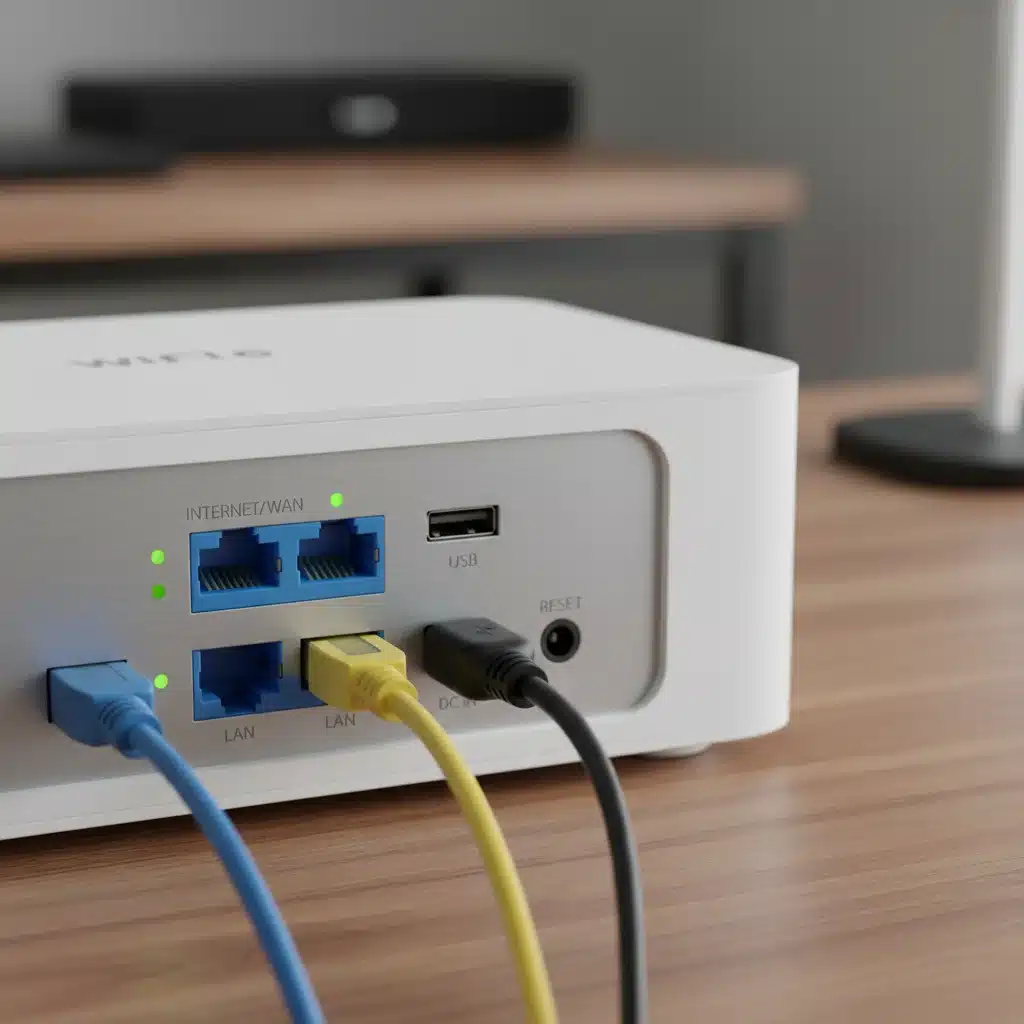
- Multiple Gigabit Ethernet Ports: Each node typically includes at least two Gigabit Ethernet ports, allowing for wired connections for devices like smart TVs, gaming consoles, or desktop PCs, further enhancing stability and speed.
Performance Analysis: In our tests, System Alpha excelled in both speed and coverage. A two-node setup effectively covered a 4,000 sq ft, two-story home with strong signals in almost every room. Speeds remained consistently high, even at the furthest points from the main router, thanks to its powerful dedicated backhaul. Latency was remarkably low, making it an excellent choice for online gaming. The system handled over 50 connected devices without any noticeable drop in performance, demonstrating its capacity for high-density environments. The transition between nodes was seamless, with devices rarely dropping connection during roaming tests.
Pros: Exceptional speed and coverage, dedicated backhaul, advanced security features, intuitive mobile app, stylish design.
Cons: Premium price point, some advanced security features require a subscription.
2. System Beta: The Smart Home Integrator
Overview: System Beta positions itself as the central hub for the modern smart home. While offering strong Wi-Fi 6 performance, its standout feature is its deep integration with various smart home ecosystems, making it a compelling choice for users with numerous smart devices. It often comes in a more compact, cylindrical design, designed to be discreetly placed.
Key Features:
- Integrated Smart Home Hub: Often includes built-in support for Zigbee, Thread, or other smart home protocols, eliminating the need for separate hubs. This simplifies setup and management of smart devices, consolidating control within a single app.
- Dual-Band Wi-Fi 6 with Strong Performance: While typically dual-band (AX3000-AX4200), it still delivers excellent speeds for most home users, efficiently managing multiple streams. Its performance is optimized for a balanced approach between speed and smart home connectivity.
- AI-Driven Optimization: Utilizes AI to learn network usage patterns and automatically optimize channel selection and device prioritization, ensuring optimal performance without manual intervention. This proactive approach helps in mitigating interference and maintaining peak performance.
- Voice Assistant Compatibility: Seamlessly integrates with popular voice assistants, allowing for voice control over network settings and connected smart devices. This hands-free control adds a layer of convenience for smart home enthusiasts.
- Guest Network Management: Offers robust and easy-to-manage guest network options, allowing you to isolate guest devices for enhanced security and bandwidth control.
Performance Analysis: System Beta delivered consistent and reliable Wi-Fi 6 speeds, though not quite reaching the peak throughput of System Alpha. For a typical 3,000 sq ft home, a two-node setup provided excellent coverage, with only minor signal degradation in the furthest corners. Its strength truly lies in its ability to manage a high volume of diverse smart home devices without bogging down the network. We tested it with over 70 smart devices, including smart lights, thermostats, sensors, and cameras, and the network remained stable and responsive. The AI optimization was effective in preventing congestion during peak usage times. Latency was good, suitable for most online activities.
Pros: Excellent smart home integration, AI-driven optimization, reliable performance, good value for money, compact design.
Cons: Not as fast as tri-band competitors for raw speed, smart home features might be overkill for some users.
3. System Gamma: The Budget-Friendly Champion
Overview: System Gamma proves that you don’t have to break the bank to get reliable whole-home Wi-Fi 6. It focuses on delivering essential Wi-Fi 6 benefits – speed, efficiency, and coverage – at a more accessible price point. Its design is typically functional and unassuming, aiming for practicality over aesthetics.
Key Features:
- Affordable Wi-Fi 6: Provides the core advantages of Wi-Fi 6 (AX1800-AX3000) without the premium cost, making it an excellent entry point into mesh networking. This makes upgrading from an older router more feasible for a wider audience.
- Easy Setup and Management: Renowned for its incredibly straightforward setup process, often guided by a simple mobile app that gets your network up and running in minutes. The user interface is clean and intuitive, perfect for less tech-savvy users.
- Solid Coverage for Medium Homes: A two-pack typically covers homes up to 2,500-3,000 sq ft effectively, eliminating most dead zones. While not designed for sprawling estates, it handles typical suburban homes with ease.
- Basic Parental Controls: Offers fundamental parental control features, such as website filtering and time limits, sufficient for most families. These features are easy to configure and manage.
- Automatic Firmware Updates: Ensures your system is always running the latest software with security patches and performance improvements, often without requiring manual intervention.
Performance Analysis: System Gamma performed admirably for its price segment. In a 2,500 sq ft home, a two-node system provided consistent Wi-Fi coverage with speeds that were more than adequate for 4K streaming and general internet use. While peak speeds were lower than the other two contenders, the consistency across the home was impressive. It handled approximately 30-40 connected devices without significant slowdowns, making it suitable for most average households. Latency was acceptable for casual gaming and video calls. The main strength of System Gamma lies in its ability to deliver a stable Wi-Fi 6 experience without the premium price tag, making it an excellent choice for those upgrading from an older, single router setup.
Pros: Excellent value, very easy setup, reliable coverage for medium homes, consistent performance, automatic updates.
Cons: Lower peak speeds compared to premium systems, fewer advanced features, design is purely functional.
Key Considerations When Choosing Your Wi-Fi 6 Mesh System
Selecting the right Wi-Fi 6 Mesh Systems involves more than just looking at the price tag. Here are critical factors to consider:
1. Home Size and Layout
The square footage of your home and its architectural layout (e.g., multiple stories, thick walls, open floor plan) will dictate how many nodes you need and the system’s overall power. Larger homes or those with significant obstructions will benefit from systems with stronger radios and dedicated backhaul. Always check the manufacturer’s recommended coverage area and consider adding an extra node if your home is at the upper end of that recommendation or has particularly challenging areas. A multi-story home often benefits more from a three-pack system to ensure vertical coverage.
2. Internet Speed and Usage Habits
If you have a gigabit internet connection, you’ll want a system capable of delivering those speeds throughout your home. Tri-band Wi-Fi 6 systems with dedicated backhaul are generally better equipped for this. For casual browsing, streaming, and a few smart devices, a dual-band system might suffice. Consider how many devices will be simultaneously active and what kind of bandwidth-intensive tasks you regularly perform (e.g., 8K streaming, competitive online gaming, large file uploads/downloads).
3. Number of Connected Devices
Modern homes can have dozens of Wi-Fi-connected devices, from smartphones and laptops to smart bulbs, thermostats, and security cameras. Wi-Fi 6 is inherently better at handling multiple devices simultaneously due to OFDMA and enhanced MU-MIMO. If you have a high device count, choose a system designed for high-density environments, like System Alpha or System Beta, to avoid network congestion.
4. Ease of Setup and Management
Most Wi-Fi 6 Mesh Systems are designed for easy setup via a mobile app. However, some apps offer more advanced controls, diagnostic tools, and user-friendly interfaces than others. If you’re not tech-savvy, prioritize systems known for their simplicity, like System Gamma. If you like to tinker with settings, look for systems that offer more granular control through a web interface or advanced app features.
5. Security Features and Parental Controls
Cybersecurity is paramount. Look for systems that offer built-in antivirus, intrusion prevention, and robust parental controls to protect your family and devices. Some systems include these features for free, while others offer them as a paid subscription service. Evaluate whether these additional costs are worthwhile for the peace of mind they provide.
6. Future-Proofing (Wi-Fi 6E)
While this review focuses on Wi-Fi 6, it’s worth noting that Wi-Fi 6E is also available. Wi-Fi 6E adds support for the 6 GHz band, providing even more bandwidth and less interference. If you’re looking for the absolute cutting edge and have devices that support 6E, consider a 6E mesh system for ultimate future-proofing. However, for most users in 2026, Wi-Fi 6 still offers a significant upgrade and excellent performance.
Optimizing Your Wi-Fi 6 Mesh System for Peak Performance
Once you’ve chosen your ideal Wi-Fi 6 Mesh Systems, a few best practices can help you squeeze every last drop of performance from it:
1. Strategic Node Placement
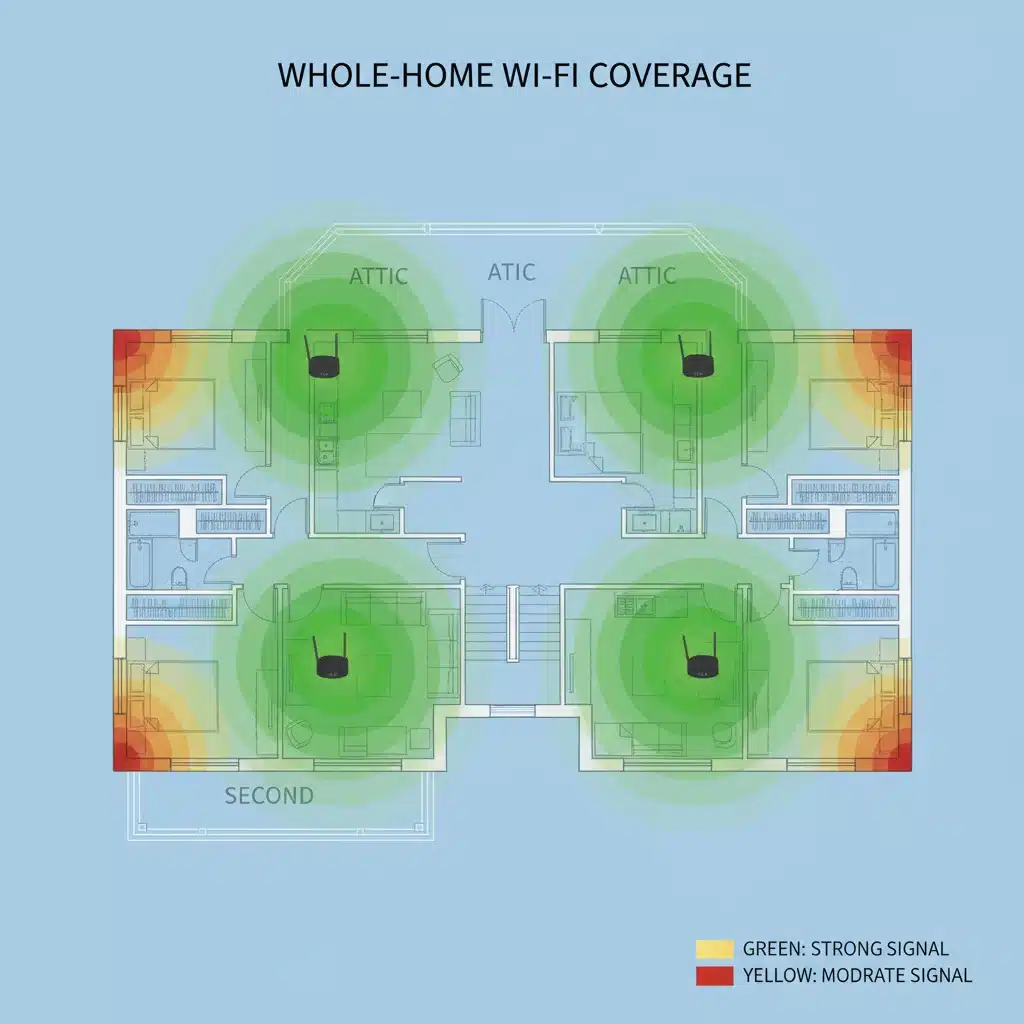
The placement of your mesh nodes is crucial. Start by placing the main router (connected to your modem) in a central location in your home, ideally in an open area away from large metal objects or appliances that can cause interference. Subsequent nodes should be placed roughly halfway between the main router and the areas needing better coverage, ensuring they have a good signal from the primary node. Avoid placing nodes in closets or behind thick walls. Experiment with placement to find the optimal configuration for your home’s unique layout. Most mesh systems offer a signal strength indicator within their app to help with this.
2. Utilize Wired Backhaul (if possible)
If your home has Ethernet wiring, connecting your mesh nodes via Ethernet (known as wired backhaul) will provide the absolute best performance. This frees up the wireless backhaul for client devices, leading to faster speeds and lower latency throughout your network. Even if only one or two nodes can be wired, it can significantly improve overall system performance, especially in larger homes or those with challenging layouts.
3. Keep Firmware Updated
Always ensure your mesh system’s firmware is up to date. Manufacturers frequently release updates that improve performance, add new features, and patch security vulnerabilities. Most modern mesh systems offer automatic updates, but it’s good practice to check periodically.
4. Leverage Quality of Service (QoS) Settings
If your system offers QoS, configure it to prioritize bandwidth for your most critical applications. For example, you can give priority to video conferencing during work hours or gaming traffic during leisure time. This prevents less critical activities from hogging bandwidth and impacting the performance of essential tasks.
5. Manage Interference
While Wi-Fi 6 has BSS Coloring to help with interference, minimizing other sources of interference is still beneficial. Keep your mesh nodes away from microwave ovens, cordless phones, baby monitors, and other electronics that operate on similar frequencies. If you live in a dense urban area with many neighboring Wi-Fi networks, your system’s automatic channel selection should help, but some advanced systems allow manual channel selection if you experience persistent issues.
6. Consider a Dedicated Guest Network
Utilize the guest network feature to provide internet access to visitors. This isolates their devices from your main network, enhancing security and potentially preventing them from consuming excessive bandwidth on your primary network. It’s a simple yet effective security measure.
Conclusion: The Future of Home Connectivity is Here
As we navigate 2026, the necessity of a robust and intelligent home network cannot be overstated. Wi-Fi 6 Mesh Systems have emerged as the definitive solution for achieving seamless, high-speed, and reliable internet coverage throughout your entire home. The days of struggling with dead zones, buffering, and dropped connections are rapidly becoming a relic of the past, thanks to the advancements brought by Wi-Fi 6 technology coupled with the inherent benefits of a mesh architecture.
Our review of System Alpha, System Beta, and System Gamma highlights the diverse options available, catering to different needs and budgets. System Alpha stands out as the ultimate performance powerhouse, ideal for large, demanding households that prioritize raw speed and extensive coverage. Its tri-band design with dedicated backhaul ensures that even the most bandwidth-intensive activities run without a hitch. System Beta shines as the smart home integrator, offering robust Wi-Fi 6 performance alongside deep compatibility with various smart home ecosystems, making it a perfect choice for those building an interconnected smart living space. Finally, System Gamma proves that exceptional whole-home Wi-Fi 6 doesn’t have to come with a premium price tag, delivering reliable performance and an incredibly easy setup experience for medium-sized homes on a budget.
Choosing the right Wi-Fi 6 Mesh Systems involves carefully considering your home’s size, your internet speed, the number of connected devices, and your specific usage patterns. By understanding the core technologies of Wi-Fi 6 and evaluating the features and performance of these top contenders, you are now well-equipped to make an informed decision. Investing in a quality mesh system is an investment in your home’s digital future, ensuring that every device, every stream, and every connection is as fast and reliable as it can be. Embrace the future of home connectivity and transform your internet experience with one of these leading Wi-Fi 6 mesh systems.