Wi-Fi 7 and Matter: Revolutionizing Smart Homes in 2026
The Latest in Wireless Protocols: How Wi-Fi 7 and Matter are Revolutionizing Home Automation in 2026
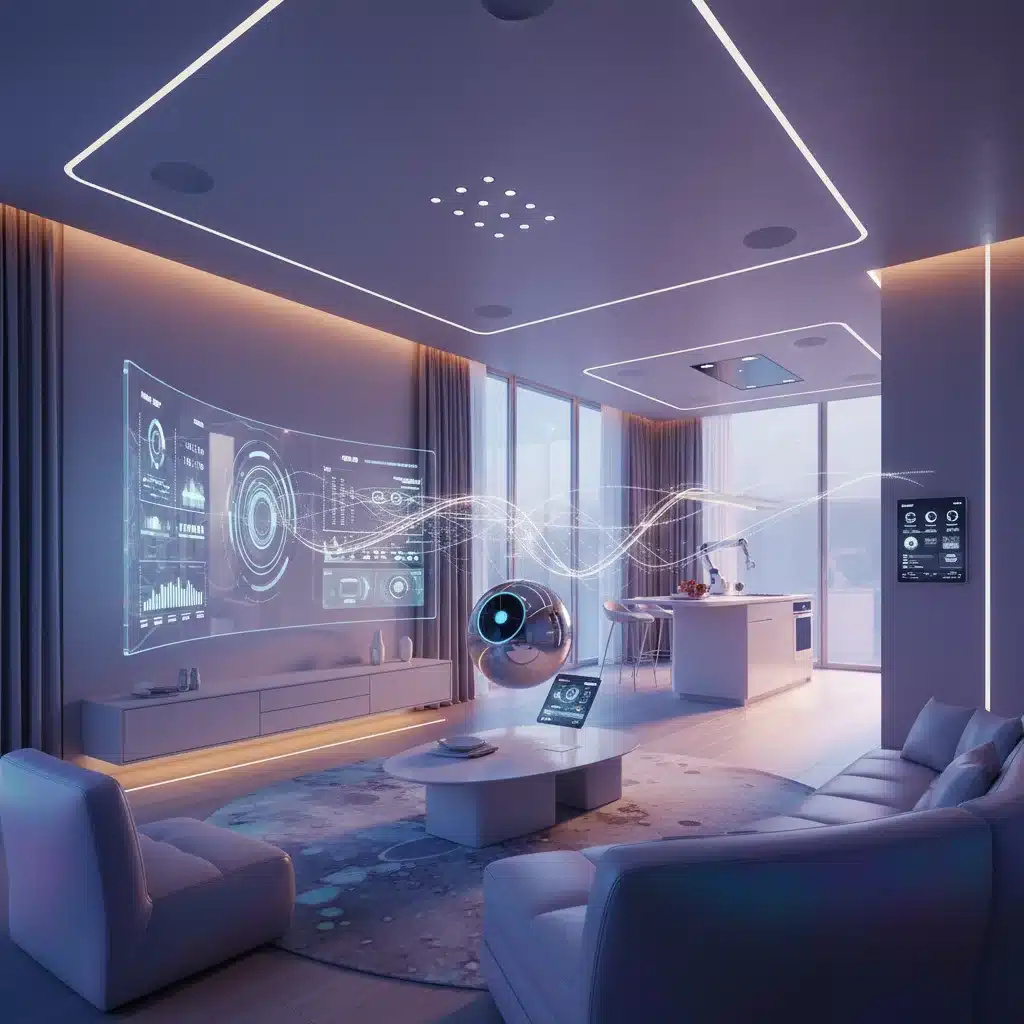
The landscape of home automation is undergoing a seismic shift, driven by relentless innovation in wireless technology. As we peer into 2026, two groundbreaking protocols, Wi-Fi 7 and Matter, stand poised to redefine our understanding of the smart home. Forget the fragmented, often frustrating experiences of yesteryear; the future promises a symphony of interconnected devices, operating with unprecedented speed, reliability, and seamless interoperability. This isn’t merely an upgrade; it’s a fundamental transformation that will make our homes smarter, more efficient, and infinitely more responsive to our needs.
For years, the promise of the truly smart home felt just out of reach. We’ve grappled with compatibility issues, sluggish performance, and complex setup processes. However, the convergence of Wi-Fi 7 and Matter is set to sweep away these challenges, paving the way for an era where every device, regardless of brand, speaks the same language at blistering speeds. This article will delve deep into the technical marvels of these protocols, exploring their individual strengths and how their combined power will unlock the full potential of home automation by 2026.
Understanding the Foundation: The Evolution of Wireless Connectivity Leading to Wi-Fi 7
Before we dive into the specifics of Wi-Fi 7, it’s crucial to appreciate the journey of wireless connectivity. From the early days of Wi-Fi 1 (802.11b) with its modest 11 Mbps, to Wi-Fi 6 (802.11ax) pushing gigabit speeds, each iteration has brought significant improvements in speed, capacity, and efficiency. However, the exponential growth of connected devices, particularly in the smart home ecosystem, has continually pushed the limits of existing standards.
Wi-Fi has traditionally been the backbone of home networking, connecting everything from laptops and smartphones to smart TVs and gaming consoles. With the proliferation of IoT devices—smart bulbs, thermostats, security cameras, door locks, and more—the demands on our home networks have skyrocketed. This increased density of devices often led to network congestion, latency issues, and a less-than-ideal user experience. This is precisely where Wi-Fi 7, also known as 802.11be or Extremely High Throughput (EHT), steps in as a game-changer.
Wi-Fi 7 is designed to address the challenges of dense networking environments and the ever-growing need for higher bandwidth and lower latency. It builds upon the successes of Wi-Fi 6 and Wi-Fi 6E, extending their capabilities and introducing revolutionary features that will directly benefit home automation. The goal is not just faster speeds, but a more robust, reliable, and efficient wireless network that can handle hundreds, if not thousands, of connected devices simultaneously without breaking a sweat.
Key Innovations Driving Wi-Fi 7’s Impact on Home Automation
So, what exactly makes Wi-Fi 7 such a pivotal technology for the future of smart homes? Several key innovations contribute to its superior performance:
- <strong>320 MHz Channels:</strong> While Wi-Fi 6E introduced the 6 GHz band, Wi-Fi 7 takes advantage of it by allowing for ultra-wide 320 MHz channels. This doubles the maximum channel size compared to Wi-Fi 6E, significantly increasing data throughput. Imagine streaming multiple 8K videos, engaging in lag-free VR experiences, and simultaneously running numerous smart home automations without any hiccups.
- <strong>4096-QAM (Quadrature Amplitude Modulation):</strong> This advanced modulation scheme allows Wi-Fi 7 to pack more data into each signal. With 4096-QAM, each symbol can carry 12 bits of data, a 20% increase over Wi-Fi 6’s 1024-QAM. This translates directly to higher speeds and greater efficiency, crucial for data-intensive smart home applications like high-resolution security camera feeds or sophisticated AI-driven home management systems.
- <strong>Multi-Link Operation (MLO):</strong> MLO is perhaps one of the most revolutionary features of Wi-Fi 7. It allows devices to simultaneously send and receive data across different frequency bands (2.4 GHz, 5 GHz, and 6 GHz). This provides several benefits: increased throughput by aggregating bandwidth from multiple bands, improved reliability by allowing seamless switching to the best available band, and reduced latency by enabling traffic prioritization. For home automation, this means your smart devices can communicate more reliably and quickly, even in congested environments, leading to instant responses and flawless execution of routines.
- <strong>Preamble Puncturing:</strong> This feature enhances spectrum efficiency. If a wide channel (e.g., 320 MHz) is partially occupied by another signal, Wi-Fi 7 can ‘puncture’ or skip the occupied segment and still use the remaining parts of the channel for transmission. This maximizes the use of available spectrum, reducing interference and improving overall network performance, which is vital in homes with many wireless devices.
- <strong>Enhanced OFDMA (Orthogonal Frequency-Division Multiple Access):</strong> Building on Wi-Fi 6, Wi-Fi 7 further refines OFDMA, allowing for even more efficient allocation of spectrum resources to multiple users simultaneously. This is particularly beneficial for smart homes with numerous low-bandwidth devices, ensuring that each device gets the resources it needs without hogging the network.
The cumulative effect of these advancements is a wireless network that is not only significantly faster but also far more resilient, efficient, and capable of handling the burgeoning demands of the modern smart home. With Wi-Fi 7, the foundation for truly intelligent and responsive home automation is firmly laid.
Matter: The Universal Language for Smart Home Devices
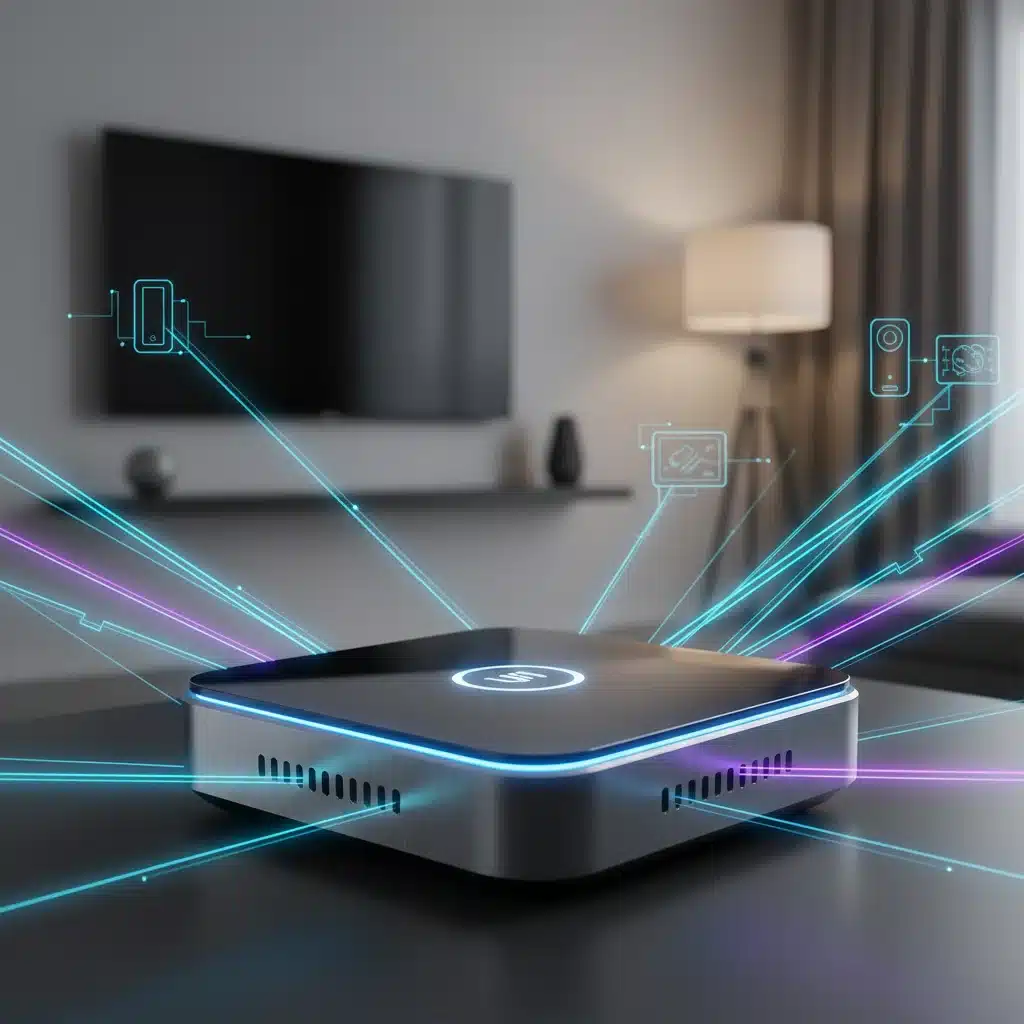
While Wi-Fi 7 provides the superhighway for data, the Matter protocol (originally known as Project CHIP – Connected Home over IP) provides the universal language that devices on that superhighway can understand. For years, one of the biggest roadblocks to widespread smart home adoption has been the fragmentation of ecosystems. You might have Philips Hue lights, a Ring doorbell, an Ecobee thermostat, and an Apple HomeKit hub, all operating on different protocols (Zigbee, Z-Wave, proprietary Wi-Fi, Bluetooth) and often requiring separate apps and bridges.
This creates a frustrating user experience, limits interoperability, and complicates setup. The Matter protocol, spearheaded by the Connectivity Standards Alliance (CSA) and backed by tech giants like Apple, Google, Amazon, and Samsung, aims to solve this problem once and for all. It is an open-source, royalty-free connectivity standard that sits on top of existing IP-based networking technologies like Wi-Fi, Ethernet, and Thread.
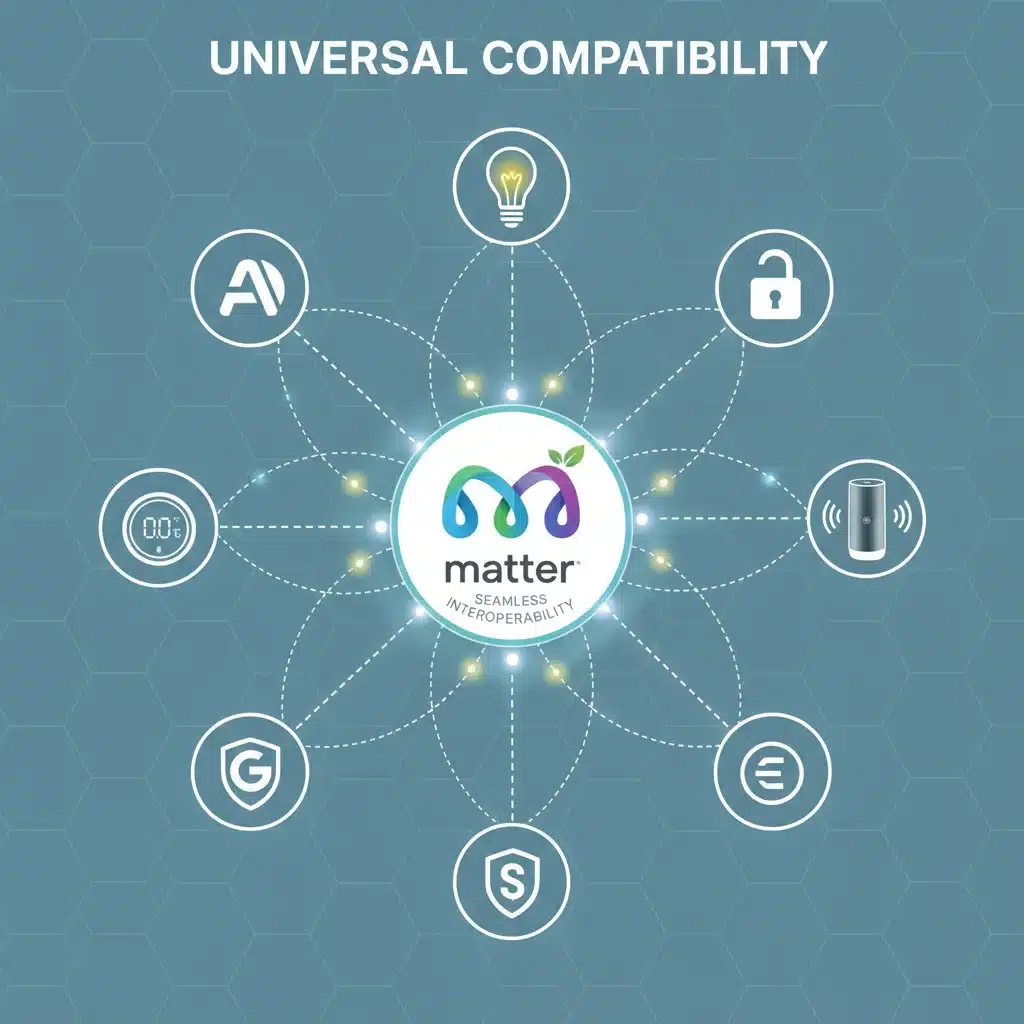
The core promise of Matter is simple: if a device is Matter-certified, it will work seamlessly with any other Matter-certified device, regardless of brand or ecosystem. This means you could, for instance, control your Google-branded smart lights using an Apple HomeKit app, or have your Amazon Alexa routine trigger a Samsung smart plug. This level of interoperability is unprecedented and is set to unlock a new era of simplicity and choice for consumers.
How Matter Achieves Universal Interoperability
The magic of Matter lies in its design principles and underlying technologies:
- <strong>IP-Based Foundation:</strong> By building on Internet Protocol (IP), Matter leverages the ubiquitous networking standard that underpins the internet. This allows devices to communicate directly over local networks without needing cloud-to-cloud communication for basic functions, improving speed, reliability, and privacy.
- <strong>Multi-Fabric Support:</strong> Matter is designed to run over Wi-Fi, Ethernet, and Thread. Wi-Fi provides high bandwidth for devices like cameras, while Thread (a mesh networking protocol) offers low-power, low-latency communication ideal for battery-powered sensors and light switches. This flexibility ensures that devices can choose the most appropriate underlying network technology for their needs.
- <strong>Simplified Onboarding:</strong> Matter aims to make device setup incredibly simple, often involving just scanning a QR code. This dramatically reduces the complexity that has long plagued smart home adoption.
- <strong>Local Control:</strong> A significant advantage of Matter is its emphasis on local control. Even if your internet connection goes down, Matter-certified devices on your local network can still communicate and operate, ensuring your smart home remains functional.
- <strong>Robust Security:</strong> Security is baked into the Matter standard from the ground up, with strong encryption and authentication mechanisms to protect your smart home from unauthorized access.
The introduction of Matter is not just about making devices talk to each other; it’s about simplifying the entire smart home experience, fostering innovation by reducing development barriers for manufacturers, and ultimately putting the user in complete control of their integrated home environment. This synergy with high-performance networks like Wi-Fi 7 is where the true revolution begins.
The Synergy: How Wi-Fi 7 and Matter Redefine Home Automation in 2026
The individual advancements of Wi-Fi 7 and Matter are impressive, but their combined impact is truly transformative. By 2026, we can expect a smart home ecosystem that is not only robust and reliable but also intuitive and effortlessly integrated. Here’s how their synergy will play out:
- <strong>Unprecedented Speed and Responsiveness:</strong> With Wi-Fi 7 providing multi-gigabit speeds and ultra-low latency, and Matter enabling direct, local communication, smart home commands will execute almost instantaneously. Imagine telling your smart assistant to ‘turn on the movie scene,’ and lights dim, blinds close, and the TV powers on without a perceptible delay. This level of responsiveness makes automation feel natural and integrated into daily life.
- <strong>Seamless Interoperability and Ecosystem Freedom:</strong> The biggest headache of smart home setup—compatibility—will largely disappear thanks to Matter. Users will no longer be locked into a single brand or ecosystem. Want a Google Nest Hub to control your Apple HomeKit lights and your Samsung SmartThings washing machine? Matter makes it possible. This freedom of choice will empower consumers and drive innovation as manufacturers compete on features and quality, not just ecosystem lock-in.
- <strong>Enhanced Reliability and Robustness:</strong> MLO in Wi-Fi 7 ensures that critical smart home communications remain stable even in congested environments, while Matter’s local control capabilities mean your automations won’t fail if your internet connection drops. This combination provides a level of reliability that has been sorely missing in many smart home setups.
- <strong>Simplified Setup and Management:</strong> The QR code-based onboarding of Matter devices, coupled with the robust and self-optimizing nature of Wi-Fi 7 networks, will significantly simplify the process of adding new devices and managing your smart home. No more complex network configurations or frustrating pairing processes.
- <strong>Scalability for the Future:</strong> As homes become increasingly filled with smart devices—from automated pet feeders to smart air quality monitors and robotic cleaners—the network needs to scale. Wi-Fi 7‘s increased capacity and efficiency, combined with Matter’s ability to manage a vast array of devices, ensures that your smart home infrastructure will be ready for whatever innovations come next.
- <strong>Advanced and Complex Automations:</strong> The foundation of speed and interoperability laid by Wi-Fi 7 and Matter will enable far more sophisticated and context-aware automations. Imagine your home reacting not just to your voice, but to your presence, your habits, and even external factors like weather, all orchestrated seamlessly through a network of devices that truly understand each other.
By 2026, the smart home will move beyond novelty and become an indispensable part of our daily lives, thanks to the foundational work of these two protocols. The friction points will be minimized, and the potential for intelligent, personalized living spaces will be maximized.
Real-World Applications and Use Cases in 2026 Smart Homes
Let’s envision some concrete scenarios that demonstrate the power of Wi-Fi 7 and Matter in action by 2026:
- <strong>Hyper-Responsive Security Systems:</strong> High-resolution 4K or even 8K security cameras leveraging Wi-Fi 7‘s 320 MHz channels will stream crystal-clear footage with zero latency. If a Matter-certified motion sensor (on Thread) detects activity, it instantly triggers a Matter-certified floodlight (on Wi-Fi) and sends a notification to your smartphone, all within milliseconds, thanks to the integrated communication fabric.
- <strong>Immersive Entertainment Zones:</strong> Your smart TV, soundbar, and ambient lighting (all Matter-certified) will communicate flawlessly over a Wi-Fi 7 network. Start a movie, and the lights automatically dim to the perfect level, the surround sound system calibrates itself, and even your smart blinds close—all orchestrated by a single command or schedule, with no buffering or lag.
- <strong>Energy-Efficient and Adaptive Climate Control:</strong> Matter-certified smart thermostats and HVAC systems will work in tandem with Matter-certified window sensors and smart blinds. If a window is opened, the AC automatically pauses. If the sun is beating down on a particular room, the blinds close, and the thermostat adjusts to maintain optimal comfort without wasting energy, all communicating efficiently via Wi-Fi 7.
- <strong>Personalized Wellness and Productivity Hubs:</strong> Imagine a smart home that adapts to your daily routine. As you wake up, Matter-certified smart lights simulate a sunrise, your coffee machine starts brewing, and a smart display shows your personalized news feed, all powered by the robust connectivity of Wi-Fi 7 and the seamless integration of Matter. Your home becomes an active participant in your well-being.
- <strong>Advanced Elder Care and Accessibility:</strong> For those needing assistance, the reliable and interconnected nature of Wi-Fi 7 and Matter can be life-changing. Fall detection sensors, smart medication dispensers, and emergency call buttons from different manufacturers can all communicate reliably, alerting caregivers or emergency services instantly, ensuring peace of mind and greater independence.
These examples merely scratch the surface of what’s possible. The true power lies in the freedom for users and developers to create increasingly complex, personalized, and beneficial automations without being constrained by technical limitations or brand silos.
Challenges and Considerations for Widespread Adoption
While the future painted by Wi-Fi 7 and Matter is bright, it’s important to acknowledge that widespread adoption and full realization of their potential will involve some challenges:
- <strong>Device Upgrades:</strong> To fully benefit from Wi-Fi 7, users will need compatible routers and client devices. Similarly, existing smart home devices will need firmware updates or new hardware to support Matter. This transition will take time and depend on manufacturers’ commitment.
- <strong>Cost of New Hardware:</strong> Early adopter costs for Wi-Fi 7 routers and Matter-certified devices might be higher initially, though prices are expected to decrease with scale.
- <strong>Consumer Education:</strong> Explaining the benefits of these new standards to the average consumer in a clear and compelling way will be crucial for driving demand and understanding.
- <strong>Security Vigilance:</strong> While Matter has robust security features, the sheer number of interconnected devices still presents an expanded attack surface. Ongoing vigilance, regular updates, and consumer awareness about best security practices will remain vital.
- <strong>Backward Compatibility:</strong> Ensuring that new Wi-Fi 7 networks and Matter hubs can still interact with older, non-Matter devices will be important during the transition period to avoid alienating existing smart home users.
Despite these challenges, the industry momentum behind both protocols is immense. The benefits are so compelling that the transition is not a question of ‘if,’ but ‘when,’ and by 2026, we anticipate significant progress towards a fully integrated and high-performance smart home ecosystem.
The Road Ahead: What to Expect Beyond 2026
The journey doesn’t end with Wi-Fi 7 and Matter. These technologies lay a robust foundation for future innovations. As we look beyond 2026, we can anticipate:
- <strong>AI and Machine Learning Integration:</strong> With faster data transfer and seamless communication, AI and ML algorithms will be able to process more data from smart home devices, leading to truly predictive and adaptive home environments that anticipate needs rather than just reacting to commands.
- <strong>Further Evolution of Wireless Standards:</strong> Just as Wi-Fi 7 builds on its predecessors, future Wi-Fi iterations will push boundaries even further, potentially offering even higher speeds and lower latency for applications we can only dream of today.
- <strong>Ubiquitous Sensing and Ambient Computing:</strong> Homes will become increasingly aware of their occupants and environment, with embedded sensors tracking everything from air quality to occupancy patterns, all communicating seamlessly through Matter and high-speed Wi-Fi.
- <strong>Enhanced Privacy Controls:</strong> As more data is collected, the importance of robust and user-friendly privacy controls will grow. Standards like Matter are already laying the groundwork for more local control, reducing reliance on cloud services.
The smart home of 2026, powered by Wi-Fi 7 and Matter, will be a testament to human ingenuity, transforming our living spaces into intelligent, responsive, and truly personalized environments. The era of fragmented, frustrating smart home experiences will largely be behind us, replaced by a cohesive and powerful ecosystem.
Conclusion: A New Era for Home Automation with Wi-Fi 7 and Matter
The convergence of Wi-Fi 7 and Matter represents a pivotal moment in the evolution of home automation. By 2026, these two protocols will have fundamentally reshaped how we interact with our living spaces, delivering a smart home experience that is faster, more reliable, and effortlessly interoperable. Wi-Fi 7 provides the high-speed, low-latency network backbone, while Matter offers the universal language for devices to communicate seamlessly, regardless of brand.
The days of struggling with incompatible devices and sluggish responses are drawing to a close. Instead, we are entering an era where our homes will intelligently anticipate our needs, respond instantly to our commands, and operate with an unprecedented level of efficiency. This powerful combination will not only simplify the smart home experience for consumers but also unleash a wave of innovation from manufacturers, leading to more sophisticated and beneficial applications.
As we move forward, embracing these new wireless protocols will be key to unlocking the full potential of our connected lives. The future of home automation is not just about more devices; it’s about making those devices work together harmoniously, intuitively, and efficiently. And by 2026, thanks to Wi-Fi 7 and Matter, that future will undoubtedly be here.