Integrating Matter Protocol: Future-Proof Your Smart Home by 2025
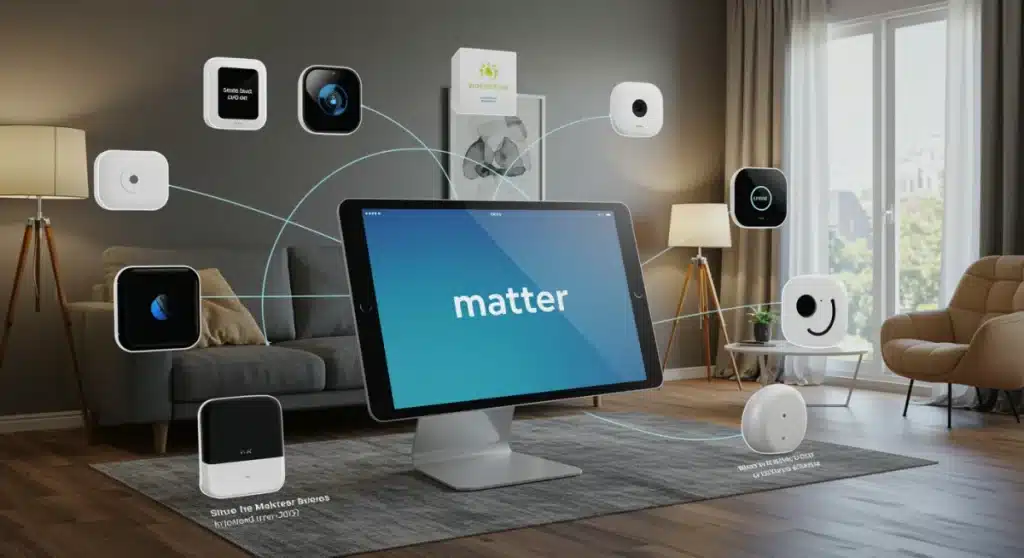
Integrating Matter Protocol is essential for future-proofing your smart home ecosystem by 2025, providing practical solutions and recent updates to streamline device compatibility and enhance overall user experience.
The landscape of smart home technology is constantly evolving, and at its forefront is the need for seamless interoperability. Integrating Matter protocol into your home automation setup is no longer just a futuristic concept but a practical necessity for ensuring your smart devices communicate effectively and efficiently.
Understanding the Matter Protocol: The Foundation of Future Smart Homes
The promise of a truly smart home has long been hampered by fragmentation. Different manufacturers, proprietary ecosystems, and a lack of universal standards often left consumers with a collection of devices that struggled to work together. Enter Matter, a new connectivity standard designed to address these challenges head-on. Launched by the Connectivity Standards Alliance (CSA), Matter aims to provide a unified language for smart home devices, promising unprecedented interoperability and ease of use.
Matter is built on existing, widely adopted technologies such as Wi-Fi, Thread, and Ethernet, making it highly adaptable and robust. This foundation allows devices to communicate locally, reducing reliance on cloud services and improving responsiveness. For homeowners, this means a simpler setup process, greater choice in devices, and a more reliable smart home experience. It’s about moving away from walled gardens and towards an open, inclusive ecosystem where your devices just work, regardless of brand.
The Core Principles of Matter
At its heart, Matter is about simplicity, reliability, and security. These principles guide its design and implementation, ensuring it meets the demands of modern smart homes.
- Simplicity: Matter aims for a straightforward setup process, allowing users to add new devices to their smart home ecosystem with minimal effort. This includes a unified pairing process and intuitive control interfaces.
- Reliability: By leveraging proven technologies like Thread and Wi-Fi, Matter ensures that devices maintain stable connections and respond consistently. Local control further enhances reliability by reducing dependence on internet connectivity.
- Security: Security is paramount in smart homes. Matter incorporates robust encryption and authentication mechanisms to protect user data and prevent unauthorized access to devices.
Understanding these core tenets is the first step in appreciating the transformative potential of Matter. It’s not just another protocol; it’s a paradigm shift that puts the user experience at the forefront, simplifying the complexities of smart home management and paving the way for truly intelligent living spaces.
Step 1: Assessing Your Current Smart Home Ecosystem
Before diving into any major upgrades, it’s crucial to take stock of your existing smart home setup. This assessment will help you understand which of your current devices are already Matter-compatible, which can be updated, and which might need to be replaced. A thorough inventory provides a clear roadmap for your Matter integration journey and helps you avoid unnecessary expenses.
Begin by listing all your smart devices, from smart bulbs and thermostats to security cameras and door locks. For each device, note its brand, model, and current connectivity protocol (e.g., Wi-Fi, Zigbee, Z-Wave, Bluetooth). This detailed list will be invaluable as you research Matter compatibility. Many leading brands are actively updating their existing products to support Matter, so a device you already own might become compatible with a simple firmware update.
Identifying Matter-Compatible Devices
- Check Manufacturer Websites: The most reliable source for compatibility information is the manufacturer’s official website. Look for announcements, product specifications, or FAQ sections related to Matter support.
- Look for the Matter Logo: New devices released with Matter support will prominently display the Matter logo on their packaging and product pages.
- Consult Third-Party Resources: Websites and forums dedicated to smart home technology often compile lists of Matter-compatible devices and provide insights into firmware update availability.
Beyond individual device compatibility, consider your smart home hub or controller. If you use a hub, check if it supports Matter as a controller. Many popular hubs from companies like Apple, Google, Amazon, and Samsung are being updated to act as Matter controllers, allowing them to manage and integrate Matter-enabled devices seamlessly. This initial assessment forms the bedrock for a successful Matter transition, ensuring you make informed decisions about your smart home’s future.
Step 2: Upgrading Your Network Infrastructure for Matter
Matter’s reliance on Wi-Fi and Thread means that a robust and stable network infrastructure is vital for optimal performance. While many modern homes already have Wi-Fi, understanding the specific requirements of Matter, especially regarding Thread, can significantly enhance your smart home’s responsiveness and reliability. This step focuses on ensuring your home network is ready to support a seamless Matter experience.
For Wi-Fi, ensure your router is up to date and provides adequate coverage throughout your home. A mesh Wi-Fi system can be particularly beneficial in larger homes, eliminating dead zones and providing a consistent connection for all your smart devices. Matter devices primarily use Wi-Fi for higher bandwidth needs, such as streaming video from cameras, and for initial setup. However, for most day-to-day operations and low-power devices, Matter leverages Thread.
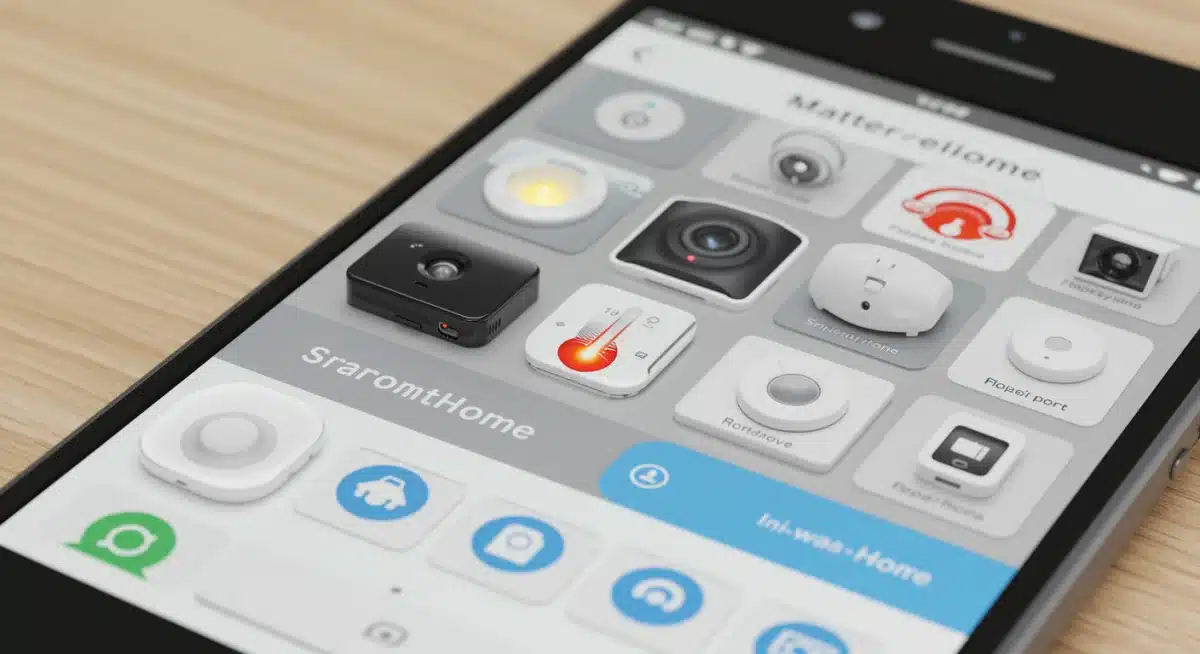
Embracing Thread for Enhanced Connectivity
Thread is a low-power, mesh networking protocol specifically designed for smart home devices. Unlike Wi-Fi, Thread creates a self-healing network where every Thread-enabled device can act as a router, extending the network’s reach and improving its resilience. This means that if one device goes offline, others can still communicate, ensuring continuous operation. To fully utilize Thread with Matter, you’ll need a Thread Border Router.
- What is a Thread Border Router? A Thread Border Router connects your Thread network to your Wi-Fi network, allowing Matter devices on Thread to communicate with other Wi-Fi devices and the internet. Many popular smart home hubs and devices, such as Apple HomePod mini, Google Nest Hubs, and some Eero routers, already function as Thread Border Routers.
- Benefits of Thread: Thread offers lower latency, improved energy efficiency for battery-powered devices, and a more robust network compared to traditional single-point wireless connections. This translates to faster response times for your smart devices and longer battery life.
Investing in a good mesh Wi-Fi system and ensuring you have at least one Thread Border Router will lay a strong foundation for your Matter-enabled smart home. This network upgrade isn’t just about compatibility; it’s about optimizing the performance and reliability of your entire smart home ecosystem, making it more responsive and resilient to future changes.
Step 3: Integrating New Matter-Certified Devices
With your network infrastructure ready and existing devices assessed, the next logical step is to begin integrating new Matter-certified devices. This stage is where you truly start to build out your future-proof smart home, taking advantage of the seamless interoperability Matter offers. The process is designed to be user-friendly, reducing the complexities often associated with adding new smart gadgets.
When purchasing new devices, always look for the Matter logo. This certification guarantees that the device adheres to the Matter standard and will integrate smoothly with other Matter-enabled products, regardless of brand. The beauty of Matter lies in its universal compatibility, meaning you no longer have to worry about whether a new smart bulb will work with your existing smart thermostat or voice assistant.
The Simplified Pairing Process
One of Matter’s most significant advantages is its streamlined pairing process. Gone are the days of needing multiple apps or complex configurations. Matter devices typically feature a QR code or a numerical pairing code that you scan or enter into your preferred Matter controller app (e.g., Apple Home, Google Home, Amazon Alexa).
- Scan and Connect: Simply scan the QR code on the device or its packaging using your Matter controller app.
- Automatic Detection: The controller will automatically detect the new device and guide you through a few simple steps to add it to your home.
- Cross-Ecosystem Integration: Once paired with one Matter controller, the device can often be easily shared across other Matter controllers in your home, allowing different family members to use their preferred apps or voice assistants to control it.
This simplified integration not only saves time but also reduces frustration, making smart home technology more accessible to a wider audience. As you expand your smart home with Matter-certified devices, you’ll notice a significant improvement in the overall coherence and responsiveness of your system, moving closer to the truly unified smart home experience that Matter promises.
Step 4: Centralizing Control with a Matter Controller
A key element of a future-proof smart home powered by Matter is the concept of a Matter controller. This device acts as the central brain of your Matter ecosystem, allowing you to manage and interact with all your Matter-enabled devices from a single interface. Choosing the right Matter controller is crucial for a unified and intuitive user experience.
Many popular smart home hubs and voice assistants are being updated to function as Matter controllers. This includes devices like Apple HomePod mini, Google Nest Hubs, Amazon Echo devices, and Samsung SmartThings hubs. The exciting part is that you’re not limited to a single brand; Matter allows you to use multiple controllers simultaneously, giving every member of your household flexibility in how they interact with the smart home.
Choosing Your Primary Matter Controller
- Familiarity and Ecosystem: Often, the best primary controller is one that integrates well with your existing smartphone and digital ecosystem. If you’re an iPhone user, Apple Home might be a natural fit; Android users might lean towards Google Home.
- Features and Interface: Consider the features offered by different controllers, such as dashboard customization, automation capabilities, and voice assistant integration. Evaluate which interface feels most intuitive and user-friendly for your daily needs.
- Thread Border Router Capability: As discussed earlier, many Matter controllers also double as Thread Border Routers. Opting for a controller with this capability simplifies your network setup and enhances the performance of your Thread-enabled devices.
Once you’ve selected your primary Matter controller, you can begin the process of adding your Matter-certified devices to it. This typically involves using the controller’s app to scan the device’s QR code or enter a pairing code. The controller then takes over the management of these devices, providing a single point of control for your lighting, climate, security, and entertainment systems. Centralizing control through a Matter controller streamlines your smart home experience, making it easier to manage, automate, and enjoy.
Step 5: Implementing Advanced Automations and Routines
Beyond basic device control, the true power of a Matter-integrated smart home lies in its ability to create sophisticated automations and routines. With all your devices speaking the same language, you can design scenarios that genuinely enhance convenience, energy efficiency, and security. This final step is about unlocking the full potential of your unified smart home ecosystem.
Matter’s interoperability allows you to create complex automations that involve devices from different manufacturers working in concert. Imagine a ‘Good Morning’ routine that not only turns on your smart lights and adjusts the thermostat but also starts your coffee maker and opens your smart blinds, all triggered by your alarm clock or the sunrise. The possibilities are vast, and they are no longer limited by brand specific silos.
Crafting Intelligent Scenes and Schedules
- Event-Based Triggers: Set up automations based on specific events, such as motion detection, door opening, or changes in temperature. For example, motion in your hallway could trigger lights to turn on and then off after a set period.
- Time-Based Schedules: Schedule devices to operate at specific times of the day or week. This could include turning lights off at bedtime, adjusting the thermostat during work hours, or running sprinklers in the early morning.
- Voice Commands: Integrate your automations with your preferred voice assistant. A simple command like “Goodnight” could lock your doors, turn off all lights, and arm your security system.
- Sensor Integration: Leverage data from various sensors (temperature, humidity, light, motion) to create reactive automations. For instance, if a room gets too warm, your smart blinds could automatically close and the AC could kick in.
The beauty of Matter is that these automations are more reliable and easier to set up because all devices are communicating through a standardized protocol. This reduces the risk of compatibility issues and ensures your routines run smoothly every time. By experimenting with advanced automations, you transform your smart home from a collection of gadgets into a truly intelligent and responsive living environment that adapts to your lifestyle, making your daily life more comfortable and efficient.
Recent Updates and What to Expect by 2025
The Matter protocol is a living standard, constantly evolving with new updates and features. Staying informed about these developments is crucial for keeping your smart home truly future-proof. Since its initial launch, Matter has seen significant progress, with more devices gaining certification and new functionalities being rolled out. The pace of innovation suggests an even more robust and versatile ecosystem by 2025.
One of the most exciting recent updates has been the expansion of device categories supported by Matter. Initially focused on lighting, plugs, and thermostats, the protocol now extends to areas like smart appliances, robotic vacuums, and even energy management devices. This broader scope means that more of your home’s infrastructure can be brought under the unified Matter umbrella, simplifying control and enabling more comprehensive automations.
Key Developments on the Horizon
- Enhanced Device Categories: Expect Matter to support an even wider array of devices, including more complex appliances and specialized sensors, providing greater choice and integration opportunities.
- Improved Energy Management: Future Matter updates are anticipated to include more sophisticated energy monitoring and management capabilities, allowing users to track consumption and optimize device usage for greater efficiency. This aligns perfectly with the goals of energy-conscious homeowners and the broader push towards sustainable living.
- Stronger Security Features: As smart homes become more central to our lives, security remains a top priority. Continuous enhancements to Matter’s security protocols will ensure that your data and privacy are protected against emerging threats.
- Simplified Onboarding for Complex Devices: The setup process, already streamlined, is expected to become even more intuitive for a broader range of devices, further lowering the barrier to entry for smart home enthusiasts.
By 2025, the vision of a truly plug-and-play smart home, where devices from any brand seamlessly interact, is expected to be largely realized thanks to Matter. This ongoing evolution means that investing in Matter today is an investment in a future-ready smart home that will continue to adapt and grow with your needs, ensuring long-term compatibility and value. Keeping an eye on announcements from the Connectivity Standards Alliance and major smart home brands will help you stay ahead of the curve and leverage the latest Matter advancements.
Troubleshooting Common Matter Integration Issues
While Matter is designed for simplicity, like any emerging technology, you might encounter a few hiccups during the integration process. Understanding common issues and their solutions can save you time and frustration, ensuring a smoother transition to a fully Matter-enabled smart home. Most problems stem from network configuration, device compatibility, or initial setup errors.
One frequent issue is a device failing to pair or connect. This can often be attributed to network congestion, an outdated router firmware, or interference from other wireless devices. Ensuring your Wi-Fi network is stable and that your Thread Border Router is functioning correctly are critical first steps. Also, always double-check that the device you’re trying to add is indeed Matter-certified and that its firmware is up to date.
Addressing Connectivity Challenges
- Network Interference: If devices are struggling to connect or stay connected, try repositioning your Wi-Fi router or Thread Border Router to minimize interference from other electronics.
- Firmware Updates: Always ensure your Matter controller and all Matter devices have the latest firmware. Manufacturers frequently release updates that improve compatibility and fix bugs.
- Power Cycle Devices: A simple power cycle (turning a device off and on again) can often resolve temporary connectivity glitches.
- Reset and Re-pair: If a device persistently fails to connect, perform a factory reset on the device and attempt the pairing process again. Refer to the device’s manual for specific reset instructions.
Another common scenario involves devices that appear connected but are unresponsive or show incorrect status. This might indicate issues with device-specific settings within your Matter controller app or a temporary communication breakdown. Verify the device’s settings within your controller, and if the problem persists, try removing and re-adding the device to your Matter ecosystem. Patience and systematic troubleshooting are key to overcoming these initial hurdles and enjoying the full benefits of your Matter-integrated smart home.
| Key Point | Brief Description |
|---|---|
| Matter’s Purpose | Unifies smart home devices across brands for seamless interoperability and ease of use. |
| Network Foundation | Leverages Wi-Fi and Thread for reliable local communication and extended range. |
| Centralized Control | Managed via a Matter controller (e.g., smart hub, voice assistant) for a unified interface. |
| Future-Proofing | Ensures long-term compatibility and adaptability as the smart home ecosystem evolves. |
Frequently Asked Questions About Matter Protocol
Matter is an open-source connectivity standard for smart home devices, developed by the Connectivity Standards Alliance (CSA). It aims to enable seamless communication between smart home devices from different manufacturers, ensuring greater compatibility, reliability, and ease of use for consumers.
Not necessarily. Many existing smart home hubs and voice assistants, such as Apple HomePod mini, Google Nest Hubs, and Amazon Echo devices, are being updated to act as Matter controllers. You might only need a firmware update for your current hub, or a Thread Border Router for Thread-enabled Matter devices.
Some older devices may receive firmware updates to become Matter-compatible, especially from major brands. However, many older devices designed for proprietary ecosystems may not support Matter and might need to be replaced if you want full Matter integration.
Integrating Matter offers numerous benefits, including enhanced device compatibility, simpler setup processes, improved reliability through local control, stronger security, and the ability to create more sophisticated automations across different brands, ultimately future-proofing your smart home.
Matter incorporates robust, industry-standard encryption and authentication protocols to secure communication between devices. Its design focuses on local control where possible, reducing reliance on cloud services and minimizing potential points of vulnerability for your smart home security ecosystem.
Conclusion
Integrating the Matter protocol into your smart home ecosystem is a strategic move towards a more connected, reliable, and user-friendly future. By following these five steps—assessing your current setup, upgrading your network, choosing Matter-certified devices, centralizing control, and implementing advanced automations—you are not just adopting a new technology; you are investing in a truly future-proof smart home. The continuous evolution of Matter, coupled with its core principles of simplicity, reliability, and security, ensures that your smart home will remain adaptable and responsive to the innovations of tomorrow, providing a seamless and intelligent living experience for years to come.