Build Your Smart Lighting Hub: 15% Energy Savings Annually by 2026
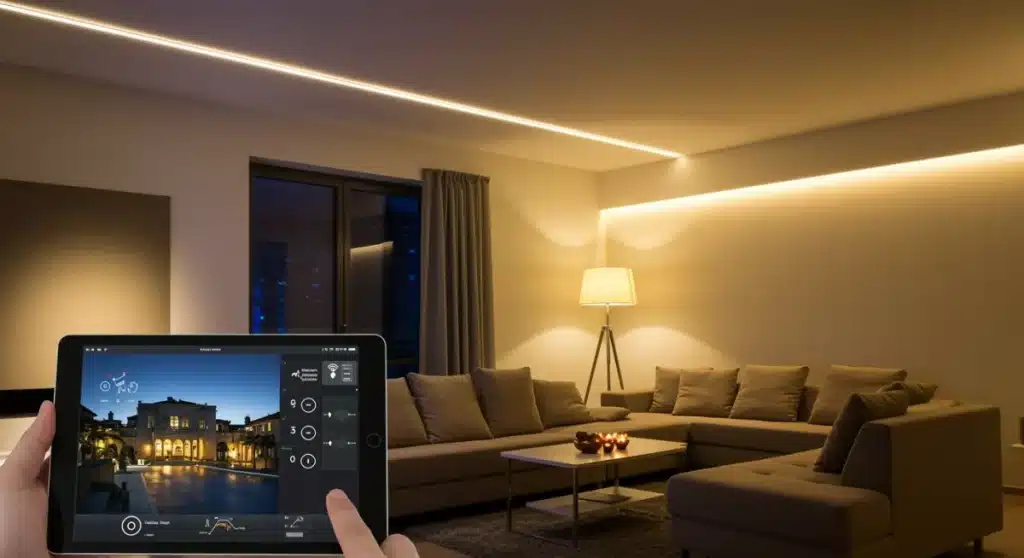
Building your own smart lighting hub can unlock substantial energy savings, potentially reaching 15% annually by 2026, through personalized control and optimized usage patterns.
Are you ready to transform your home into a beacon of efficiency and innovation? Learning to build your own smart lighting hub offers a powerful pathway to achieving significant energy savings, with projections indicating up to 15% annual reduction by 2026. This guide will illuminate the path to a brighter, more economical future for your home.
understanding the smart lighting ecosystem
The smart lighting ecosystem is a fascinating blend of hardware and software designed to give you unprecedented control over your home’s illumination. It’s more than just turning lights on and off; it’s about optimizing their use for comfort, security, and crucially, energy efficiency. By 2026, these systems have evolved to be incredibly intuitive and powerful, making DIY setups more accessible than ever.
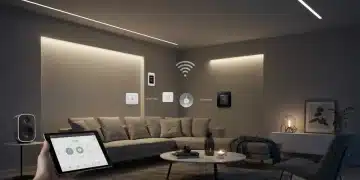
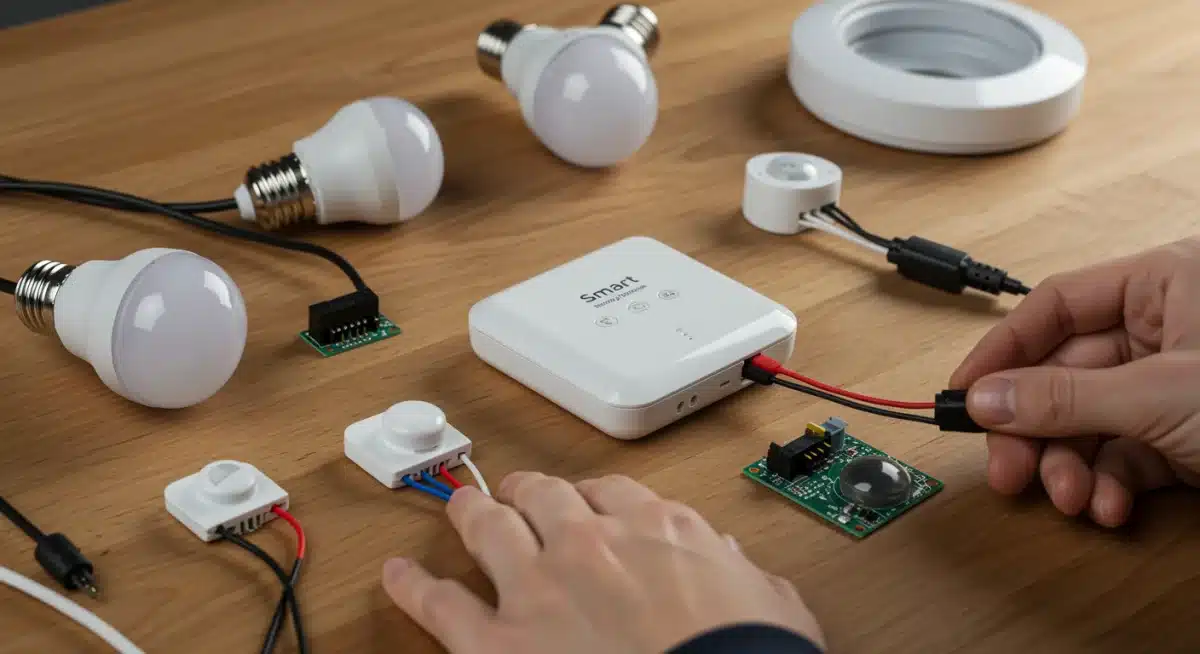
At its core, a smart lighting system consists of smart bulbs or fixtures, a central hub (or bridge), and a control mechanism, often a smartphone app or voice assistant. The hub acts as the brain, communicating with your smart lights and translating your commands into actions. This interconnectedness allows for complex routines and automations that traditional lighting cannot offer.
the role of the hub
The hub is arguably the most critical component of a robust smart lighting system. It bridges the gap between your home network and your smart lights, often using protocols like Zigbee, Z-Wave, or Wi-Fi. Without a dedicated hub, many smart bulbs rely solely on Bluetooth, which limits range and automation capabilities. A hub centralizes control, enabling seamless communication across all your devices.
- Centralized Control: Manage all your smart lights from a single application or interface.
- Enhanced Automation: Create complex schedules, scenes, and conditional automations.
- Broader Compatibility: Often supports a wider range of smart devices from different manufacturers.
- Improved Reliability: Dedicated network for smart devices reduces Wi-Fi congestion.
Understanding these foundational elements is the first step towards building a system that not only enhances your living space but also actively contributes to significant energy savings. The ability to precisely control when and how much light is used is a game-changer for household energy consumption.
selecting your smart lighting components
Choosing the right components is paramount to building an effective and energy-efficient smart lighting hub. The market is flooded with options, but a strategic selection based on compatibility, features, and future-proofing will ensure your DIY project is a success. Consider the specific needs of your home and your desired level of automation.
Start with the smart bulbs themselves. LED technology is standard in smart lighting, offering superior energy efficiency compared to traditional incandescent or fluorescent bulbs. Look for bulbs that offer dimming capabilities, color-changing options, and a wide range of brightness. These features not only enhance ambiance but also contribute to energy savings by allowing you to use only the light you need.
choosing the right smart bulbs
When selecting smart bulbs, pay close attention to the communication protocol they use. Wi-Fi bulbs connect directly to your home network but can sometimes strain your router if you have many. Zigbee and Z-Wave bulbs require a compatible hub but create a more stable mesh network, which is ideal for larger homes or numerous devices.
- Wi-Fi Bulbs: Easy setup, no hub required for basic functionality, but can create network congestion.
- Zigbee/Z-Wave Bulbs: Require a hub, offer a robust mesh network, excellent for larger setups and complex automations.
- Bluetooth Bulbs: Simple for single-room control, limited range, not ideal for a whole-home hub.
Beyond bulbs, consider smart switches or dimmers. These can transform existing ‘dumb’ lights into smart ones, offering control without replacing every bulb. Motion sensors, occupancy sensors, and daylight sensors are also invaluable for automating your lighting and maximizing energy savings. These sensors can trigger lights only when needed, ensuring no energy is wasted.
setting up your diy smart lighting hub
Embarking on the journey to set up your own smart lighting hub might seem daunting at first, but with a clear plan, it’s an incredibly rewarding DIY project. This process involves several key steps, from physically installing your chosen devices to configuring them within your chosen hub’s interface. The goal is to create a seamless, responsive, and energy-saving lighting system.
Begin by unboxing your smart hub and connecting it to your home network, usually via an Ethernet cable to your router. Power it on and wait for it to initialize. Most hubs will then guide you through an initial setup process via a companion smartphone app. This typically involves creating an account and connecting the hub to your Wi-Fi network.
integrating smart bulbs and devices
Once your hub is operational, the next step is to add your smart bulbs and other devices. The exact pairing process varies by manufacturer and protocol, but generally involves putting the smart device into ‘pairing mode’ and then initiating a search from your hub’s app. For Zigbee and Z-Wave devices, the hub will discover them and allow you to assign them to specific rooms or groups.
Consider the placement of your smart lights and sensors carefully. Motion sensors should be placed in high-traffic areas, while daylight sensors are best near windows to accurately measure ambient light. Proper placement ensures optimal performance and maximizes energy efficiency by providing light only when and where it’s truly needed. Test each device after pairing to confirm it’s responding correctly to commands.
leveraging automation for energy savings
The true power of a smart lighting hub, especially in the context of energy savings, lies in its automation capabilities. Simply replacing traditional bulbs with smart LEDs is a good start, but intelligent automation is what truly drives down consumption, potentially achieving that 15% annual reduction by 2026. This involves setting up routines, schedules, and responsive triggers.
Start with basic scheduling. Program lights to turn on and off at specific times, aligning with your daily routine. For example, lights in common areas can dim or turn off automatically late at night, and bedroom lights can gently brighten to wake you in the morning. This eliminates the possibility of lights being left on unnecessarily.
smart routines and scenes
Beyond simple schedules, smart hubs allow for the creation of complex routines or ‘scenes’ that respond to various inputs. Imagine your lights automatically adjusting based on the amount of natural light entering a room, or turning off when no one is detected for a certain period. These dynamic automations are where significant energy savings are realized.
- Motion-Activated Lighting: Lights in hallways or bathrooms turn on when motion is detected and off after a period of inactivity.
- Daylight Harvesting: Lights dim or turn off when sufficient natural light is available, saving energy without noticeable changes in illumination.
- Away Mode: Lights simulate occupancy when you’re away, enhancing security while using minimal power.
- Geofencing: Lights turn on as you approach home and off as you leave, ensuring you never come back to a dark house or leave lights on accidentally.
By thoughtfully implementing these automation strategies, your smart lighting hub transforms from a mere convenience into a powerful tool for energy management. These settings ensure that light is provided only when and where it’s truly necessary, minimizing waste and maximizing efficiency.
optimizing your smart lighting for maximum efficiency
Once your smart lighting hub is set up and running, the next crucial step is to continuously optimize its performance for maximum energy efficiency. This isn’t a one-time task but an ongoing process of refinement, leveraging data and advanced features to squeeze every last bit of savings out of your system. By 2026, smart home platforms offer sophisticated insights to aid this optimization.
Regularly review your automation rules and schedules. Are there areas where lights are still on longer than needed? Perhaps a motion sensor’s sensitivity needs adjustment, or a scheduled turn-off time could be moved earlier. Small tweaks can lead to cumulative savings over time. Pay attention to seasonal changes, as daylight hours shift, your schedules may need updating.
advanced control features
Many smart lighting platforms offer advanced features that can further enhance efficiency. Explore options like adaptive lighting, which automatically adjusts the color temperature and brightness of your lights throughout the day to mimic natural light cycles. This not only enhances well-being but can also optimize energy use by reducing reliance on artificial light during brighter parts of the day.
- Energy Monitoring: Some smart bulbs or hubs provide data on energy consumption, allowing you to identify power-hungry areas.
- Group Control: Grouping lights by room or zone allows for simultaneous control and scheduling, reducing manual adjustments.
- Integration with Other Smart Devices: Link your lighting to smart thermostats or blinds for a holistic energy-saving approach. For instance, if your thermostat detects you’re away, your lights can automatically switch off.
Consider integrating your smart lighting with other smart home devices. For example, if your smart thermostat detects that you’ve left the house, it can signal your lighting hub to turn off all non-essential lights. This interconnectedness creates a truly intelligent and efficient home ecosystem, ensuring no energy is wasted.
troubleshooting and future-proofing your diy setup
Even the most meticulously planned DIY smart lighting hub can encounter occasional hiccups. Knowing how to troubleshoot common issues and understanding how to future-proof your setup will ensure long-term reliability and continued energy savings. The smart home landscape is constantly evolving, so preparing for future advancements is key.
Common troubleshooting steps include checking network connectivity, ensuring devices are powered on, and verifying that the hub’s software is up to date. If a specific device isn’t responding, try re-pairing it with the hub. Sometimes a simple reboot of the hub or your home router can resolve connectivity issues.
staying current with technology
Future-proofing your DIY smart lighting hub means choosing components that adhere to open standards and are likely to receive ongoing software support. Platforms like Matter and Thread are designed to improve interoperability between devices from different manufacturers, making your system more flexible and adaptable to future innovations.
- Firmware Updates: Regularly check for and install firmware updates for your hub and smart devices to ensure optimal performance and security.
- Open Standards: Prioritize devices that support open communication protocols like Zigbee, Z-Wave, Matter, or Thread for better long-term compatibility.
- Scalability: Choose a hub that can support a growing number of devices, allowing you to expand your system as your needs evolve.
By keeping an eye on emerging technologies and maintaining your current setup, you ensure your DIY smart lighting hub remains a cutting-edge and efficient solution for years to come. This proactive approach safeguards your investment and continues to deliver significant energy savings.
| Key Aspect | Benefit for Energy Savings |
|---|---|
| DIY Hub Setup | Custom control tailored to specific household needs, avoiding pre-set inefficiencies. |
| Smart Bulb Selection | Choosing energy-efficient LEDs with dimming and color control reduces consumption. |
| Automation & Routines | Lights activate only when needed, based on schedules, motion, or daylight. |
| Optimization & Integration | Fine-tuning settings and linking with other smart devices for holistic energy management. |
frequently asked questions about diy smart lighting hubs
The primary benefit is achieving significant energy savings, estimated at 15% annually by 2026, through highly customized automation and precise control over your home’s lighting. A DIY hub allows for tailored solutions that off-the-shelf systems may not provide, perfectly matching your lifestyle and energy goals.
You’ll need a central smart home hub (like SmartThings or Hubitat), smart LED bulbs or fixtures compatible with your chosen hub’s protocol (Zigbee, Z-Wave), and optionally, smart switches, dimmers, or sensors (motion, daylight). These components work together to create an integrated and efficient lighting system.
Yes, achieving 15% annual energy savings is a realistic goal. This is primarily accomplished by leveraging automation features like scheduling, motion detection, and daylight harvesting, which ensure lights are only on when and where they’re needed. Switching to LED bulbs also contributes significantly to these savings.
While some technical aptitude is helpful, many modern smart home devices are designed for user-friendly installation. Most hubs offer intuitive app-based setup guides, and smart bulbs simply screw into existing sockets. The main challenge lies in configuring complex automation rules, but numerous online resources and communities are available for support.
To future-proof your setup, choose a hub and devices that support open smart home standards like Matter and Thread, which promote cross-brand compatibility. Regularly update firmware, and select a scalable hub that can accommodate additional devices as your smart home evolves. This ensures your investment remains relevant.
conclusion
Building your own smart lighting hub is more than just a tech project; it’s an investment in a more energy-efficient, comfortable, and responsive home. As we move towards 2026, the tools and technologies available for DIY smart home enthusiasts are more powerful and accessible than ever. By carefully selecting components, strategically implementing automation, and continuously optimizing your setup, you can unlock significant annual energy savings, potentially reaching the impressive 15% mark. This personalized approach to home automation empowers you to take control of your energy consumption, contributing to both your wallet and a more sustainable future.