Smart Speakers Showdown 2026: Best Home Automation Control
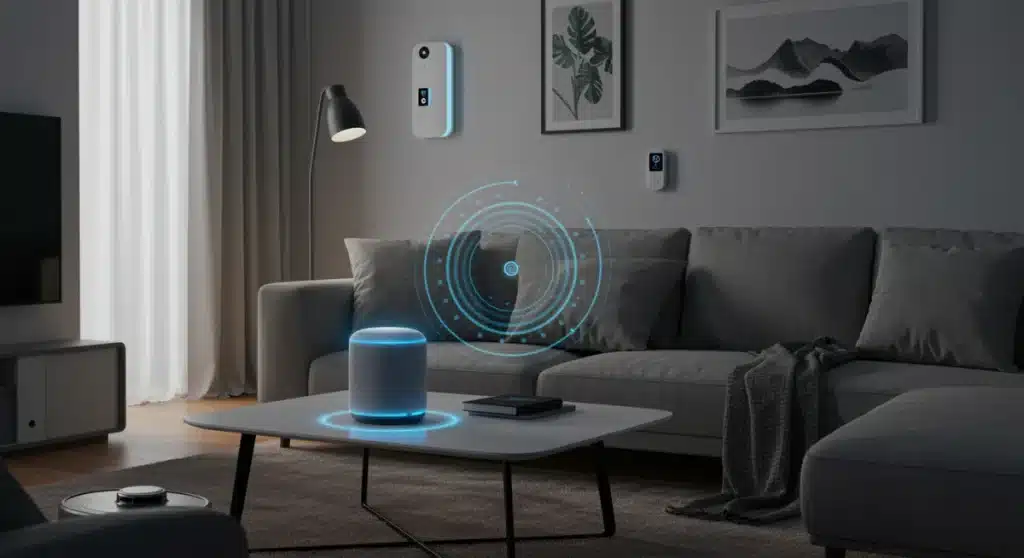
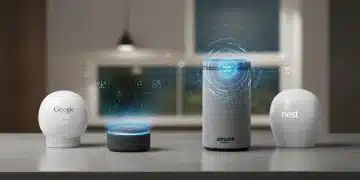
The 2026 smart speaker market presents advanced options for home automation; this article evaluates leading assistants to determine which provides the most seamless and effective control over your connected environment.
Welcome to the forefront of smart living, where the digital maestro of your home is more powerful and intuitive than ever. In the exciting landscape of 2026, the question isn’t just about owning a smart speaker, but rather, which one truly elevates your lifestyle through superior home automation control. This smart speakers automation control showdown delves deep into the capabilities of today’s leading voice assistants, guiding you to make the most intelligent choice for your connected abode.
The evolving landscape of smart home automation in 2026
The smart home ecosystem has undergone a significant transformation leading up to 2026, moving beyond simple voice commands to truly integrated and predictive systems. Users now expect their smart speakers to not only understand complex instructions but also anticipate needs and manage devices autonomously. This shift has placed immense pressure on manufacturers to innovate, focusing on seamless interoperability and advanced AI.
The core of this evolution lies in the convergence of various technologies. Artificial intelligence has become more sophisticated, enabling natural language processing that can decipher nuanced requests and learn user habits over time. Furthermore, advancements in sensor technology and edge computing mean that smart speakers can process more data locally, leading to faster response times and enhanced privacy. The overall goal is to create a home that feels less like a collection of gadgets and more like a cohesive, intelligent entity.
Interoperability standards and device compatibility
A major hurdle in previous years was the fragmented nature of smart home devices, often requiring multiple apps and hubs. By 2026, the adoption of universal standards like Matter has significantly improved interoperability, making it easier for devices from different brands to communicate seamlessly. This has empowered smart speakers to become true central controllers.
- Matter Protocol: Enables cross-platform compatibility for a wide range of smart devices, simplifying setup and control.
- Thread Networking: Provides a robust, self-healing mesh network for low-power devices, enhancing reliability and responsiveness.
- Open APIs: Many manufacturers now offer open application programming interfaces, fostering innovation and broader integration possibilities for developers.
The emphasis on open standards and robust compatibility means consumers have more freedom in choosing devices, knowing they will likely integrate well with their chosen smart speaker. This flexibility is crucial for building a personalized and effective smart home environment. The days of being locked into a single ecosystem are largely behind us, paving the way for a more user-centric approach to automation.
In conclusion, the 2026 smart home landscape is defined by advanced AI, improved interoperability, and a focus on user experience. Smart speakers are no longer just voice interfaces; they are intelligent hubs capable of orchestrating complex automation routines and adapting to dynamic household needs, making them indispensable for modern living.
Amazon Alexa: the established ecosystem and its evolution
Amazon Alexa has long been a dominant force in the smart speaker market, and by 2026, it continues to hold a significant position, largely due to its expansive ecosystem and continuous innovation. Alexa’s strength lies in its vast array of compatible devices and a mature platform that has evolved to offer more predictive and proactive automation capabilities. The integration with Amazon’s services, from shopping to entertainment, remains a key differentiator.
The core of Alexa’s appeal for home automation is its extensive skill library and routine creation. Users can craft intricate routines that trigger multiple actions based on time, sensor input, or voice commands. The introduction of ‘Adaptive AI’ in 2025 further enhanced Alexa’s ability to learn user preferences and adjust device behavior without explicit instructions, making automation feel more natural and less like programming.
Advanced routine creation and personalized experiences
Alexa’s routine builder has become incredibly sophisticated, allowing for multi-step actions and conditional logic. This means you can create scenarios that respond intelligently to your home’s environment and your daily schedule.
- Contextual Routines: Alexa can now infer context based on location, time of day, and even ambient noise, triggering routines like ‘evening unwinding’ when you arrive home after work.
- Sensor-Triggered Automation: Seamless integration with motion, contact, and environmental sensors allows for precise control of lighting, climate, and security systems.
- Voice Biometrics for Personalization: Advanced voice recognition enables personalized responses and actions, ensuring that routines and settings are specific to the individual speaking.
The ability to personalize experiences is paramount. Alexa’s voice biometrics ensure that your preferences are always prioritized, whether it’s adjusting your personal smart lighting scene or playing your favorite morning playlist. This level of customization fosters a deeper connection between the user and their smart home.
In summary, Amazon Alexa in 2026 stands out for its robust ecosystem, advanced routine capabilities, and increasingly personalized automation experiences. Its continued dominance is a testament to its commitment to evolving with user needs and maintaining a broad range of device compatibility.
Google Assistant: intelligent integration and predictive capabilities
Google Assistant, a formidable competitor, has carved its niche by focusing on deep integration with Google’s vast knowledge graph and AI-driven predictive capabilities. By 2026, Google Assistant excels in understanding complex, conversational queries and proactively offering assistance based on your calendar, location, and search history. Its strength in home automation stems from its powerful search capabilities and seamless integration with a wide array of smart home devices that leverage its foundational AI.
The Assistant’s ability to interpret natural language, even with nuanced commands, makes it incredibly user-friendly for controlling a smart home. Its ‘Ambient Computing’ initiative, fully realized by 2026, allows devices to work together in the background, anticipating needs and making your home feel more intuitive. This means your lights might dim automatically as sunset approaches, or your thermostat adjusts based on your typical schedule without you having to ask.
Seamless device management and cross-platform synergy
Google Assistant’s strength lies in its ability to manage diverse smart home devices from various manufacturers, often with a simpler setup process due to its strong support for Matter and Thread.
- Unified Home View: The Google Home app provides a centralized, intuitive dashboard for managing all connected devices, regardless of brand.
- Contextual Awareness: Leveraging Google’s extensive data, the Assistant understands context better, allowing for commands like ‘turn on the reading lights’ to activate specific lamps in the room you are currently in.
- Proactive Suggestions: Based on learned patterns, the Assistant can suggest new routines or adjustments, such as optimizing energy usage during peak hours.
The synergy across Google’s services, from Calendar to Maps, enriches the home automation experience. For instance, your home can prepare for your arrival by adjusting the temperature and turning on lights when your navigation app indicates you’re a few minutes away. This proactive approach significantly enhances convenience.
Ultimately, Google Assistant in 2026 offers an intelligent and deeply integrated approach to home automation, distinguished by its conversational AI and proactive, context-aware capabilities. Its focus on seamless device management and cross-platform synergy makes it an excellent choice for users seeking an intuitive and highly responsive smart home experience.
Apple HomeKit and Siri: privacy, security, and refined control
Apple HomeKit, powered by Siri, occupies a unique position in the 2026 smart speaker market, prioritizing privacy, security, and a meticulously curated user experience. While its ecosystem might be perceived as more exclusive compared to others, this focus ensures a high level of reliability and stringent security protocols. Apple’s approach emphasizes seamless integration within its own hardware and software ecosystem, offering a polished and consistent automation experience that appeals to users deeply invested in Apple products.
Siri’s evolution in 2026 has brought significant improvements in natural language understanding and responsiveness, especially when controlling HomeKit-enabled devices. The core strength remains its commitment to local processing for many commands, which enhances both speed and privacy. HomeKit’s architecture ensures that your home data is kept secure and private, a critical consideration for many discerning users.
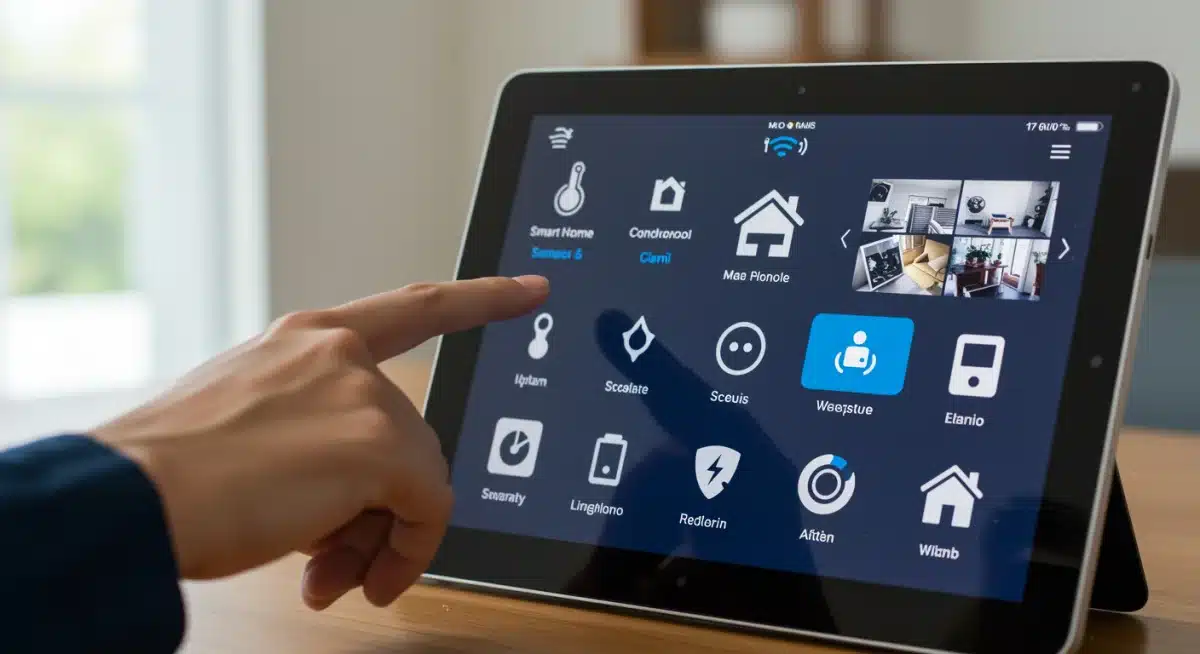
The Home app serves as the central hub for managing all HomeKit accessories, providing an intuitive interface for setting up scenes, automations, and checking device status. The integration with other Apple devices, such as the Apple Watch or iPad, allows for versatile control options beyond just the smart speaker.
Enhanced security features and robust device ecosystem
Apple’s dedication to security is a cornerstone of HomeKit, offering peace of mind to users concerned about data privacy in a connected home.
- End-to-End Encryption: All communication between HomeKit devices and your Apple devices is encrypted, ensuring data remains private.
- Local Processing: Many commands are processed locally on your HomeKit hub (like an Apple TV or HomePod), reducing reliance on cloud services and improving privacy.
- Strict Certification Process: Devices must meet rigorous security and quality standards to receive HomeKit certification, ensuring reliability and compatibility.
Beyond security, HomeKit offers a robust ecosystem of certified devices, ranging from smart lighting and thermostats to security cameras and door locks. While the selection might be smaller than some competitors, the quality and guaranteed compatibility are significant advantages. New partnerships and the broader adoption of Matter have also expanded the range of compatible devices in 2026, without compromising Apple’s core values.
In conclusion, Apple HomeKit and Siri in 2026 offer a premium smart home automation experience defined by unparalleled privacy, robust security, and seamless integration within the Apple ecosystem. For users who prioritize these aspects and appreciate a refined, consistent interface, HomeKit remains a top contender.
Emerging players and niche solutions in 2026
While Amazon, Google, and Apple dominate the smart speaker landscape, 2026 has seen the rise of several compelling emerging players and niche solutions that cater to specific user needs or offer innovative approaches to home automation. These alternatives often focus on specialized functionalities, enhanced privacy models, or open-source flexibility, providing valuable options beyond the mainstream offerings. Their growth signifies a maturing market where diverse consumer demands are being met with tailored products.
Some of these emerging platforms leverage advanced AI models specifically designed for localized processing, reducing reliance on cloud services and significantly boosting privacy. Others focus on specific verticals, such as advanced energy management or sophisticated security integrations, offering deeper control than general-purpose assistants. The competitive pressure from these innovative players is also pushing the established giants to further refine their offerings, ultimately benefiting consumers.
Specialized assistants and open-source alternatives
- Voice Assistants with Local Processing: Companies like ‘Mycroft AI’ (though still niche) and newer startups are focusing on entirely local voice command processing, appealing to privacy-conscious users.
- Energy Management Hubs: Integrated smart speakers that double as advanced energy monitors, optimizing appliance usage and suggesting energy-saving routines based on real-time grid data.
- Open-Source Platforms: Projects like Home Assistant, when paired with compatible hardware, offer unparalleled customization and control for tech-savvy users, though requiring more technical expertise.
These specialized solutions often provide an unmatched level of control and data privacy, which can be highly attractive to certain segments of the market. While they may not have the broad device compatibility of the larger players, their depth of features in their chosen niche can be a significant advantage.
In summary, the emerging players and niche solutions in 2026 demonstrate the dynamic nature of the smart speaker market. They offer valuable alternatives for users seeking specialized functionalities, enhanced privacy, or the ultimate in customization, proving that innovation continues beyond the established giants.
Key factors in choosing your smart speaker for home automation
Selecting the right smart speaker for your home automation needs in 2026 involves more than just picking a popular brand; it requires a careful evaluation of several critical factors that impact functionality, user experience, and future-proofing. The ideal choice will seamlessly integrate with your existing devices, cater to your privacy preferences, and offer the level of control and intelligence you desire for your connected home. Understanding these factors is paramount to making an informed decision.
Consider your current smart home ecosystem. Are you already invested in a particular brand’s devices? Compatibility with your existing setup should be a primary concern to avoid fragmentation and ensure a smooth transition. Furthermore, think about the complexity of the automation routines you envision. Some assistants excel at simple commands, while others offer deep, customizable scripting for intricate scenarios. Your daily habits and technological comfort level will heavily influence which platform feels most intuitive.
Compatibility, privacy, and future-proofing your investment
These three pillars are fundamental to a satisfactory long-term smart home experience.
- Device Compatibility: Ensure the smart speaker supports the communication protocols (e.g., Matter, Thread, Zigbee, Z-Wave) and brands of your current and future smart devices.
- Data Privacy and Security: Research each platform’s data handling policies, encryption methods, and commitment to user privacy, especially concerning voice recordings and personal data.
- Ecosystem Longevity and Updates: Choose a platform with a strong track record of continuous software updates, new feature rollouts, and a commitment to long-term support for its devices.
Future-proofing your investment also means considering how easily the system can adapt to new technologies and expand with your growing smart home needs. A platform that embraces open standards and offers robust developer support is more likely to remain relevant and functional for years to come.
In essence, choosing your smart speaker for home automation in 2026 is a strategic decision. By carefully weighing compatibility, privacy, and the longevity of the ecosystem, you can select a device that not only meets your current needs but also provides a flexible and secure foundation for your evolving smart home.
The future of smart speakers and home automation beyond 2026
Looking beyond 2026, the trajectory of smart speakers and home automation points towards even deeper integration, enhanced predictive intelligence, and a more ambient, less intrusive user experience. The concept of a ‘truly smart’ home will evolve from reacting to commands to proactively managing the environment based on complex algorithms that understand human behavior and intent. This future promises a home that anticipates needs before they are even articulated, creating an environment that adapts seamlessly to its occupants.
We can expect further advancements in multimodal interaction, where voice, gestures, and even biometric data work in concert to provide a richer control interface. The line between smart speakers and other smart home devices will blur, with voice assistants becoming embedded in more appliances and surfaces throughout the home. Energy efficiency will also become a primary driver, with smart systems dynamically optimizing consumption based on real-time energy prices and environmental impact.
Hyper-personalization and ethical AI considerations
The drive towards hyper-personalization will define the next generation of smart home experiences, alongside critical ethical considerations.
- Emotional Intelligence: Future assistants may detect user emotional states through voice analysis and adjust home environments (lighting, music, temperature) accordingly.
- Predictive Maintenance: Smart speakers, integrated with appliance sensors, could predict maintenance needs for devices, scheduling repairs or ordering parts proactively.
- Ethical AI Frameworks: Increased scrutiny and regulation around data privacy, algorithmic bias, and the transparency of AI decision-making will shape development.
The challenge will be to balance unparalleled convenience and personalization with robust privacy safeguards and ethical AI practices. Consumers will demand greater transparency in how their data is used and how decisions are made by their intelligent home systems. The industry will need to navigate these ethical complexities carefully to maintain user trust and foster widespread adoption.
In conclusion, the future of smart speakers and home automation beyond 2026 is one of profound intelligence, seamless integration, and hyper-personalization. While promising immense convenience, it also necessitates a strong focus on ethical AI and robust privacy measures to ensure these advanced technologies serve humanity responsibly.
| Key Aspect | Description |
|---|---|
| Amazon Alexa | Expansive ecosystem, vast device compatibility, advanced routine creation, and personalized experiences. |
| Google Assistant | Intelligent integration with Google services, predictive capabilities, and seamless cross-platform synergy. |
| Apple HomeKit/Siri | Prioritizes privacy and security, refined control within Apple’s ecosystem, and strict device certification. |
| Emerging Solutions | Niche players offering specialized functions, enhanced privacy, or open-source customization for specific user needs. |
Frequently asked questions about smart speakers and home automation
The most significant advancement by 2026 is the widespread adoption of universal interoperability standards like Matter, alongside highly sophisticated AI that enables predictive and adaptive home automation routines. This translates to a more seamless and intuitive user experience across diverse devices.
Privacy has significantly improved with increased local processing capabilities, reducing reliance on cloud services for many commands. Platforms like Apple HomeKit prioritize end-to-end encryption, and emerging players focus on entirely offline voice assistants, offering users more control over their data.
Yes, by 2026, the Matter protocol has vastly improved interoperability, allowing you to mix and match devices from various brands. Most major smart speakers now support Matter, ensuring that your chosen assistant can control a wide range of compatible smart home gadgets effectively.
Both Amazon Alexa and Google Assistant offer highly advanced and customizable routine creation tools, allowing for complex, multi-step automations triggered by various conditions. Apple HomeKit also provides robust scene and automation capabilities, particularly within its ecosystem, focusing on reliability and security.
Beyond 2026, expect hyper-personalization driven by emotional intelligence, predictive maintenance features, and even deeper ambient computing. Ethical AI frameworks and transparency in data usage will also become more critical, shaping how these technologies are developed and deployed in homes.
Conclusion
The smart speakers automation control landscape in 2026 is incredibly dynamic, offering sophisticated solutions for every type of smart home enthusiast. Whether you prioritize Amazon Alexa’s expansive ecosystem, Google Assistant’s intelligent integration, or Apple HomeKit’s unwavering commitment to privacy and security, each platform presents compelling advantages. Emerging players also offer specialized functionalities for niche needs. The key to making the best choice lies in understanding your personal requirements for compatibility, privacy, and desired level of automation complexity. As technology continues its rapid evolution, selecting a smart speaker that not only meets your current needs but also offers a pathway to future innovations will ensure your home remains at the forefront of intelligent living.