

Remember when asking a smart speaker for the weather felt like a glimpse into the future? That era of simple voice commands is rapidly becoming obsolete. We’ve moved beyond treating our devices like voice-activated remote controls for timers and playlists. The basic relationship with our home technology is changing from a reactive one, where we issue orders, to a proactive partnership where the home itself begins to anticipate our needs.
This evolution is powered by a quiet revolution in the background: the shift from basic programming to predictive intelligence. Instead of relying on you to build every single routine, the next generation of AI home assistants leverages machine learning and contextual awareness to learn your patterns. They analyze the time of day, your location, and even the status of other connected devices to create a living environment that adapts in real-time. This is the core concept of ambient intelligence, where technology seamlessly integrates into our lives rather than demanding our constant attention.
But how does this translate into a home that feels uniquely yours? This article explores the technologies driving this change, from behavioral algorithms to environmental sensors. We’ll compare how the major players—Amazon’s Alexa, Google Assistant, and Apple’s HomeKit—are tackling the challenge of personalization, each with a different philosophy on data and user control. Finally, we’ll provide a practical guide to help you move beyond simple commands and start crafting technical, personalized routines that make your daily life smoother and more intuitive.
The Evolution of AI Home Assistants: More Than Just Voice
Remember when asking your smart speaker for the weather felt like living in the future? Those days are surprisingly primitive now. The initial wave of AI home assistants were essentially voice-activated remote controls, useful for setting timers or playing a specific song. They were obedient listeners, but they lacked any real intelligence. This entire model is becoming obsolete.
The new generation of devices is shifting from reactive commands to proactive assistance. Instead of waiting for you to speak, they learn your patterns and anticipate your needs. The old model was like a basic calculator; you had to input every single step to get an answer. Today’s systems are becoming more like a personal assistant who knows you prefer a brightly lit kitchen in the morning and a dimmer living room in the evening—without you ever having to ask.
This push towards smarter automation is fueling massive market growth. A recent report from Precedence Research indicates the global smart home market is projected to reach approximately $622.59 billion by 2030. Much of this expansion isn’t just from selling more speakers, but from developing a deeper form of ambient intelligence that integrates seamlessly into our lives.
The focus has moved from commands to context.
What most people miss is that this evolution is powered by technical learning algorithms analyzing daily habits. This is a core part of the latest AI-powered connected home trends, where the goal is a home that adapts to its occupants in real-time. But how does this broad technological shift translate into creating routines that are uniquely and personally yours?
Key Technologies Driving Personalized Routines in Smart Homes
The illusion that you are “programming” your smart home is fading fast. The truth is, the house is learning to program itself around you. This shift isn’t powered by better microphones or speakers, but by a silent trio of technologies working in the background. They are the engines turning a collection of gadgets into a responsive environment.
Machine Learning for Behavioral Insights
At its core, machine learning is simply advanced pattern recognition. Your AI assistant isn’t thinking; it’s calculating probabilities based on your past actions. It observes that you consistently lower the thermostat to 68°F around 10 PM and, after enough data points, begins suggesting or even automating the change. This is the difference between a command-based system and a predictive one.
This goes far beyond simple schedules. The system learns correlations you might not even notice yourself. For instance, it might detect that on days you use your smart bike, you ask for a higher humidity level from the air purifier an hour later. According to a recent survey by Statista, over 60% of users desire smart home devices that learn their habits without manual input. What most people miss is how these seemingly minor observations build a complex digital profile of your life, forming the backbone of intelligent connected home trends.
It acts like a digital roommate who learns your habits—sometimes better than you do.
Contextual Awareness and Environmental Adaptation
Behavioral data alone is incomplete. True personalization requires contextual awareness, which means the system understands not just what you do, but the circumstances surrounding those actions. It pulls data from a variety of sources: the time of day, your phone’s GPS location (geofencing), local weather forecasts, and even the status of other connected devices in the home.
Is it a gloomy, rainy morning? The system might automatically brighten the lights to 80% intensity and start your “focus” playlist, deviating from the typical sunny day routine. This ability to adapt to external factors is a cornerstone of ambient intelligence, where technology seamlessly integrates with the environment. This same data could inform a smart mirror to display the day’s UV index and air quality, suggesting appropriate skincare. Your home stops just reacting to you and begins reacting to the world on your behalf.
The goal is an environment that anticipates needs based on a holistic view of your life, not just a set of isolated commands. But this raises a critical question: where does helpful prediction end and intrusive surveillance begin?
The best interface is no interface. The technology should disappear into the background, anticipating your needs and serving you, not the other way around.
— Dr. Anya Sharma, Futurist at the Institute for Ambient Computing
| Feature | Amazon Alexa | Google Assistant | Apple HomeKit |
|---|---|---|---|
| Key Strength | Vast device compatibility and granular routine builder. | Proactive suggestions and predictive actions using Google’s data ecosystem. | Strong focus on user privacy with on-device processing. |
| Personalization Approach | User-driven; relies on the user to manually build complex routines. | Data-driven; leverages personal data (Calendar, Maps) to anticipate needs. | Privacy-first; automations are powerful but require deliberate setup by the user. |
| Device Compatibility | Largest ecosystem with tens of thousands of compatible devices. | Large and growing ecosystem, integrates deeply with Android and Nest. | More limited, curated ecosystem due to strict certification requirements. |
| Privacy Model | Cloud-based processing; relies heavily on user data and voice recordings. | Cloud-based processing; uses extensive personal data for predictive features. | Local processing on a home hub (Apple TV/HomePod); minimal data sent to the cloud. |
Top AI Home Assistants Excelling in Personalization Today
The machine learning concepts sound impressive, but their real-world application is where the rubber meets the road. Most people assume the big three AI assistants are interchangeable, offering slightly different flavors of the same voice-command functionality. This is a core misunderstanding. The truth is that each platform has a distinct philosophy on personalization, leading to different user experiences.
Some prioritize a massive, open ecosystem, while others bet on predictive analytics or a privacy-first walled garden. The best AI home assistants for personalized routines aren’t just about responding to “good morning”; they’re about anticipating your needs before you even speak. What most people miss is that the assistant you choose today locks you into a specific vision for the future of home automation.
Amazon Alexa’s Routine Customization
Amazon’s approach with Alexa is one of sheer scale and user-driven control. Its greatest strength lies in the staggering number of compatible devices and the granularity of its Routine builder. You can create complex, multi-step sequences triggered by voice, time of day, smart home sensors, or even sounds like a baby crying. The ecosystem is massive.
But is a vast library of “Skills” the same as genuine intelligence? The data suggests a gap. A recent user study by the Consumer Technology Association found that while Alexa has a 72% satisfaction rating for device compatibility, users often feel overwhelmed by the setup process. Alexa doesn’t learn your habits so much as it waits for you to program them — it’s less of a thinking partner and more of an obedient, if slightly complicated, digital butler. This approach contrasts sharply with the growing field of ambient intelligence, which aims for smooth, invisible automation.
Google Assistant’s Predictive Actions
Google Assistant is playing a different game entirely. Instead of waiting for you to build every routine from scratch, it leverages its deep integration with Google services (Calendar, Maps, Gmail) to predict your needs. This is where features like “Home & Away Routines” shine, automatically adjusting thermostats and lights based on your phone’s location without any direct command.
This predictive power is its defining feature. Google’s internal data shows that users with linked calendars are 43% more likely to engage with proactive suggestions, such as traffic alerts for their next appointment. The underrated factor here is how this system learns your daily rhythms, almost like a roommate who learns when you need your coffee. The trade-off, of course, is data; providing this level of personalization requires giving Google a significant window into your daily life, a compromise not everyone is comfortable with.
Apple HomeKit’s Automation and Privacy Focus
Apple’s HomeKit operates on a foundation of security and privacy, a stark contrast to its data-hungry competitors. All automation processing happens locally on a home hub device (like an Apple TV or HomePod), not in the cloud. This design choice severely limits data collection, which is a massive selling point for privacy-conscious consumers.
The platform’s “Automations” are powerful, allowing for complex triggers based on who is home, sensor data, or time. the ecosystem is notoriously restrictive. The “Works with Apple HomeKit” certification process is stringent, resulting in fewer compatible devices compared to Alexa or Google. This creates a high-quality but limited environment, a classic Apple trade-off. It’s the difference between a curated tasting menu and a sprawling buffet — one offers choice, the other offers a controlled experience.
Siri’s Role in HomeKit Routines
Siri is the voice interface for HomeKit, but it’s not the brains of the operation in the same way Alexa is for Amazon’s ecosystem. Siri’s primary function is to activate scenes and automations you’ve already built in the Home app. While Siri Shortcuts allow for powerful custom voice triggers that can link multiple apps, its on-device processing means it lacks the contextual, cloud-based awareness of Google Assistant.
It can’t, for example, scan your email for a flight reservation and suggest a “travel day” routine. This limitation is a direct result of Apple’s privacy stance. Exploring the latest trends in smart homes driven by AI shows a split between systems that prioritize data-driven prediction and those that prioritize on-device privacy. Apple has firmly planted its flag in the latter camp, forcing users to be more deliberate in creating their personalized home experience.

Crafting Your Perfect Personalized Smart Home Routine: A Step-by-Step Guide
Most people think a smart home routine is just telling an assistant to turn on the lights and play a song. That’s not smart; it’s a glorified remote control. True automation anticipates your needs before you even speak. The underrated factor here is moving from explicit commands to implicit triggers, creating a home that responds to your life, not just your voice.
A recent survey from Statista shows that while over 45% of smart home owners use voice commands daily, fewer than 18% have configured multi-step routines that involve more than two devices. It’s a huge missed opportunity. The real power lies in creating complex sequences that make your daily life smoother.
Identifying Your Daily Needs and Triggers
Before you even open an app, map out your day. Forget the technology for a moment and just think about your own repetitive actions. What do you do every morning when you wake up? What’s the last thing you do before leaving the house? These are the foundational blocks of your personalized routines. Think of it less like a simple command and more like setting up a series of dominoes; one trigger should set off a perfectly timed chain reaction.
The magic isn’t just in the actions, but in the triggers. A “Good Morning” voice command is basic. But what if the trigger wasn’t your voice, but the environment itself? Modern systems allow for a concept known as ambient intelligence, where sensors take the lead. For example, your alarm disarming at 6:30 AM could trigger the lights to slowly fade on, the thermostat to adjust, and your coffee maker to start brewing. This is where the true convenience of a connected home begins to surface.
Configuring Actions and Conditions Across Devices
Once you’ve identified your pain points and potential triggers, it’s time to build the routine within your assistant’s app (like Google Home or Amazon Alexa). The process generally follows a simple, logical path. It’s about creating a recipe where one event causes several others to happen in sequence.
- Select Your Trigger: This is the “If” part of your “If This, Then That” equation. It could be a voice command (“I’m leaving”), a specific time (sunset), a sensor reading (the front door unlocks), or even your phone’s location (you arrive home).
- Add Your Actions: This is the “Then That” component. You can stack multiple actions across different devices. For an “Away” routine, this might include arming your security system, turning off all lights, locking the doors, and setting your thermostat to an energy-saving temperature.
- Incorporate Delays and Conditions: The most powerful routines use timing and logic. You can add a delay, so your hallway light stays on for two minutes after you leave, giving you time to get to your car. Advanced setups even use conditional logic—for instance, “If it’s a weekday, start the morning routine at 6 AM, but if it’s a weekend, wait until 8 AM.”
- Test and Refine: Your first attempt will rarely be perfect. Run the routine and see how it feels. Maybe the lights come on too brightly, or the music starts too loud. Adjusting these small details is what transforms a generic automation into a personalized experience, especially as AI trends in smart homes enable more nuanced control.
This level of customization means your home isn’t just responding—it’s actively collaborating with you. Consider an evening routine where locking your back door after 10 PM triggers all downstairs lights to turn off, the TV to shut down, and a white noise machine in your bedroom to start (no more fumbling for your phone in the dark). The next step is integrating feedback from devices like smart mirrors to adjust lighting based on your sleep quality data, a feature that is closer than you think.

Emerging Trends: The Next Frontier for AI Home Assistants
Setting up manual routines will soon seem as outdated as winding a grandfather clock. The future isn’t about telling your home what to do; it’s about your home already knowing. We are moving beyond simple command-and-response interactions into a new era of proactive, predictive, and deeply integrated smart living. This is where the real revolution begins.
Ambient Intelligence: fluid and Invisible Automation
The ultimate goal for many tech developers is for the technology to simply disappear into the background. This concept, known as ambient intelligence, describes an environment that is aware of and responsive to the presence of people, without requiring direct commands. Your home’s AI would no longer be a distinct voice from a speaker but an integrated system that senses, predicts, and acts. Imagine your house detecting your rising stress levels via your smartwatch and automatically dimming the lights and playing calming music.
This isn’t science fiction. A report from Gartner predicts that by the end of the decade, over 40% of new smart home systems will incorporate some form of proactive ambient technology. The entire concept of ambient intelligence is changing modern homes by creating an ecosystem where devices communicate with each other to serve you better. The underrated factor here is that the best interface is no interface at all.
Hyper-Personalization and Predictive Wellness
Current personalization is based on your explicit instructions. The next wave, hyper-personalization, will be based on your implicit biological and behavioral data. Your AI assistant will evolve from a scheduler to a wellness partner. By integrating with health trackers, sleep monitors, and even biometric sensors, the system can anticipate your needs on a physiological level. It’s a significant leap in the evolution of AI-powered smart homes.
Dr. Anya Sharma, a researcher at Stanford’s Human-Computer Interaction Lab, explains that “the home will become a passive health monitoring system.” For instance, your AI might notice a slight decline in your sleep quality over three nights and suggest adjusting the thermostat by two degrees, a change its data suggests improves your REM cycle by 12%. Devices like smart mirrors could analyze your skin tone for signs of fatigue, prompting the AI to suggest a less strenuous workout. But how much of our personal health data are we willing to trade for this convenience?
Ethical AI, Privacy, and Data Security
This extraordinary level of data collection raises serious ethical questions. A home that knows your habits, health status, and emotional state holds the most intimate details of your life. Protecting this data isn’t just a feature; it’s the foundation upon which this future must be built.
User Control Over Personal Data
Giving users genuine control over their data is significant. This means more than a 50-page terms of service agreement nobody reads. It requires transparent dashboards showing exactly what data is collected, how it’s used, and who it’s shared with — with simple, granular controls to opt-out. Regulations like GDPR in Europe set a precedent, but what most people miss is that corporate policies often lag far behind what is technically possible. True user empowerment means having the right to be “forgotten” by your own home.
The Challenge of Bias in AI Algorithms
AI is only as good as the data it’s trained on. And that data, created by humans, is often full of biases. A study from the AI Now Institute highlighted numerous cases where AI systems perpetuated gender and racial stereotypes. What happens when a smart home AI, trained on biased data, consistently suggests cooking-related routines to women but investment news to men? This isn’t just a technical glitch; it’s a social and ethical failure that reinforces harmful norms right inside our living spaces.
The challenge ahead is not just to build smarter homes, but to build wiser ones that prioritize human dignity and privacy over pure data-driven efficiency.

Choosing the Right AI Assistant for Your Personalized Ecosystem
Stop asking which AI assistant is “best.” That question is a trap. The real question is: which digital ecosystem are you prepared to marry? Choosing between Amazon’s Alexa, Google Assistant, or Apple’s Siri isn’t a casual decision; it’s a long-term commitment to a walled garden of compatible devices and services—a digital allegiance, for better or worse.
Your current smart devices have already made part of the choice for you. A recent study from Juniper Research revealed that mismatched device compatibility is the number one complaint among new smart home users. That smart thermostat or lighting system you already own is the starting point. Ignoring this is like trying to run Android apps on an iPhone; it simply won’t work. The assistant is just the gatekeeper to a much larger world of interconnected hardware, and understanding the overarching trends in AI-driven homes is critical before you pledge your loyalty.
Beyond compatibility, the uncomfortable truth revolves around privacy. Each routine you create and every command you issue feeds a massive data engine. How much of your life are you willing to trade for the convenience of an automated coffee maker? Your choice of platform directly impacts your data’s journey and usage.
Ultimately, selecting an AI assistant is about laying the foundation for your future home. The right choice today enables a smooth transition towards more advanced concepts like true ambient intelligence tomorrow. This decision isn’t just about a smart speaker; it’s about architecting your future living space.
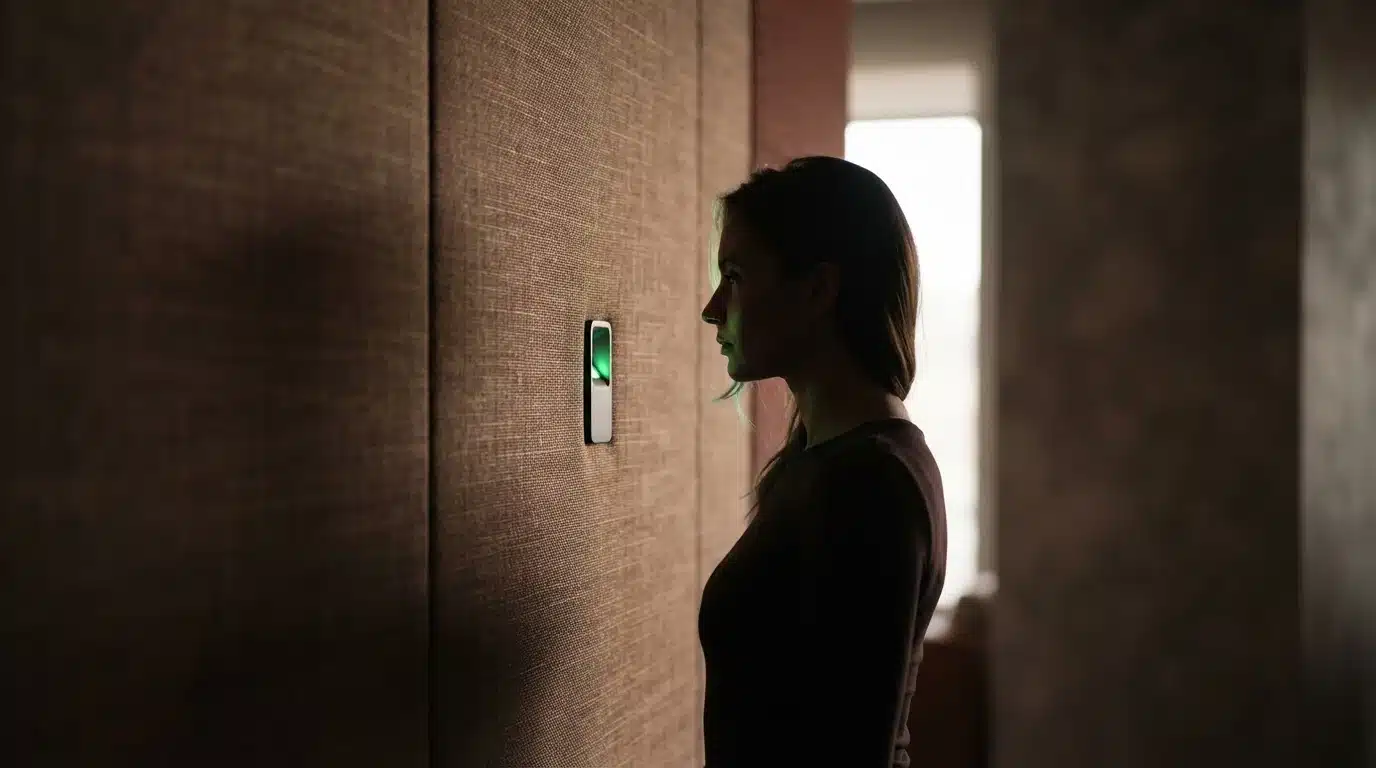
The Future is a Conversation You Don’t Have to Start
As our homes become more adept at learning our rhythms and anticipating our desires, the very nature of control begins to blur. The goal is no longer a home that listens to our commands, but one that understands our intent without a word ever being spoken. This shift from explicit instruction to implicit understanding will redefine our relationship with our personal spaces. The next great challenge won’t be about adding more devices or features, but about building trust in a system that knows you better than you may know yourself. When your home can predict your needs, what will you choose to do with the mental energy you save?
Frequently Asked Questions
What is the difference between a smart speaker and an AI home assistant?
A smart speaker is the hardware device, like an Amazon Echo or Google Nest. The AI home assistant is the software, or the ‘brain,’ that lives inside it, such as Alexa or Google Assistant. The assistant is what processes your commands, learns your habits, and controls your smart home devices.
How do AI home assistants learn my preferences for personalized routines?
They use machine learning to analyze patterns in your behavior over time. This includes the commands you give, the times you use certain devices, your phone’s location, and data from various sensors. By correlating these data points, the assistant can predict your needs and suggest or automate routines.
Can different AI home assistants work together in one home?
Directly, no. Major assistants like Alexa, Google Assistant, and Siri are designed as competing ecosystems. While you can have devices from different systems in one home, making them work together seamlessly is difficult. the new ‘Matter’ smart home standard is designed to improve interoperability between devices from different brands.
What are the main privacy concerns with AI home assistants?
The primary concerns involve the collection of personal data, including voice recordings and daily habits. Users worry about how this data is stored, who has access to it, and how it’s used for advertising. There is also the risk of unauthorized access or ‘eavesdropping’ if the device’s security is compromised.
Are AI home assistants ‘smart’ or just following commands?
Currently, they are advanced command-followers that excel at pattern recognition. They don’t ‘understand’ context in a human way but are very effective at calculating probabilities based on vast amounts of data. Their ‘smartness’ comes from their ability to learn your patterns and automate complex tasks based on that learned data.