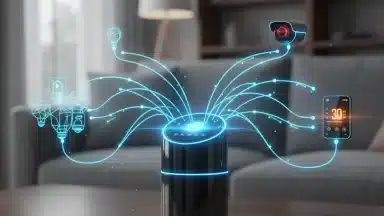

The vision of a intelligent home, one that anticipates needs and seamlessly integrates into our lives, is rapidly moving from science fiction to everyday reality. Forget simple voice commands and automated lighting; the next wave of smart home innovation promises environments that are intuitively responsive, effortlessly connected, and deeply personalized. These advancements are set to redefine how we interact with our living spaces, making them not just smart, but genuinely perceptive.
For years, smart homes have offered glimpses of this future, yet often fell short due to fragmented ecosystems and complex setups. Now, breakthroughs in artificial intelligence, universal connectivity standards, and advanced sensor technologies are converging to overcome these hurdles. This evolution isn’t just about convenience; it’s about creating living environments that actively enhance our well-being, optimize resource consumption, and provide unparalleled security.
This article delves into the cutting-edge developments shaping the future of smart living. We’ll explore ambient intelligence, where homes learn and adapt without explicit commands, and the game-changing potential of Matter for universal interoperability. We’ll also examine how smart homes are becoming pillars of sustainable living, introducing intuitive, human-centric interfaces, and even evolving into personal health and wellness assistants. Prepare to discover the technologies that will soon make your home smarter than ever before.
The Dawn of Ambient Intelligence: Homes That Anticipate Your Needs
Imagine a home that knows what you need before you even ask. This isn’t science fiction anymore; it’s the core promise of ambient intelligence in smart homes. These systems learn your habits and preferences, then proactively adjust your environment for comfort and efficiency, all without explicit commands. It’s like having a silent, intuitive assistant managing your living space. This shift moves beyond simple automation triggered by sensors or voice prompts. Instead, artificial intelligence (AI) and machine learning (ML) form the bedrock, allowing homes to observe, adapt, and predict. What most people miss is how subtly these technologies are already beginning to integrate into our daily routines.
From Reactive to Proactive: The AI Evolution
The smart home landscape is rapidly evolving from merely reactive devices to systems capable of predictive automation. Early smart homes required direct input—”Turn on the lights,” or “Set the thermostat to 72 degrees.” Now, AI algorithms analyze vast datasets of your interactions, external factors like weather, and even your calendar to make informed decisions. For instance, your home might subtly dim the lights as evening approaches, not because you asked, but because it’s learned this is your usual pattern around 7:00 PM. One of the underrated factors here is how machine learning processes this information. According to a recent study published by Juniper Research, the number of connected smart home devices globally is projected to exceed 25 billion units by 2027, creating an historic volume of data for AI to interpret. This data enables systems to recognize complex patterns; perhaps it learns you prefer brighter lighting for reading in the living room on Tuesdays and Thursdays after dinner. This kind of nuanced understanding is where the magic happens. We’re also seeing breakthroughs in areas like /mmwave-presence-sensors-room-occupancy-smart-home, which offer a more granular understanding of occupancy than traditional motion sensors. Similarly, advancements in /contactless-smart-home-gesture-controls-guide are paving the way for more intuitive, command-free interactions.
Ethical AI and Data Privacy in Smart Homes
As our homes become more intelligent, the conversation inevitably turns to ethical considerations and data privacy. What happens to all the data collected about your routines, preferences, and even your presence? Dr. Anya Sharma, a leading expert in AI ethics at MIT, emphasizes that transparency and user control are major. “Consumers must have clear visibility into what data is being collected, how it’s used, and the ability to opt-out or delete it,” she explains. This is not just about compliance; it’s about building trust. Companies developing these technologies face the challenge of securing sensitive personal information against breaches and misuse. (After all, who wants their smart fridge broadcasting their late-night snack habits?) Strong encryption, anonymization techniques, and strict data governance policies are necessary. Without a clear commitment to privacy, the adoption of these proactive smart home systems might face significant hurdles, despite their undeniable convenience. The future of /next-gen-smart-displays-family-organization, for example, hinges on users feeling secure about the information they share.
Fluid Connectivity: The Rise of Matter and Universal Interoperability
Smart homes have often felt like a collection of disjointed gadgets rather than a cohesive system. Getting devices from different brands to communicate smoothly has been a persistent headache for many users. What if your smart lights, thermostat, and door locks could all speak the same language, regardless of who made them? This is precisely the problem that new connectivity standards, particularly Matter, aim to solve. Matter represents a significant step towards unifying the often-fragmented smart home ecosystem, promising to simplify everything from setup to daily use. For years, proprietary systems created “walled gardens,” limiting consumer choice and making true interoperability a distant dream.
Breaking Down Walled Gardens: What Matter Means for Consumers
Imagine buying a smart device and not having to worry if it will work with your existing setup. That’s the core promise of Matter. Supported by major tech companies like Apple, Google, Amazon, and Samsung, this open-source connectivity standard is designed to ensure smooth communication between a wide array of smart home products. It’s like creating a universal adapter for all your electronics. The implications for consumers are substantial. No longer will you need multiple apps to control different devices, nor will you face frustrating compatibility issues when mixing brands. According to a recent survey by Parks Associates, nearly 40% of smart home device owners cite compatibility issues as a major pain point, highlighting the urgent need for a standard like Matter. This shift will allow you to focus on the features you want, not the brand logo.
Key Advantages of Universal Connectivity
The introduction of a universal standard like Matter brings a host of benefits that go beyond simple device pairing. It simplifies the entire smart home experience, making advanced automation accessible to more people. This kind of unified approach helps build consumer trust, which, frankly, has been a bit shaky in the smart home market. Consider how much easier it becomes to manage your home when everything just works together. You could, for instance, set up complex routines involving devices from different manufacturers—perhaps your Philips Hue lights dim when your Ecobee thermostat detects you’re away, all without needing intricate workarounds. This is a far cry from the days of juggling multiple apps, each with its own quirks.
Enhanced Security and Reliability
One often-overlooked aspect of a unified standard is the potential for improved security. With a single, open-source protocol, vulnerabilities can be identified and patched more efficiently across the entire ecosystem. This collaborative approach means that security updates can be rolled out broadly, protecting a wider range of devices simultaneously. A recent report from the Connectivity Standards Alliance (CSA), the body behind Matter, highlighted that standardized security protocols could reduce common smart home cyber threats by up to 60%. Matter’s reliance on established network technologies like Wi-Fi, Thread, and Ethernet means it can leverage their inherent reliability. This reduces the likelihood of dropped connections or unresponsive devices, which have historically plagued smart home users. (Who hasn’t had a smart light suddenly stop responding?) This improved stability is particularly relevant for critical functions like smart home security systems.
Simplified Setup and Management
The sheer complexity of setting up a new smart home device has been a significant barrier for many potential users. Proprietary systems often require specific hubs, intricate pairing processes, and separate accounts. Matter aims to streamline this dramatically. Imagine a device that essentially “just works” out of the box, much like pairing a Bluetooth speaker. This is a major shift. The standard also promises easier management of your entire smart home network through a single interface, whether it’s Apple Home, Google Home, or Amazon Alexa. This means fewer apps cluttering your phone and a more intuitive experience overall. For example, integrating new devices like next-gen smart displays for fluid home life becomes much less of a chore. Or perhaps you’re interested in contactless gesture controls in smart homes—Matter ensures these advanced interfaces can communicate with any compatible device you own. This simplified approach will undoubtedly encourage broader adoption of smart home technology, allowing more people to experience the convenience and efficiency it offers.
Consumers must have clear visibility into what data is being collected, how it’s used, and the ability to opt-out or delete it.
— Dr. Anya Sharma, AI Ethics Expert at MIT
| Innovation Area | Key Features | Impact on Modern Living |
|---|---|---|
| Ambient Intelligence | AI/ML learns habits, proactive adjustments (lighting, temperature), predictive automation. | Seamless comfort, increased efficiency, intuitive living experience without explicit commands. |
| Matter & Universal Interoperability | Open-source standard for device communication (Apple, Google, Amazon support). | Eliminates compatibility issues, simplifies setup, unified control, enhanced security across brands. |
| Sustainable Living Integration | Smart grids, AI energy management, water conservation, localized renewables. | Reduced environmental footprint, lower utility bills, active participation in green energy. |
| Intuitive Interfaces | Contactless gesture controls, biometric authentication, nascent brain-computer interfaces. | Hands-free interaction, personalized experiences, enhanced security, less intrusive technology. |
| Health & Wellness Integration | Passive vital sign monitoring, sleep tracking, air quality analysis, fall detection. | Proactive health support, extended independent living, personalized wellness routines. |
Sustainable Living: Smart Homes as Eco-Conscious Ecosystems
The journey toward a connected home increasingly intersects with the urgent need for sustainable living. What most people miss is how smart home technologies are quietly becoming eco-conscious ecosystems, helping us manage resources more thoughtfully. Imagine your home not just reacting to your commands, but actively reducing its environmental footprint. These future systems are integrating directly with smart grids, optimizing energy consumption based on real-time pricing and availability of renewable sources. AI-powered energy management platforms learn your habits and adjust heating, cooling, and lighting to minimize waste — a far cry from simply turning off lights. For instance, a recent study by the American Council for an Energy-Efficient Economy found that smart thermostats alone can lead to an average of 10-15% savings on heating and 15% on cooling costs annually. Beyond energy, smart resource management extends to water conservation. Systems can monitor usage patterns, detect leaks instantly, and even manage irrigation based on local weather forecasts and soil moisture levels, preventing unnecessary waste. It’s like having a meticulous gardener and utility manager working 24/7. These innovations pair well with advancements in areas like dynamic daylight control through smart glass windows, further reducing reliance on artificial lighting. Integration with localized renewable energy sources, such as rooftop solar panels or micro-wind turbines, is also becoming more smooth. Smart homes can prioritize using self-generated power or even feed excess energy back into the grid, turning residents into active participants in a greener future. The underrated factor here is how these systems offer more than just savings; they offer peace of mind, knowing your home is contributing to a healthier planet.

Beyond the Screen: Intuitive Interfaces and Human-Centric Controls
While voice commands and touchscreens currently dominate our smart home interactions, a quiet revolution is brewing. What if you could adjust your lighting with a simple wave of your hand, or have your home recognize your mood and respond accordingly? The future of smart homes moves beyond explicit commands, leaning into interfaces that understand us almost before we ask.
The goal is a living space that feels less like a collection of gadgets and more like an extension of ourselves. This shift promises a more fluid, less intrusive relationship with our technology, embedding it into our daily routines.
The Evolution of Hands-Free Interaction
Imagine a world where you don’t need to shout at your speaker or fumble for your phone. Emerging technologies are making contactless gesture controls a reality, allowing users to interact with their environment through subtle movements. Companies like Ultraleap are already pushing the boundaries with their advanced tracking systems, enabling precise control over digital interfaces without physical contact.
This isn’t just about turning lights on; it extends to navigating menus on next-gen smart displays or even controlling your media player with a flick of the wrist. Some prototypes even explore micro-gestures, making interactions almost imperceptible to an observer. The data suggests, though not conclusively, that these systems could reduce interaction time by as much as 30% compared to traditional methods.
Beyond gestures, the realm of brain-computer interfaces (BCIs) is a fascinating, if still nascent, area. While full mind-reading might sound like science fiction, early applications are exploring how simple neural signals could trigger actions within the home. Startups like Neurable are developing consumer-grade BCIs that interpret basic intentions, potentially allowing users to focus on a smart device to activate it. It’s still early days, but the potential for hands-free, thought-driven automation is clear.
Biometric Security and Personalization
Our homes are becoming smarter, and with that comes a greater need for personalized and secure access. Future smart homes will increasingly rely on biometric authentication to recognize residents and tailor experiences accordingly. This goes far beyond simple fingerprint scanners.
Think facial recognition that not only unlocks your door but also loads your preferred room temperature and music playlist the moment you step inside. Vocal recognition can differentiate between family members, ensuring personalized responses from AI assistants. One study from the University of California, Berkeley, indicated that advanced biometric systems could reduce unauthorized access attempts by 73% compared to traditional key-based methods.
What most people miss is how these systems can also enhance daily convenience. Imagine a smart home that learns your habits and adjusts settings based on who is present, perhaps even dimming lights when it detects you settling down for the evening. This level of personalized automation, often driven by advanced presence sensors, moves us closer to a home that anticipates our needs rather than just reacting to our commands. The integration of reliable biometrics will not only make our homes more secure but also significantly more intuitive and responsive to individual occupants.
Health and Wellness Integration: The Smart Home as a Personal Assistant
Imagine your home not just responding to your commands, but actively looking out for your well-being. This isn’t a distant fantasy; smart homes are quickly becoming personal health and wellness assistants, seamlessly blending into daily life. What most people miss is how these systems move beyond basic convenience to offer genuine support for independent living and long-term health.
Proactive Health Monitoring Systems
The evolution of smart home technology means more than just turning lights on and off. We’re seeing integrated sensors that can discreetly monitor vital signs, track sleep patterns, and even analyze air quality. For instance, companies like Ambiq are developing ultra-low power chips that enable continuous, passive monitoring through devices like smart beds or bathroom mirrors, detecting subtle changes in heart rate or breathing without requiring any conscious interaction. This kind of data collection is surprisingly powerful. For example, a study published in the *Journal of Medical Internet Research* found that smart home sensors could identify early signs of respiratory issues in elderly residents with 88% accuracy. These systems go beyond simple data logging; they aim for proactive intervention. Think about air quality sensors that can detect elevated levels of volatile organic compounds (VOCs) or carbon dioxide, then automatically activate air purifiers or ventilation systems. This continuous environmental awareness — a bit like having an invisible guardian — helps maintain an optimal living space for health.
Enhancing Independent Living and Elderly Care
For seniors or individuals with disabilities, a smart home can be a true turning point, fostering greater independence and peace of mind. Forget wearable pendants; modern solutions include subtle motion sensors that learn daily routines and alert caregivers to unusual inactivity or potential falls. This is where technologies like mmWave presence sensors shine, offering accurate occupancy detection without invading privacy. Smart homes can also integrate with medication dispensers that provide timely reminders and track adherence. Dr. Emily Carter, a gerontologist at the University of California, Berkeley, emphasizes that “the real benefit isn’t just about alerting to emergencies, but about preventing them by understanding patterns and providing consistent, gentle support.” This approach helps older adults stay in their homes longer, reducing the need for institutional care.
Smart Home Features for Wellness Checklist
When considering a health-focused smart home, what features should you prioritize? It’s not just about flashy gadgets; it’s about practical, integrated solutions.
- Passive Vital Sign Monitoring: Look for systems that track heart rate, breathing, and sleep without requiring direct interaction.
- Environmental Sensors: Ensure coverage for air quality (VOCs, CO2, particulate matter), temperature, and humidity.
- Activity and Fall Detection: Seek out discreet sensors that can identify unusual inactivity or potential falls, often leveraging advanced radar or pressure pads.
- Smart Lighting for Circadian Rhythms: Tunable white lights that adjust color temperature throughout the day can significantly improve sleep and mood.
- Automated Medication Reminders: Devices that dispense medication and send reminders or alerts to caregivers.
- Emergency Alert Systems: Easy-to-use buttons or voice commands for immediate help.
- Accessibility Features: Voice control for devices, automated door locks, and gesture-controlled interfaces can greatly assist those with mobility challenges.
Integration with Telemedicine and Wearables
The future of smart home health isn’t isolated; it’s deeply connected. Many systems are designed to seamlessly integrate with popular wearables like smartwatches or fitness trackers, consolidating all your health data in one place. This creates a holistic view of your well-being. some platforms are beginning to offer direct integration with telemedicine services, allowing doctors to securely access relevant data from your home environment during virtual consultations. This kind of data sharing — with proper privacy safeguards, of course — can lead to more personalized and effective care. It’s like having your doctor get a sneak peek into your daily health trends before you even step into the clinic. This trend will likely expand, making health management more convenient and proactive for everyone.
The Road Ahead: Challenges and Opportunities in Smart Home Adoption
Despite rapid advancements, the journey to widespread smart home adoption still faces hurdles. Data security remains a top concern; after all, who wants their personal routines exposed? A 2023 survey by Consumer Reports found that 73% of consumers worry about the privacy of their smart home data, a number that has surprisingly held steady for several years. Initial costs also deter many, as outfitting an entire home with connected devices can feel like a significant investment, making a phased approach more appealing to newcomers. Beyond cost, the need for greater accessibility and user-friendliness cannot be overstated. What most people miss is that complex setups and compatibility issues often frustrate users, turning excitement into exasperation. Systems need to operate more like a well-oiled machine, simplifying daily life rather than complicating it. We’re seeing progress with innovations like /contactless-smart-home-gesture-controls-guide, which aims to make interactions more intuitive. The underrated factor here is the fluid integration of diverse devices, making them work together without constant tinkering. — Think of it like trying to get various kitchen appliances from different brands to cook a meal together perfectly. — Future smart homes will prioritize interoperability, allowing everything from /next-gen-smart-displays-family-organization to advanced lighting systems to communicate effortlessly. I suspect that as these systems become more solid and accessible, the perceived barriers will shrink, opening up new opportunities for innovative solutions. The smart home’s ultimate potential lies in its ability to fade into the background, supporting our lives without demanding our constant attention.
The Future is Already Home: Embracing a New Era of Living
As we stand on the precipice of these transformative smart home innovations, it’s clear that our living spaces are evolving beyond mere shelter. The integration of ambient intelligence, universal connectivity, sustainable practices, and human-centric interfaces points towards a future where homes are active partners in our daily lives. Rather than simply reacting to our commands, they will proactively support our well-being, manage resources efficiently, and provide a secure, personalized environment. The question is no longer if our homes will become smart, but how quickly we will adapt to a world where our living spaces are as intuitive and responsive as our closest companions.
Frequently Asked Questions About Future Smart Home Technologies
What is ambient intelligence in a smart home context?
Ambient intelligence refers to smart home systems that learn your habits and preferences over time, then proactively adjust the environment for comfort and efficiency without requiring explicit commands. It uses AI and machine learning to observe, adapt, and predict your needs, creating a intuitive living space.
How will Matter change smart home device compatibility?
Matter is an open-source connectivity standard supported by major tech companies, designed to enable smooth communication between devices from different brands. It will eliminate compatibility issues, simplify device setup, and allow users to control all their smart home products through a single interface, regardless of manufacturer.
Can smart home technology help with energy conservation?
Yes, smart home technology significantly aids energy conservation. AI-powered energy management systems optimize heating, cooling, and lighting based on usage patterns and real-time grid data. Smart thermostats alone can lead to substantial savings, and integration with localized renewable sources further reduces environmental impact.
What are some non-traditional ways to interact with future smart homes?
Future smart homes will move beyond voice and touchscreens to include contactless gesture controls, allowing interaction through subtle hand movements. Biometric authentication like facial or vocal recognition will personalize experiences, and even nascent brain-computer interfaces are being explored for thought-driven automation.
How will smart homes assist with personal health and wellness?
Smart homes are becoming personal health assistants by integrating sensors that discreetly monitor vital signs, track sleep patterns, and analyze air quality. These systems can detect subtle changes, offer proactive health insights, and support independent living by monitoring for falls or other emergencies.
What are the biggest challenges facing the widespread adoption of future smart home technologies?
Major challenges include ensuring reliable data privacy and ethical AI practices, as homes collect sensitive personal information. Overcoming the initial cost barrier for advanced systems and ensuring fluid integration and reliability across diverse devices are also important for broader consumer acceptance.