The landscape of home security is constantly evolving, and by 2026, Smart Home Security Cameras have become indispensable tools for homeowners seeking peace of mind. Gone are the days of simple surveillance; today’s cameras integrate artificial intelligence, advanced analytics, and seamless connectivity to offer unprecedented levels of protection and convenience. This comprehensive review delves into the cutting-edge features, crucial privacy implications, and real-world performance of the leading Smart Home Security Cameras available in 2026, helping you navigate the options and make an informed decision for your digital fortress.
As technology advances, so do the capabilities of these devices. From crystal-clear 8K resolution to sophisticated facial recognition and predictive analytics, the market is brimming with innovations. However, with great power comes great responsibility, particularly concerning data privacy and cybersecurity. Our goal is to provide a balanced perspective, highlighting the benefits while also addressing the potential pitfalls, ensuring you choose a system that not only protects your home but also respects your personal information.
The Evolution of Smart Home Security Cameras: What’s New in 2026?
The year 2026 marks a significant leap forward in Smart Home Security Cameras. Manufacturers have pushed the boundaries of what’s possible, integrating technologies that were once the realm of science fiction. Key advancements include:
- Hyper-Realistic Imaging: Many top-tier cameras now offer 8K resolution, providing unparalleled clarity and detail, even in challenging lighting conditions. This ultra-high definition makes it easier to identify individuals and objects, a critical factor in security.
- Advanced AI and Machine Learning: Beyond basic motion detection, 2026 cameras feature highly refined AI algorithms. These can differentiate between pets, vehicles, and humans, reducing false alarms significantly. Some even boast behavioral analysis, learning routines and flagging unusual activities.
- Predictive Analytics: A burgeoning trend, predictive analytics allows cameras to anticipate potential threats based on historical data and real-time environmental factors. For example, a camera might alert you to unusual activity patterns around your property before an actual intrusion attempt.
- Seamless Smart Home Integration: Compatibility with various smart home ecosystems (e.g., Apple HomeKit, Google Home, Amazon Alexa, Matter) is now standard, allowing for complex automations. Imagine your outdoor lights turning on and doors locking automatically when a camera detects an unfamiliar presence.
- Enhanced Night Vision: Full-color night vision, even in complete darkness, is becoming more prevalent, thanks to advancements in low-light sensors and infrared technology. This eliminates the grainy, black-and-white footage of yesteryear.
- Edge AI Processing: To enhance privacy and reduce latency, more cameras are processing data directly on the device (edge computing) rather than solely relying on cloud servers. This means faster threat detection and less personal data leaving your home network.
These innovations collectively redefine what it means to have a secure home. Choosing the right Smart Home Security Cameras in 2026 means considering not just basic surveillance, but a comprehensive, intelligent security ecosystem.
Comparative Review of Leading Smart Home Security Cameras (2026 Models)
To provide a clear picture, let’s compare some of the most anticipated and top-performing Smart Home Security Cameras of 2026 across key metrics. While specific model names may vary, we’ll focus on the architectural features and capabilities that define the best in class.
Brand A: The Privacy-Centric Guardian
Features: Brand A is renowned for its robust privacy features. It boasts end-to-end encryption for all video streams and recordings, with a strong emphasis on local storage options (on-device SSD or secure NAS integration). Its AI is primarily edge-based, meaning facial recognition and object detection happen on the camera itself, minimizing data transfer to the cloud. It offers 4K HDR video, 180-degree field of view, and advanced sound detection that can differentiate between glass breaking and a dog barking. Integration with open-source smart home platforms is a plus.
Privacy: This brand excels. Users have granular control over data retention policies, and the company has a transparent privacy policy, regularly audited by third parties. There’s a physical privacy shutter option and a ‘human-only’ recording mode.
Performance: Excellent low-light performance and rapid alert notifications. The edge AI ensures minimal latency in threat detection. Battery life on wireless models is among the best, lasting up to 12 months on a single charge.
Brand B: The AI Powerhouse
Features: Brand B focuses on cutting-edge AI. Its cameras feature 8K resolution with optical zoom, capable of identifying individuals from a database of trusted contacts. It offers predictive analytics, learning daily routines and flagging anomalies. Its ‘Smart Zone’ feature allows users to define specific areas for enhanced monitoring, ignoring high-traffic zones like public sidewalks. Two-way audio with noise cancellation is exceptionally clear. Cloud storage is a primary offering, with tiered subscription plans.
Privacy: While offering robust encryption, Brand B relies more heavily on cloud processing for its advanced AI features. This means data leaves your device. They offer strong data anonymization and strict access controls, but users should be aware of the cloud dependency. Opt-out options for AI training data are available.
Performance: Unrivaled AI accuracy in object and person detection. The 8K resolution provides incredible detail. However, the reliance on cloud processing can introduce slight latency in alerts, especially in areas with slower internet. Power requirements are higher due to advanced processing.
Brand C: The Value-Oriented All-Rounder
Features: Brand C strikes a balance between features and affordability. It provides solid 2K QHD video, excellent color night vision, and reliable person detection. It integrates well with popular smart home assistants and offers a decent range of motion detection zones. Local storage via microSD card is supported alongside optional cloud storage. It’s a great entry point into Smart Home Security Cameras.
Privacy: Standard encryption protocols are in place. The privacy policy is clear but less detailed than Brand A’s. Cloud storage is an add-on, giving users a choice. Edge processing is limited to basic motion detection; advanced AI features are cloud-based.
Performance: Good overall performance for its price point. Alerts are timely, and video quality is more than adequate for most needs. Night vision is effective. The primary trade-off for its affordability is less advanced AI compared to Brand B and less stringent privacy controls than Brand A.

Key Features to Consider When Buying Smart Home Security Cameras in 2026
When investing in Smart Home Security Cameras, several features stand out as crucial for optimal security and user experience:
1. Video Resolution and Quality
As mentioned, 4K and 8K are becoming standard for premium cameras. Higher resolution means clearer images, which is vital for identification. Look for features like HDR (High Dynamic Range) for better detail in varied lighting and wide-angle lenses to cover more ground. The quality of night vision – whether it’s infrared, starlight, or full-color – also significantly impacts usability.
2. AI and Smart Detection Capabilities
Basic motion detection is no longer enough. Modern Smart Home Security Cameras should offer:
- Person/Vehicle/Pet Detection: To minimize false alarms.
- Facial Recognition: To identify known individuals (family, friends, delivery personnel).
- Sound Detection: To alert you to specific sounds like glass breaking, smoke alarms, or even baby cries.
- Activity Zones: Allowing you to define specific areas for monitoring, ignoring busy streets or neighbor’s yards.
3. Storage Options: Local vs. Cloud
This is a critical decision impacting both cost and privacy. Local storage (microSD card, NAS, internal SSD) offers greater privacy and no recurring fees, but footage can be lost if the camera is stolen or damaged. Cloud storage provides off-site backup, accessibility from anywhere, and often comes with additional features like continuous recording and longer retention periods, but usually requires a subscription.
4. Power Source and Connectivity
Cameras can be wired (Ethernet, AC power) or wireless (battery-powered, Wi-Fi). Wired cameras offer more reliable connectivity and continuous power but require professional installation. Wireless cameras provide flexibility in placement but need regular battery recharging or replacement. Consider Wi-Fi 6E for faster, more stable connections, especially for high-resolution streaming.
5. Two-Way Audio
The ability to speak and listen through the camera is invaluable for interacting with visitors, deterring intruders, or even checking in on pets. Look for clear audio quality and effective noise cancellation.
6. Smart Home Integration
Ensure the camera integrates seamlessly with your existing smart home ecosystem. This allows for automation, such as triggering lights when motion is detected or viewing feeds on smart displays.
7. Durability and Weather Resistance (for outdoor cameras)
Outdoor cameras must withstand the elements. Look for an IP (Ingress Protection) rating, with IP65 or higher indicating good resistance to dust and water.
The Critical Aspect of Privacy and Data Security in Smart Home Security Cameras
In 2026, as Smart Home Security Cameras become more sophisticated, the discussion around privacy and data security is paramount. These devices collect highly sensitive information about your home and family, making it essential to understand how your data is handled.
Encryption Standards
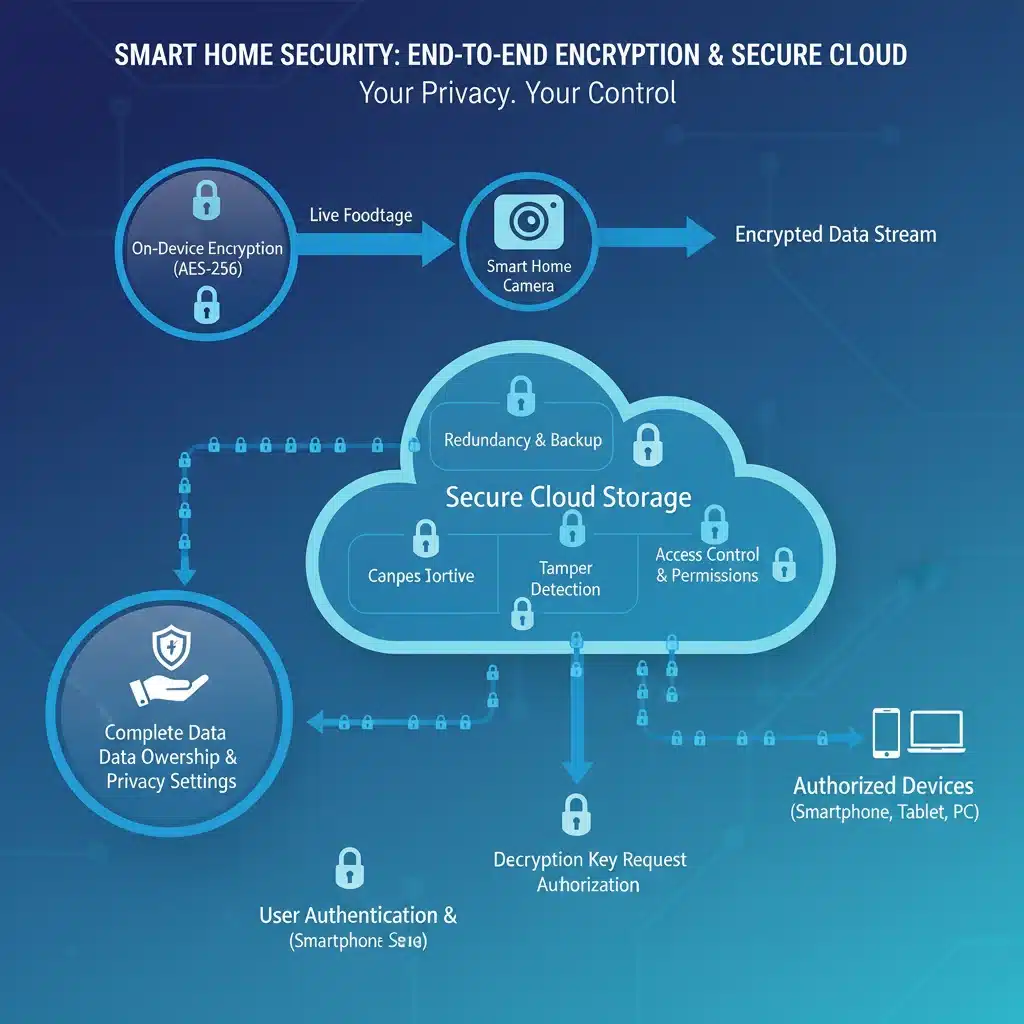
Always ensure your camera uses robust encryption for video streams and stored data. End-to-end encryption (E2EE) is the gold standard, meaning only you and authorized users can access the footage. Data should be encrypted both in transit (when sent to the cloud) and at rest (when stored on servers or locally).
Data Retention Policies
Understand how long your footage is stored and who has access to it. Reputable manufacturers offer clear data retention policies and allow users to customize these settings. Be wary of companies that retain footage indefinitely without your explicit consent.
Local vs. Cloud Processing
Cameras that perform AI processing on the device (edge AI) offer a higher degree of privacy, as less raw data is sent to the cloud. While cloud-based AI can be more powerful, it means your data is leaving your home network and is subject to the provider’s security measures and data policies.
Third-Party Access and Data Sharing
Scrutinize the privacy policy for any mention of third-party data sharing. Some companies might share anonymized data for research or marketing purposes. Ensure you have the option to opt out of such practices. Government requests for data are also a concern; choose brands with a strong legal stance on protecting user data.
Two-Factor Authentication (2FA) and Account Security
A strong password combined with 2FA is crucial for protecting your camera account from unauthorized access. Ensure the camera app and associated services support this security measure.
Physical Privacy Controls
Some cameras offer physical shutters or modes that temporarily disable recording and streaming, providing an additional layer of privacy when you’re home and don’t want to be monitored.
Performance Metrics: What Makes a Smart Home Security Camera Stand Out?
Beyond features and privacy, the real-world performance of Smart Home Security Cameras dictates their effectiveness. Here’s what to look for:
1. Alert Speed and Accuracy
How quickly does the camera notify you of an event? Fast alerts are crucial for timely intervention. Accuracy, driven by advanced AI, reduces false positives, preventing alert fatigue and ensuring you only respond to genuine threats.
2. Video Stream Latency
When you access a live feed, is there a noticeable delay? Low latency is important for real-time monitoring and two-way conversations. Factors like internet speed, server location, and edge processing capabilities all influence latency.
3. Reliability and Uptime
A security camera is only useful if it’s always working. Look for brands known for reliable software, stable connectivity, and minimal downtime. Regular firmware updates are a good sign of ongoing support and security patching.
4. Battery Life (for wireless cameras)
For battery-powered cameras, a long battery life (several months to a year) is a significant convenience. Consider solar panel accessories for continuous charging if available.
5. Audio Quality
Clear two-way audio is essential. Test for microphone sensitivity and speaker volume, as well as noise cancellation features, especially for outdoor cameras.
6. Ease of Installation and User Interface
While not strictly a performance metric for the camera itself, a user-friendly installation process and an intuitive app make a significant difference in your overall experience. The interface should allow for easy access to settings, recordings, and live feeds.
The Future of Smart Home Security Cameras Beyond 2026
Looking ahead, the trajectory of Smart Home Security Cameras points towards even greater intelligence, integration, and autonomy. Expect to see:
- Hyper-Personalized Security: Cameras will learn and adapt to individual household members, offering truly personalized alerts and controls.
- Proactive Threat Neutralization: Integration with smart home devices will allow for more proactive responses, such as deploying deterrents (loud alarms, flashing lights, mist sprays) before an intruder even gains entry.
- Advanced Biometrics: Beyond facial recognition, expect gait analysis and even voiceprint identification for highly secure access control and threat assessment.
- Decentralized Security Networks: Blockchain technology could be used to create more secure, peer-to-peer security networks, reducing reliance on centralized cloud servers and enhancing privacy.
- Energy Harvesting: Cameras powered by ambient light, kinetic energy, or even Wi-Fi signals could eliminate the need for batteries or wires entirely, making them truly self-sufficient.
- Augmented Reality (AR) Integration: AR overlays in live feeds could provide contextual information, identifying objects, people, or potential threats with real-time data from other smart home sensors.
These developments promise to make our homes not just secure, but truly intelligent and responsive to our safety needs.
Conclusion: Choosing Your Smart Home Security Cameras in 2026
The market for Smart Home Security Cameras in 2026 offers an impressive array of choices, each with its unique strengths. Your ideal camera system will depend on your specific needs, priorities, and budget. If privacy is paramount, prioritize brands with strong local processing and transparent data policies. If cutting-edge AI and superior image quality are your drivers, explore models with advanced cloud-based analytics. For those seeking a balance, many mid-range options offer excellent value.
Regardless of your choice, remember to:
- Prioritize security: Look for strong encryption and robust account protection.
- Understand data privacy: Read the privacy policy and know how your data is used.
- Assess performance: Consider alert speed, video quality, and reliability.
- Check compatibility: Ensure seamless integration with your existing smart home ecosystem.
By carefully evaluating these factors, you can select Smart Home Security Cameras that not only safeguard your property but also provide the peace of mind you deserve in an increasingly connected world. The future of home security is here, and it’s smarter, safer, and more integrated than ever before.