Voice Control Beyond Basics: Advanced Home Automation Commands 2026
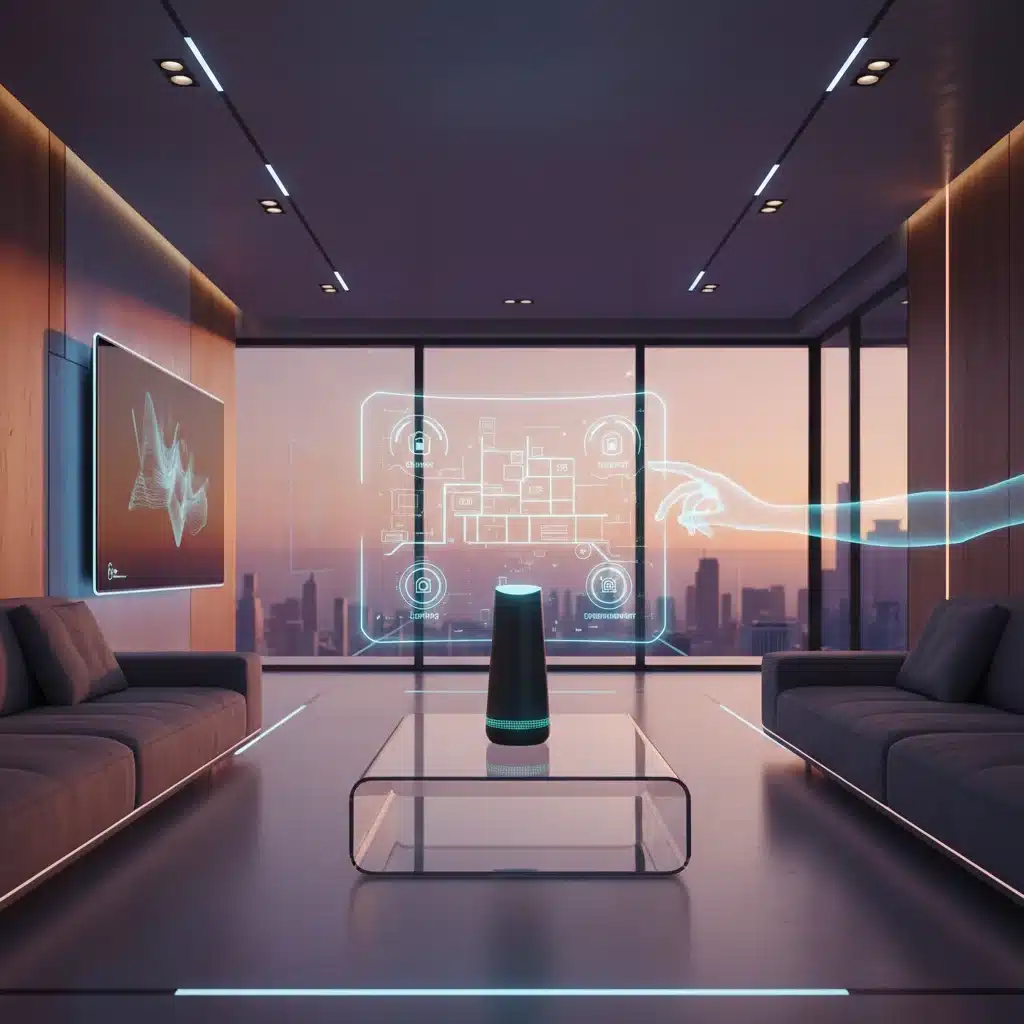
Voice Control Beyond Basics: Implementing Advanced Home Automation Commands with 2026’s Best Assistants
The dawn of 2026 has heralded an unprecedented era for smart home technology, where voice control transcends simple commands and enters the realm of sophisticated, intuitive automation. Gone are the days when ‘turn on the lights’ was the pinnacle of our interaction with AI assistants. Today, the landscape of home automation is rich with possibilities, allowing us to orchestrate complex routines, integrate diverse devices seamlessly, and personalize our living spaces with an intelligence that was once confined to science fiction. This article delves into the exciting world of advanced voice automation, exploring how you can leverage 2026’s cutting-edge AI assistants to transform your home into a truly intelligent sanctuary.
The evolution of artificial intelligence and machine learning has propelled voice assistants far beyond their initial capabilities. They are no longer just reactive tools; they are proactive partners in managing our homes, learning our preferences, anticipating our needs, and executing multi-step commands with remarkable precision. For enthusiasts and newcomers alike, understanding how to harness this power is key to unlocking the full potential of a modern smart home. We’ll navigate the intricacies of creating custom commands, delve into the best AI assistants leading the charge in 2026, and provide actionable insights to elevate your home automation experience to an entirely new level.
Prepare to move beyond the basics and embrace a future where your voice is the ultimate remote control, managing everything from climate and entertainment to security and wellness, all with a newfound level of sophistication. Let’s embark on this journey to master advanced voice automation.
The Evolution of Voice Control: From Simple Queries to Complex Routines
Remember the early days of voice assistants? They were revolutionary, certainly, but often limited to straightforward tasks: setting timers, playing music, or answering trivia. Fast forward to 2026, and the landscape is dramatically different. The advancements in natural language processing (NLP) and contextual understanding have empowered AI assistants to interpret nuanced requests, understand user intent, and even predict subsequent actions based on past behavior. This leap has made advanced voice automation not just a possibility, but a practical reality for everyday living.
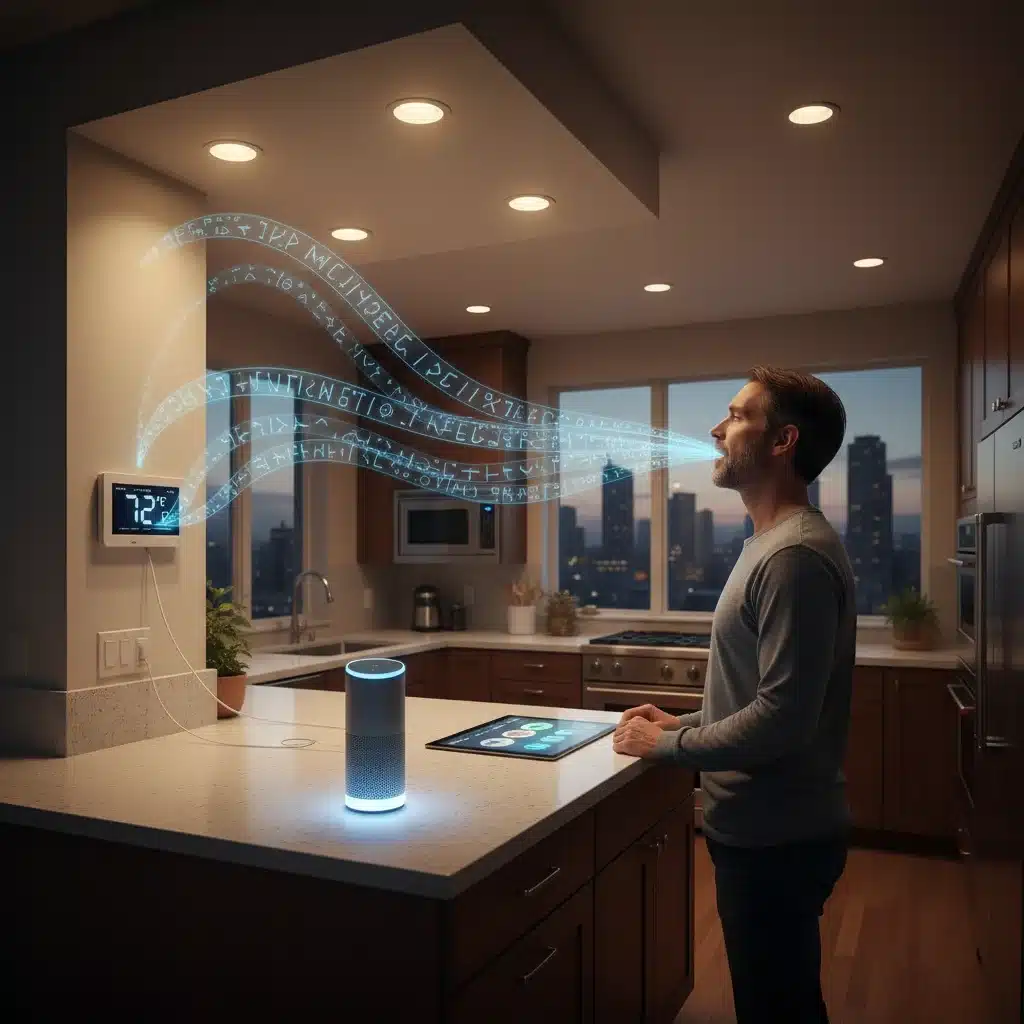
Modern voice assistants are adept at handling multi-device commands within a single utterance. Instead of saying, "Turn on the living room lights. Now, dim them to 50%. Then, close the blinds," you can now issue a single, fluid command like, "Set the evening ambiance in the living room." This level of integration and intuitive response is a testament to the continuous development in smart home ecosystems, where devices communicate more effectively and AI brains are becoming increasingly sophisticated.
Key Technological Drivers for Advanced Voice Automation in 2026:
- Enhanced Natural Language Processing (NLP): AI models are better at understanding complex sentence structures, idioms, and even emotional cues, leading to more natural and less frustrating interactions.
- Contextual Awareness: Assistants can now remember previous commands, understand the time of day, and factor in environmental data (like weather) to make more intelligent decisions.
- Edge AI and Local Processing: Some processing is now happening on the device itself, reducing latency and improving privacy for certain commands.
- Interoperability Standards: Initiatives like Matter have significantly improved how devices from different manufacturers communicate, paving the way for truly unified automation.
- Predictive Intelligence: Learning from user habits, AI can suggest or even initiate routines proactively, such as "It’s 7 AM, would you like me to start your morning routine?"
This technological foundation is what enables us to move beyond basic commands and start building truly intelligent and responsive smart homes. The ability to chain actions, incorporate conditional logic, and personalize responses means that your home can now adapt to your lifestyle in ways previously unimaginable.
Defining Advanced Voice Automation Commands
What exactly constitutes an "advanced" voice command? It’s more than just controlling multiple devices; it’s about creating interconnected sequences, incorporating conditional logic, and personalizing interactions to an unprecedented degree. Advanced voice automation involves crafting routines that are anticipatory, adaptive, and truly intelligent.
Components of Advanced Commands:
- Multi-Device & Multi-Action Sequences: A single command triggers actions across several devices in a specific order. Example: "Good morning" turns on bedroom lights to 30%, starts the coffee maker, and plays the morning news.
- Conditional Logic: Commands that execute actions based on certain conditions (e.g., time of day, presence detection, sensor readings, weather). Example: "Close the blinds" only if the sun is shining directly into the room.
- Personalized Responses & Context: The assistant provides tailored feedback or performs actions relevant to the specific user speaking or the current context. Example: "What’s my schedule?" provides a different answer for each family member.
- Integration with External Services: Commands that bridge your smart home with external apps, calendars, fitness trackers, or online services. Example: "Prepare for my workout" could turn on specific lights, set a fan, and start a Spotify playlist, while also logging the activity in a fitness app.
- Customizable Routines & Scenes: User-defined macros that combine various settings and actions under a simple, memorable phrase. These are the backbone of advanced voice automation.
The beauty of these advanced commands lies in their ability to simplify complex interactions into a single, intuitive voice prompt. They move beyond mere convenience to offer a truly integrated and responsive living environment, making your home feel more alive and attuned to your needs.
Top AI Assistants for Advanced Home Automation in 2026
In 2026, the competition among AI assistants for smart home dominance is fiercer than ever. While Amazon Alexa, Google Assistant, and Apple HomeKit (Siri) continue to be major players, new entrants and significant upgrades have pushed the boundaries of what’s possible. Here’s a look at the leading contenders for advanced voice automation:
1. Google Assistant Pro (Enhanced for 2026)
Google Assistant Pro has cemented its position as a powerhouse for complex routines and deep integration. Its strength lies in its unparalleled understanding of natural language and its ability to pull information from the vast Google ecosystem. In 2026, Google Assistant Pro boasts:
- Advanced Routine Builder: A highly intuitive interface for creating multi-step routines with conditional triggers, time-based actions, and personalized responses. It supports nested conditions and parallel actions.
- "Ambient Computing" Integration: Deeper understanding of your overall digital presence (calendar, email, location) to anticipate needs and proactively suggest actions.
- Cross-Platform Device Compatibility: Excellent support for Matter-enabled devices and a wide array of third-party integrations, making it versatile for diverse smart homes.
- Enhanced Voice Biometrics: More accurate voice recognition for multiple users, allowing for personalized experiences and secure access to sensitive commands.
2. Amazon Alexa Ultra (2026 Edition)
Alexa Ultra continues to innovate, particularly in its "Routines" functionality and its extensive skill library. Amazon’s focus on user experience and a broad device ecosystem makes it a strong contender for advanced voice automation.
- Customizable Sound & Light Scapes: Beyond basic commands, Alexa Ultra can create immersive environments with synchronized lighting, sound effects, and even projected visuals, all activated by voice.
- "Adaptive Routines": Routines that learn and adjust over time based on your actual usage patterns, optimizing for energy efficiency or personal comfort.
- Advanced Guard & Security Integration: Deeper integration with smart security systems, allowing for complex voice-activated security protocols, including mock occupancy and emergency response initiation.
- Local Control & Privacy Modes: Increased capability for certain commands to be processed locally on compatible Echo devices, enhancing speed and data privacy.
3. Apple HomeKit with Siri 2026
Apple’s HomeKit, powered by an increasingly intelligent Siri, excels in privacy, security, and seamless integration within the Apple ecosystem. While historically more restrictive, 2026’s Siri offers significant advancements for advanced voice automation.
- "Shortcuts+" Automation: A vastly expanded Shortcuts app that allows for incredibly complex, multi-application automations, now with more direct voice triggers through Siri. This enables intricate workflows extending beyond just home devices.
- Enhanced On-Device Intelligence: More voice processing and machine learning occurs directly on Apple devices, prioritizing user privacy and faster response times.
- Thread & Matter Native Support: Apple has been a strong proponent of these standards, ensuring robust and low-latency communication across a wide range of compatible smart home devices.
- "HomeKit Secure Video+" Features: Advanced voice commands for managing security cameras, reviewing footage based on specific events, and integrating with other security devices more intelligently.
4. Samsung Bixby Vision (New for 2026)
Emerging as a dark horse, Samsung Bixby Vision leverages Samsung’s vast ecosystem of appliances and devices. Its unique selling proposition for 2026 is its multimodal interaction and deep device-level control.
- Visual & Voice Fusion: Bixby Vision devices (like smart displays or refrigerators) can interpret visual cues in addition to voice commands, allowing for more intuitive interactions. Example: "Dim the lights on the left" while pointing.
- Appliance-Specific Routines: Unmatched control over Samsung smart appliances, enabling highly specific routines for washing machines, ovens, and TVs.
- AI-Powered "Home Health" Routines: Integrates with Samsung Health and smart wearables to suggest environmental adjustments based on your wellness data.
Choosing the best assistant often comes down to your existing device ecosystem and personal priorities (e.g., privacy, integration with specific services). However, all these platforms offer robust capabilities for building truly advanced voice automation.
Crafting Sophisticated Routines and Custom Commands
The true power of advanced voice automation lies in your ability to create personalized routines and custom commands that perfectly match your lifestyle. This is where you move from being a user to an architect of your smart home experience.
Step-by-Step Guide to Building Advanced Routines:
-
Identify Your Needs and Scenarios:
Before diving into the app, think about specific moments in your day or scenarios where automation would be most beneficial. Consider:
- Morning Routine: Waking up, getting ready, leaving for work.
- Evening/Night Routine: Arriving home, dinner, winding down, bedtime.
- Specific Activities: Movie night, reading, working out, cooking.
- Security & Safety: "Away" mode, "Emergency" command.
- Environmental Control: Adjusting to weather changes, energy saving.
-
Choose Your Triggers:
Advanced routines aren’t just triggered by voice. Consider a combination of:
- Voice Phrases: "Good morning," "Movie time," "I’m home."
- Time of Day/Sunrise/Sunset: Automatically start actions based on light conditions.
- Location (Geofencing): Trigger actions when you leave or arrive home.
- Sensor Input: Motion detectors, door/window sensors, temperature/humidity sensors.
- Device State: When a specific device turns on/off, reaches a certain level, etc.
- External Events: Calendar events, weather alerts (e.g., "If rain is expected, close windows").
-
Define Your Actions (and Their Order):
This is where you specify what happens. Think about the sequence and timing:
- Device Control: Lights (on/off, dim, color), thermostats (set temp), blinds (open/close), smart plugs (on/off).
- Media Playback: Play specific music, podcasts, TV shows on certain devices.
- Information Delivery: Weather updates, traffic reports, news briefings, calendar events.
- Communication: Send notifications, make announcements, send texts.
- Security Actions: Lock doors, arm/disarm alarm, activate cameras.
- Conditional Actions: "IF [condition] THEN [action] ELSE [another action]."
- Delays: Incorporate pauses between actions for a more natural flow.
-
Add Conditional Logic and Variables:
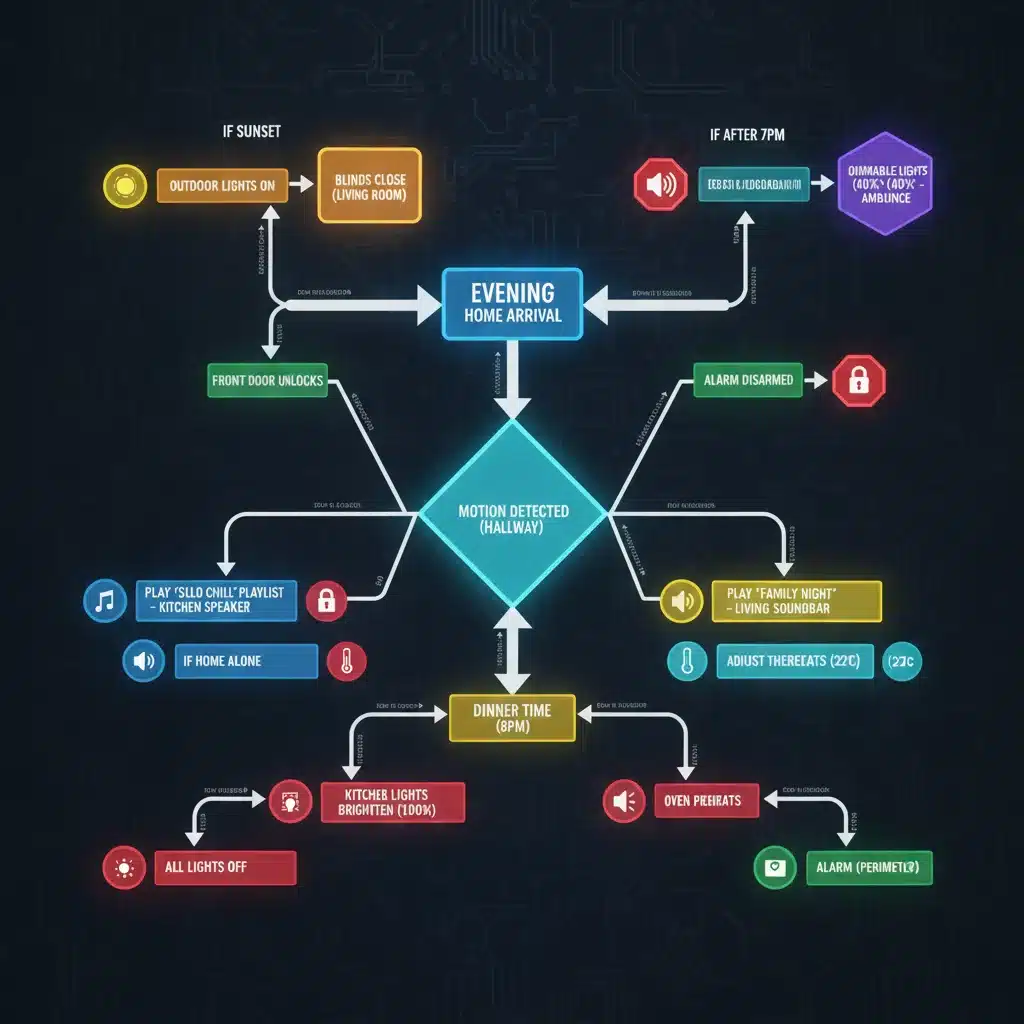
This is a hallmark of advanced voice automation. Most platforms now allow "if-then" statements. For example:
- IF it’s before 7 AM, THEN dim lights to 10% and play soft music. ELSE, dim lights to 50% and play news.
- IF motion detected in the hallway AND it’s between 1 AM and 5 AM, THEN turn on hallway light to 5% for 2 minutes.
Some platforms also support variables, allowing routines to dynamically adjust based on input (e.g., "Set the living room temperature to [X] degrees").
-
Test and Refine:
Automation is an iterative process. Test your routines thoroughly. Do they execute as expected? Is the timing right? Are the voice commands intuitive? Don’t be afraid to tweak and optimize until it’s perfect.
For example, a sophisticated "Goodnight" routine could:
- Turn off all lights downstairs.
- Lock all exterior doors and arm the perimeter alarm.
- Set the thermostat to 68°F.
- Play white noise in the bedroom for 60 minutes.
- Turn off all smart displays.
- Confirm, "All doors are locked, and the house is secured. Goodnight!"
This level of control, all initiated with a simple phrase, exemplifies the comfort and security offered by advanced voice automation.
Integrating Diverse Smart Home Ecosystems for Seamless Control
One of the biggest hurdles in early smart homes was the fragmentation of ecosystems. Different brands, different apps, and often, incompatible communication protocols. In 2026, significant strides have been made towards interoperability, primarily driven by standards like Matter, Thread, and expanded API integrations.
Key Strategies for Ecosystem Integration:
-
Embrace Matter & Thread:
These new connectivity standards are game-changers. Matter allows devices from different manufacturers to communicate locally and reliably, regardless of the brand. Thread creates a robust, self-healing mesh network for low-power devices. Prioritize devices that support these standards when expanding your smart home.
-
Choose a Central AI Assistant:
While you might have devices from various brands, select one primary AI assistant (e.g., Google Assistant Pro, Amazon Alexa Ultra, Apple HomeKit) as your central control hub. Most modern devices are compatible with at least one, if not all, of these major platforms.
-
Utilize IFTTT (If This Then That) or Similar Services:
For niche integrations or highly specific cross-platform automations not directly supported by your main AI assistant, IFTTT remains a powerful tool. It allows you to create "applets" that link services and devices, enabling complex conditional triggers and actions across otherwise incompatible systems.
-
Leverage "Hubs" and Bridges:
Some smart home hubs (like SmartThings, Hubitat, or Homey) are designed to be ecosystem agnostic, acting as translators between different protocols (Zigbee, Z-Wave, Wi-Fi, Matter) and exposing them to your chosen AI assistant. This is particularly useful for older devices or specialized hardware.
-
API Integrations and Developer Tools:
For the technically inclined, many smart home devices and services offer APIs (Application Programming Interfaces). This allows for custom programming and integration, creating bespoke advanced voice automation solutions that are perfectly tailored to your unique requirements.
A well-integrated smart home means fewer headaches and more seamless execution of your advanced voice automation commands. It ensures that your "movie night" command not only dims the lights and starts the projector but also adjusts the smart thermostat, locks the front door, and silences your phone, regardless of the brands involved.
Security and Privacy in Advanced Voice Automation
As our homes become smarter and more interconnected through voice control, concerns about security and privacy naturally arise. In 2026, leading AI assistant providers have made significant strides in addressing these concerns, but user vigilance remains paramount.
Key Considerations for Security and Privacy:
- Voice Biometrics: Utilize voice recognition features to ensure only authorized users can trigger sensitive commands (e.g., unlocking doors, making purchases).
- Two-Factor Authentication (2FA): Enable 2FA wherever possible for your smart home accounts and connected services.
- Permissions Management: Regularly review and restrict device and app permissions. Only grant access to what’s absolutely necessary for a device or service to function.
- Data Encryption: Ensure your smart home devices and services use robust encryption for data in transit and at rest.
- Local Processing: Opt for devices and assistants that offer more on-device processing, reducing the amount of data sent to the cloud.
- Privacy Modes: Utilize features like "mute microphone" buttons or privacy settings on your AI assistants when not in use.
- Secure Network: Implement a strong Wi-Fi password and consider segmenting your smart home devices onto a separate network (VLAN) for enhanced security.
- Regular Updates: Keep all your smart home devices, apps, and AI assistant software updated to patch vulnerabilities.
- Understand Data Usage: Read the privacy policies of your smart home device manufacturers and AI assistant providers to understand how your data is collected and used.
While the convenience of advanced voice automation is immense, it should never come at the expense of your digital security or personal privacy. By taking proactive steps, you can enjoy the benefits of a smart home with peace of mind.
Future Trends in Advanced Voice Automation (Beyond 2026)
The pace of innovation in smart home technology shows no signs of slowing down. Looking beyond 2026, we can anticipate even more transformative developments in advanced voice automation:
- Proactive & Predictive AI: Assistants will move beyond reacting to commands to truly anticipating needs, perhaps even initiating actions before you voice them, based on deep learning of your habits, biometrics, and environmental data.
- Emotional Intelligence: AI assistants may gain the ability to detect and respond to your emotional state, adjusting lighting, music, or even offering supportive messages based on your tone of voice or physiological data from wearables.
- Hyper-Personalization: Homes will become even more attuned to individual preferences within a household, offering unique experiences for each occupant simultaneously.
- Multi-Modal Interaction Dominance: The combination of voice, gestures, gaze tracking, and even thought interfaces will become more commonplace, offering a richer and more natural way to interact with your home.
- Energy Optimization & Sustainability: AI will play an even larger role in optimizing home energy consumption, dynamically adjusting systems based on real-time energy prices, grid demand, and individual usage patterns, all managed through intuitive voice commands.
- Robotics Integration: Voice commands will seamlessly control household robots for cleaning, cooking assistance, or even companionship, integrating them into complex home routines.
- Decentralized AI & Edge Computing: More processing will happen locally on devices, reducing reliance on cloud servers, enhancing privacy, and improving responsiveness, especially in areas with limited internet connectivity.
These trends paint a picture of a future where our homes are not just smart, but truly intelligent companions, making our lives easier, more comfortable, and more sustainable, all orchestrated by the power of our voice.
Conclusion: Mastering Your Intelligent Home with Advanced Voice Automation
The journey from basic voice commands to advanced voice automation is a testament to the rapid innovation in smart home technology. In 2026, we stand at the precipice of a truly intelligent living experience, where our homes anticipate our needs, respond to our nuanced desires, and operate with an efficiency and personalization that was once the stuff of dreams.
By understanding the capabilities of leading AI assistants like Google Assistant Pro, Amazon Alexa Ultra, and Apple HomeKit with Siri 2026, and by strategically crafting sophisticated routines with conditional logic and multi-device integration, you can unlock an unparalleled level of control and convenience. The key is to think beyond simple on/off switches and envision how your voice can orchestrate entire sequences of events, transforming your daily life.
While the technological advancements are impressive, remember that the most effective smart homes are those tailored to the unique needs and preferences of their inhabitants. Invest time in planning your routines, testing them rigorously, and continuously refining them. Prioritize security and privacy in your setup, ensuring that your intelligent home remains a safe and secure sanctuary.
Embrace the future of living. Your voice is not just a tool; it’s the conductor of your smart home symphony. Start exploring the depths of advanced voice automation today, and reshape your home into a truly responsive, intuitive, and intelligent environment that works for you, effortlessly.