
In the rapidly evolving landscape of smart homes, the promise of seamless, effortless living hinges entirely on one critical factor: reliability. As we march into 2026, the expectation isn’t just for devices to connect, but for them to perform their automated tasks with near-perfect precision. This means building home automation triggers that boast an impressive 99% reliability. But how do we get there? It’s a journey from the very first sensor input to the final automated action, demanding meticulous planning, robust hardware, resilient software, and a deep understanding of potential failure points.
The allure of home automation is undeniable: imagine your lights dimming as you settle in for a movie, your thermostat adjusting to your preferred temperature before you arrive home, or your security system arming itself as you leave. These aren’t just conveniences; they’re integral parts of modern living. However, a trigger that fails even 1% of the time can lead to frustration, wasted energy, or even security vulnerabilities. This comprehensive guide will delve into the strategies, technologies, and best practices required to achieve truly reliable automation triggers, ensuring your smart home works for you, every single time.
Understanding the Core of Reliable Automation Triggers
At its heart, a home automation trigger is an ‘if-then’ statement. IF a certain condition is met (the trigger), THEN a specific action is performed. The reliability of this entire chain depends on every link being strong. This includes the sensor that detects the initial condition, the communication network that transmits this data, the central hub that processes the logic, and the actuator that performs the action.
The Foundation: High-Quality Sensors
The journey to 99% reliability begins with the input – the sensors. A faulty sensor or one that provides inconsistent data will inevitably lead to unreliable triggers. Investing in high-quality sensors is not an expense; it’s an investment in the stability of your entire system. Here’s what to look for:
- Accuracy and Precision: For temperature, humidity, light, or motion, how accurate are the readings? How frequently do they update?
- Response Time: How quickly does the sensor detect a change and report it? A slow motion sensor can mean lights turn on after you’ve already entered a room.
- Durability and Longevity: Sensors exposed to environmental factors (outdoor temperature, moisture) need to be robust. Battery life is also a crucial consideration for wireless sensors.
- Communication Protocol: Ensure sensors use reliable protocols (Zigbee, Z-Wave, Thread, Wi-Fi) that are compatible with your hub and offer good range and interference resistance.
- Redundancy: For critical functions, consider deploying multiple sensors to verify conditions. For example, two motion sensors in a high-traffic area, or a light sensor combined with a time-of-day trigger for lighting.
Choosing the Right Sensor Types for Reliable Automation Triggers
Different automation needs call for different sensor types. Understanding their strengths and weaknesses is key to building robust triggers:
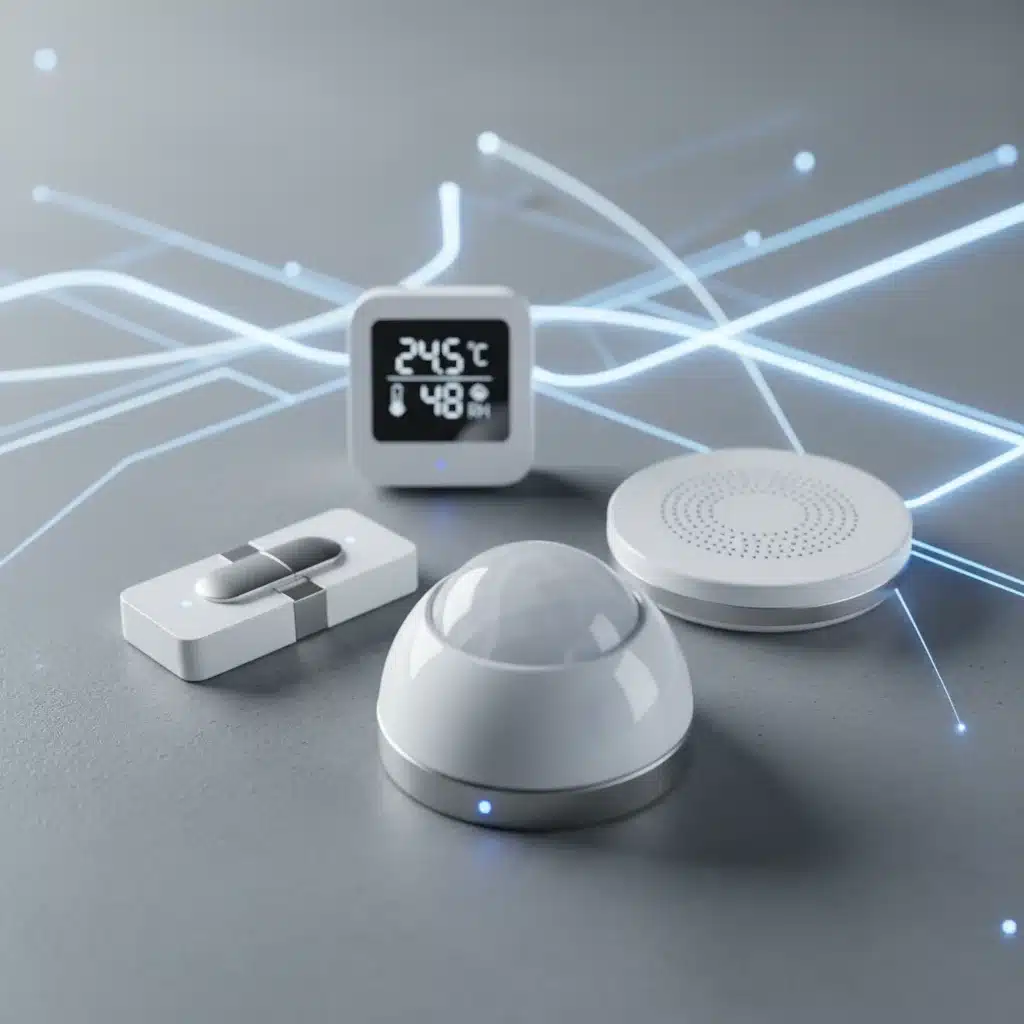
- Motion Sensors (PIR, Microwave, Ultrasonic): PIR (Passive Infrared) are common but can be prone to false positives from pets or drafts. Microwave/ultrasonic sensors are more precise but can be more expensive. For critical security or lighting, consider dual-technology sensors.
- Contact Sensors (Door/Window): Essential for security and energy efficiency. Opt for reputable brands known for strong magnetic contacts and secure mounting.
- Environmental Sensors (Temperature, Humidity, Air Quality): Crucial for HVAC automation. Placement is vital; avoid direct sunlight or drafts that can skew readings.
- Light Sensors (Lux Sensors): For dynamic lighting control. Ensure they have a wide dynamic range to handle various light conditions accurately.
- Water Leak Sensors: Critical for preventing damage. Place them in vulnerable areas like under sinks, near water heaters, and in basements.
- Presence Sensors (Radar, mmWave): Emerging technology offering more granular presence detection than traditional motion sensors, distinguishing between sitting and standing, or even breathing, leading to fewer false negatives for occupancy-based triggers.
The Backbone: A Robust Communication Network
Even the best sensors are useless if their data can’t reliably reach the hub. Your smart home network is the highway for all this critical information. A weak or congested network is a primary culprit for unreliable automation triggers.
Wi-Fi Optimization for Smart Devices
While convenient, Wi-Fi can be prone to congestion. Here’s how to optimize it:
- Dedicated IoT Network (VLAN): Isolate your smart devices on their own Wi-Fi network or VLAN. This reduces traffic on your main network and enhances security.
- Router Placement: Centralize your router for optimal coverage. Consider mesh Wi-Fi systems for larger homes.
- Channel Optimization: Use a Wi-Fi analyzer to identify and switch to less congested channels (especially for 2.4GHz).
- Quality of Service (QoS): Prioritize traffic from critical smart home devices on your router settings.
Leveraging Mesh Networks: Zigbee, Z-Wave, and Thread
For superior reliability and scalability, dedicated IoT mesh protocols are often preferred over Wi-Fi for many sensors and devices:
- Zigbee: Widely adopted, low power, and creates a self-healing mesh network. Devices act as repeaters, extending the network’s range.
- Z-Wave: Similar to Zigbee, but operates on a different frequency (less Wi-Fi interference) and has stricter interoperability standards. Also forms a robust mesh.
- Thread: An IP-based mesh networking protocol, offering advantages in direct cloud connectivity and future-proofing. Often seen in newer devices and Matter-compatible ecosystems.
The key benefit of mesh networks is their self-healing nature. If one device (node) goes offline, data can reroute through other nearby devices, maintaining connectivity and ensuring your reliable automation triggers continue to function.
The Brain: Smart Home Hubs and Automation Logic
The smart home hub is where all the sensor data converges and where your automation logic is executed. Its reliability is paramount.
Choosing a Robust Smart Home Hub
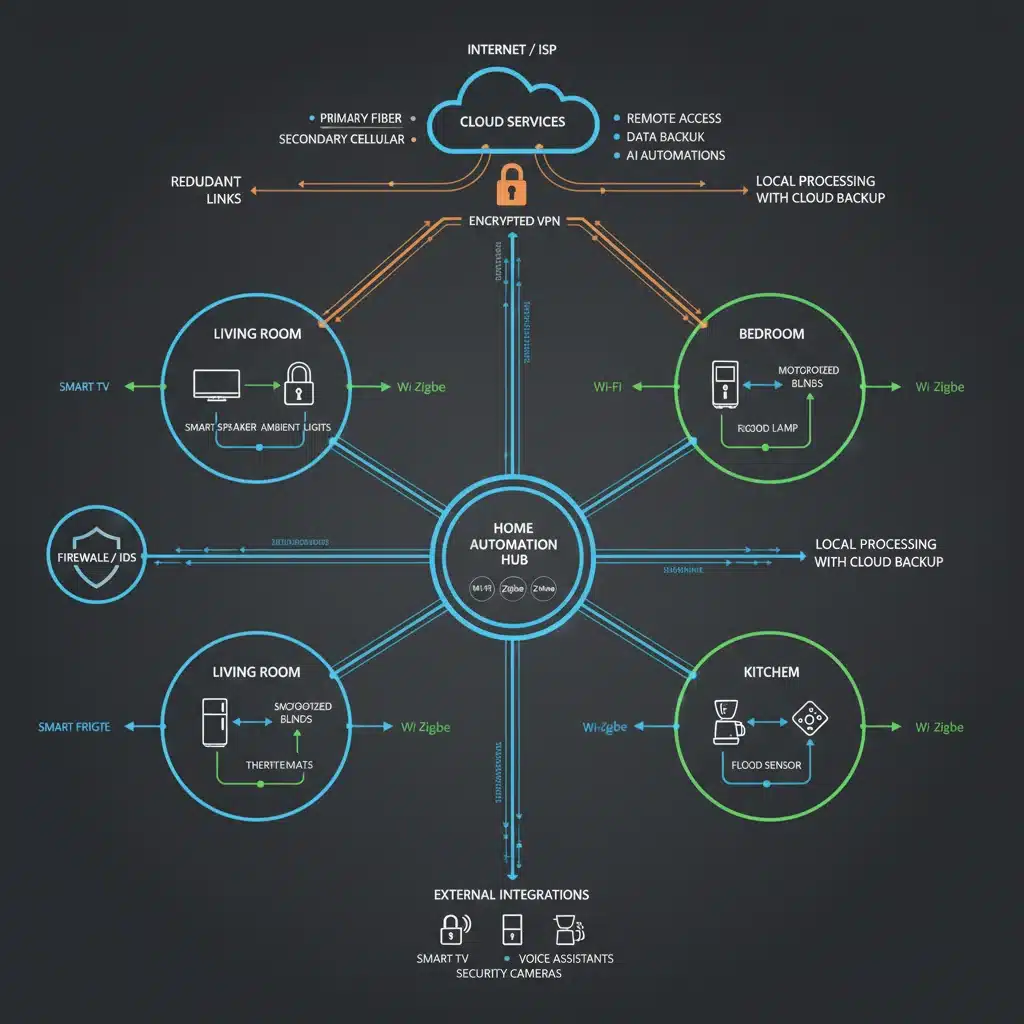
- Local Processing: Opt for hubs that can process automation rules locally (on-device) rather than relying solely on cloud processing. This ensures triggers work even if your internet goes down. Examples include Home Assistant, Hubitat, and some SmartThings setups with local execution.
- Protocol Support: A hub that supports multiple protocols (Wi-Fi, Zigbee, Z-Wave, Thread) offers greater flexibility and reduces reliance on a single point of failure.
- Processing Power and Memory: A more powerful hub can handle complex automations and a larger number of devices without slowdowns.
- Reliable Software/Firmware: Choose hubs from manufacturers with a track record of stable software updates and good community support.
Crafting Resilient Automation Logic for Reliable Automation Triggers
The way you define your ‘if-then’ rules significantly impacts reliability. Simple, direct rules are good, but robust systems often require more sophisticated logic.
- Conditional Triggers: Don’t just trigger based on one condition. Add secondary conditions. For example, IF motion detected AND it’s dark, THEN turn on lights. This prevents lights from turning on during the day.
- Time-Based Constraints: Incorporate time windows. E.g., IF door opens AND it’s between 10 PM and 6 AM, THEN send notification.
- State-Based Logic: Instead of just ‘turn on,’ use ‘turn on if off.’ This prevents redundant commands and potential errors.
- Delays and Debouncing: For sensors that might briefly fluctuate (e.g., a door contact sensor that bounces), introduce small delays before executing an action. ‘IF motion detected for 5 seconds, THEN turn on light.’
- Loops and Retries: For critical actions (e.g., locking a door), implement logic that checks if the action was successful and retries if it wasn’t.
- Virtual Switches/Booleans: Use these to track states within your automation system, allowing for more complex logic flows and preventing contradictory automations.
Mitigating Failure Points: Building Redundancy and Fail-Safes
Even with the best components, failures can occur. The key to 99% reliability is having strategies to handle these eventualities.
Power Outages and Connectivity Loss
- UPS (Uninterruptible Power Supply): Connect your hub, router, and modem to a UPS. This keeps your local automations running during short power flickers or outages.
- Battery Backup for Devices: Many sensors run on batteries, but ensure critical devices (like smart locks) have robust battery life and low-battery alerts.
- Local Control/Fallback: Ensure you can still manually control devices if the network or hub fails. Smart bulbs that revert to a default state (e.g., on at 50% brightness) after a power cycle are useful.
- Cellular Backup: For critical security systems, a hub with cellular backup ensures alerts are sent even if your internet is down.
Sensor Failure and Data Inconsistencies
- Sensor Health Monitoring: Many hubs or platforms can monitor sensor battery levels and last-seen timestamps. Set up alerts for unresponsive sensors or low batteries.
- Data Validation: If a sensor reports an anomalous reading (e.g., -50 degrees Celsius indoors), your automation logic should ignore it or flag it as an error rather than acting upon it.
- Redundant Sensors: As mentioned, for critical applications, having two sensors verify a condition can prevent false positives or negatives.
Software Glitches and Firmware Updates
- Staging Environments (for advanced users): If you heavily customize your system (e.g., Home Assistant), test new automations or major updates in a non-production environment first.
- Regular Backups: Back up your hub’s configuration regularly. This is crucial for quick recovery from software issues or hardware failure.
- Automated Self-Healing: Some advanced setups can include rules to reboot devices or services if they become unresponsive.
Advanced Strategies for Uncompromising Reliability
To push beyond good and achieve truly exceptional reliability, consider these advanced techniques.
Edge Computing and Local AI for Reliable Automation Triggers
Moving some processing closer to the sensors (edge computing) can reduce latency and reliance on cloud services. Local AI processing can enable more intelligent and adaptive triggers:
- Local Object Recognition: Cameras with onboard AI can detect specific objects (e.g., a package at the door, a pet on the couch) and trigger actions without sending video to the cloud.
- Occupancy Learning: Systems that learn occupancy patterns over time can refine HVAC and lighting schedules, reducing false triggers and optimizing energy use.
- Predictive Maintenance: Monitoring device performance and battery degradation can allow for proactive replacement before failure occurs.
Integrating Multiple Ecosystems with Matter
The advent of Matter is a game-changer for interoperability and, by extension, reliability. By standardizing communication, Matter aims to reduce compatibility headaches and create a more robust, unified smart home experience. A Matter-compatible hub can seamlessly integrate devices from different brands, allowing you to choose the most reliable sensor or actuator for each task, regardless of its original ecosystem.
Proactive Monitoring and Alerting
Don’t wait for something to break. Implement systems that actively monitor the health of your smart home:
- Dashboard Monitoring: Create a dashboard that displays the status of critical sensors, device battery levels, network health, and recent automation executions.
- Anomaly Detection: Set up alerts for unusual events, such as a door opening in the middle of the night when no one is home, or a temperature sensor reporting a sudden, drastic change.
- Log Analysis: Regularly review your hub’s logs for errors or warnings. This can help identify intermittent issues before they become critical failures for your reliable automation triggers.
The Future of Reliable Automation Triggers in 2026 and Beyond
As we look to 2026, the focus will continue to be on systems that are not just smart, but truly intelligent and self-healing. Machine learning will play an increasingly vital role in predicting failures, optimizing performance, and adapting to user behavior with minimal intervention. The goal is to move from reactive troubleshooting to proactive system management, where your smart home anticipates needs and resolves potential issues before they even impact your experience.
The journey to 99% reliable automation triggers is continuous. It requires ongoing attention to detail, a willingness to upgrade components, and a commitment to understanding the intricate dance between hardware, software, and network. By focusing on high-quality sensors, robust networks, intelligent hubs, and comprehensive fail-safes, you can build a smart home that truly delivers on its promise of convenience, efficiency, and peace of mind, operating flawlessly day in and day out.
Conclusion: Your Blueprint for Unwavering Smart Home Performance
Achieving 99% reliability in home automation triggers by 2026 is an ambitious yet entirely attainable goal. It’s a holistic endeavor that starts with the fundamental choice of high-quality sensors, extends through the meticulous design of a resilient communication network, and culminates in the intelligent programming of your smart home hub. By embracing local processing, redundancy, fail-safe mechanisms, and proactive monitoring, you transform your smart home from a collection of gadgets into a dependable, intelligent ecosystem.
Remember, reliability isn’t a feature you add; it’s a principle you build into every layer of your system. From selecting robust hardware to crafting nuanced automation logic and preparing for unexpected outages, each step contributes to the overall stability. As technology advances with standards like Matter and greater integration of AI at the edge, the path to near-perfect smart home performance becomes clearer. Invest wisely, plan thoroughly, and continuously refine your setup, and you’ll enjoy a smart home that consistently delivers on its promise, making your life simpler, safer, and more efficient, day after day.