AI Home Automation: Unlocking Smart Home Features by 2026
Insider’s Guide to AI-Powered Home Automation: Unlocking Advanced Features in Your US Smart Home by Mid-2026
The concept of a ‘smart home’ has evolved dramatically over the past decade, moving beyond simple remote control to sophisticated, intelligent ecosystems. As we approach mid-2026, the integration of artificial intelligence (AI) into home automation is no longer a futuristic dream but a rapidly unfolding reality, particularly in the US market. This comprehensive guide will delve deep into the transformative power of AI Home Automation, exploring the advanced features that are redefining convenience, security, and energy efficiency in our living spaces. Prepare to unlock the full potential of your smart home as AI takes center stage, making our environments more intuitive, responsive, and truly intelligent.
The Evolution of Smart Homes: From Automation to Intelligence
Initially, smart homes were about automating tasks: turning lights on and off, adjusting thermostats, or locking doors with a tap on a smartphone. While convenient, these early systems often lacked true intelligence, requiring explicit commands or pre-programmed schedules. The advent of AI has changed this paradigm entirely. Now, your home isn’t just following instructions; it’s learning, adapting, and anticipating your needs. This leap from mere automation to genuine intelligence is the cornerstone of modern AI Home Automation.
In the US, consumer adoption of smart home devices has been steadily climbing. Research indicates a significant portion of households already own at least one smart device, ranging from smart speakers to connected appliances. However, the next wave of innovation, driven by AI, promises to integrate these disparate devices into a cohesive, sentient home environment. Imagine a home that understands your daily routines, adjusts lighting based on natural light and your mood, optimizes energy consumption without manual input, and even proactively identifies potential security threats. This is the promise of advanced AI Home Automation.
Defining AI-Powered Home Automation
At its core, AI Home Automation refers to the use of artificial intelligence algorithms and machine learning techniques to enable smart home devices and systems to operate autonomously, learn from user behavior, and make intelligent decisions. This goes beyond simple IF-THEN rules. AI systems can process vast amounts of data from various sensors (motion, light, temperature, sound, etc.), analyze patterns, and then execute actions that enhance comfort, safety, and efficiency. It’s about creating a truly responsive and adaptive living space.
Key Advanced Features of AI Home Automation by Mid-2026
By mid-2026, several advanced AI-powered features will become mainstream in US smart homes, transforming how we interact with our living environments. These innovations are designed to offer unparalleled convenience and efficiency.
1. Predictive Personalization and Proactive Controls
One of the most exciting aspects of AI Home Automation is its ability to predict your needs. Instead of simply reacting to commands, AI systems will learn your habits over time. For example, your thermostat won’t just adjust to a schedule; it will learn when you typically arrive home, considering traffic patterns, and pre-cool or pre-heat your house to your preferred temperature. It will also understand seasonal changes and adapt accordingly. AI-powered lighting systems will learn your preferred illumination levels throughout the day and adjust automatically, even considering external weather conditions to optimize natural light usage.
Imagine your smart home knowing you’re about to leave for work and automatically disarming the security system, locking doors, and turning off unnecessary lights. Or, as you settle down for an evening movie, the blinds close, lights dim, and the TV turns on to your preferred streaming service – all without you uttering a single command. This level of proactive control, driven by sophisticated AI algorithms, will become a standard expectation in advanced smart homes.
2. Enhanced Security and Surveillance with AI
Home security has always been a primary driver for smart home adoption. With AI, security systems are becoming exponentially more intelligent and effective. By mid-2026, AI-powered security cameras will feature advanced facial recognition, distinguishing between residents, known visitors, and strangers. This means fewer false alarms and more precise alerts. These systems will also be able to detect unusual patterns of activity, such as a package left for too long or someone loitering, and send immediate, actionable notifications.
Beyond cameras, AI will integrate with smart door locks and sensors to create a comprehensive security perimeter. Machine learning algorithms can analyze sound patterns to identify broken glass, smoke alarms (even if not connected to the smart system), or unusual noises, alerting homeowners and even emergency services automatically. This proactive threat detection and intelligent response capabilities are pivotal for the next generation of AI Home Automation security.
3. Adaptive Energy Management and Sustainability
Energy efficiency is a critical concern for homeowners, both for cost savings and environmental impact. AI Home Automation offers groundbreaking solutions in this area. AI-powered energy management systems will go beyond simple scheduling. They will analyze real-time energy prices, weather forecasts, solar panel output (if applicable), and your historical consumption patterns to optimize energy usage throughout your home.
For instance, an AI system might pre-cool your home during off-peak electricity hours, or automatically adjust heating based on the number of occupants detected in a room. It can learn which appliances consume the most energy and suggest ways to reduce their usage or even automate their operation during more efficient times. This adaptive approach not only saves money but also contributes significantly to a more sustainable lifestyle, making your smart home an active participant in environmental stewardship.
4. Seamless Integration and Interoperability
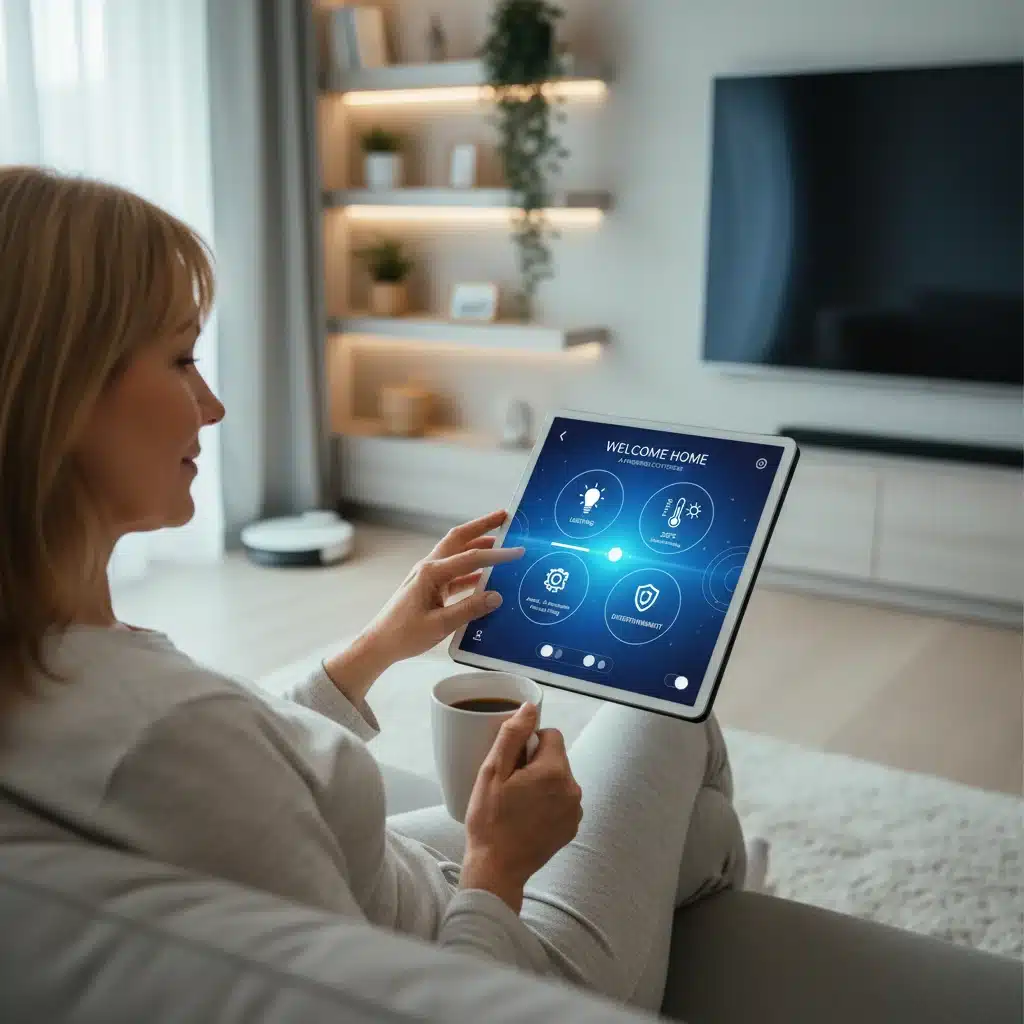
One of the biggest frustrations with early smart home systems was the lack of interoperability between different brands and ecosystems. By mid-2026, AI will act as a universal translator and orchestrator, enabling seamless communication between a vast array of devices, regardless of manufacturer. Standards like Matter and Thread, coupled with advanced AI engines, will ensure that your smart thermostat can talk to your smart lighting, your security cameras, and even your smart appliances, all working together in a unified, intelligent manner.
This seamless integration means a truly holistic smart home experience where devices don’t just coexist but actively collaborate to enhance your living environment. AI will handle the complexities of different protocols and APIs, presenting a cohesive and intuitive user experience. This level of interoperability is crucial for the widespread adoption and true potential of AI Home Automation.
5. Voice and Gesture Control with Advanced Understanding
While voice assistants like Alexa and Google Assistant are commonplace, AI is pushing the boundaries of natural language understanding and interaction. By mid-2026, voice control will be more nuanced, capable of understanding complex, multi-step commands and even anticipating your next request. AI will also enable more sophisticated gesture controls, allowing you to interact with your home in more natural and intuitive ways.
Imagine simply pointing at a light to turn it off, or making a specific hand gesture to adjust the volume of your music. Furthermore, AI will personalize voice interactions, recognizing individual voices and tailoring responses or actions based on who is speaking. This enhanced level of interaction makes AI Home Automation not just convenient but genuinely intuitive and user-friendly for every member of the household.
The Underlying Technologies Driving AI Home Automation
The advancements in AI Home Automation are powered by several sophisticated technologies working in concert. Understanding these components helps appreciate the intelligence behind your smart home.
Machine Learning and Deep Learning
At the heart of AI in smart homes are machine learning (ML) and deep learning (DL) algorithms. These allow systems to learn from data without being explicitly programmed. For example, an ML algorithm can analyze your daily routines, energy consumption patterns, and preferences to build a predictive model of your home’s needs. Deep learning, a subset of ML, is particularly effective for tasks like facial recognition, voice command processing, and anomaly detection in security systems, allowing for highly accurate and robust intelligent features.
Edge Computing and Cloud AI
The processing power for AI Home Automation often comes from a combination of edge computing and cloud AI. Edge computing refers to processing data directly on the device (e.g., a smart camera analyzing footage locally for immediate threat detection), which reduces latency and enhances privacy. Cloud AI, on the other hand, allows for more complex computations, data storage, and the training of sophisticated AI models using vast datasets. The optimal balance between these two ensures both responsiveness and advanced intelligence.
Sensor Fusion and Data Analytics
Modern smart homes are equipped with an array of sensors: motion, temperature, humidity, light, sound, air quality, and more. AI systems employ sensor fusion techniques to combine data from multiple sources, providing a more comprehensive understanding of the home environment. Advanced data analytics then process this fused data, identifying patterns, anomalies, and insights that inform the AI’s decisions and actions. This rich data environment is what allows for truly intelligent and adaptive home responses.
Challenges and Considerations for AI Home Automation Adoption
While the future of AI Home Automation is bright, there are several challenges and considerations that need to be addressed for widespread adoption, especially in the US market.
Privacy and Data Security
As smart homes become more intelligent and collect more data about our lives, privacy and data security become paramount concerns. Homeowners need assurances that their personal data – from daily routines to voice commands and video footage – is protected from unauthorized access and misuse. Manufacturers and service providers must implement robust encryption, secure data storage, and transparent data handling policies. Regulations and industry standards will play a crucial role in building consumer trust in this area.
Cost and Accessibility
The initial cost of implementing a comprehensive AI Home Automation system can be a barrier for some consumers. While basic smart devices are increasingly affordable, advanced AI-powered systems with integrated features can still represent a significant investment. As technology matures and economies of scale take effect, prices are expected to become more accessible. Furthermore, ensuring that these technologies are user-friendly and accessible to individuals of all technical aptitudes is essential for broader adoption.
Reliability and Connectivity
A truly intelligent home relies on robust and stable connectivity. Intermittent Wi-Fi, network congestion, or device malfunctions can degrade the AI experience. Manufacturers must focus on creating highly reliable devices and systems that can function effectively even with occasional network interruptions. The underlying infrastructure, including high-speed internet access, is also crucial for maximizing the potential of AI-driven smart homes.

The Future Landscape: AI Home Automation Beyond 2026
Looking beyond mid-2026, the trajectory of AI Home Automation promises even more transformative changes. We can anticipate homes that are not just smart but truly empathetic and anticipatory, capable of supporting our well-being in profound ways.
Health and Wellness Integration
Future AI-powered homes will likely play a significant role in health monitoring and wellness. Imagine sensors that track sleep patterns, air quality, and even vital signs, integrating with AI to offer personalized recommendations for improving well-being. AI could detect subtle changes in behavior that might indicate health issues, alerting family members or healthcare providers. Smart homes could become proactive assistants in maintaining a healthy lifestyle, from reminding you to hydrate to suggesting light therapy based on your circadian rhythm.
Elderly Care and Assisted Living
For the elderly or individuals with disabilities, AI Home Automation offers immense potential for independent living. AI systems can monitor daily activities, detect falls, remind individuals to take medication, and facilitate communication with caregivers. These systems can provide a sense of security and support, allowing vulnerable individuals to maintain their autonomy while offering peace of mind to their families.
Immersive Entertainment and Productivity
AI will further enhance home entertainment and productivity. Immersive experiences will move beyond traditional screens, with AI-driven augmented reality (AR) and virtual reality (VR) seamlessly integrated into living spaces. Your home office could become an AI-optimized productivity hub, adjusting lighting, soundscapes, and climate to maximize focus and creativity. AI will personalize content delivery, curate experiences, and even recommend new forms of entertainment based on your evolving preferences.
Getting Started with AI Home Automation in Your US Home
For those eager to embrace the future of AI Home Automation, getting started can seem daunting. Here’s a practical approach:
- Assess Your Needs: What aspects of your home life do you want to enhance? Security, energy efficiency, convenience, or entertainment? Prioritizing your needs will help you choose the right devices and systems.
- Choose a Core Ecosystem: Decide on a primary smart home platform (e.g., Amazon Alexa, Google Home, Apple HomeKit) that will serve as the central hub for your devices. This helps ensure better compatibility and a unified experience.
- Start Small and Expand: Begin with a few key AI-enabled devices, suchs a smart thermostat, a smart speaker, or a security camera with AI features. As you become comfortable, gradually expand your system.
- Prioritize Interoperability: Look for devices that support open standards like Matter and Thread, ensuring they can easily integrate with other smart home products in the future.
- Research and Read Reviews: The market is constantly evolving. Stay informed about the latest products, read expert reviews, and consider user feedback before making purchases.
- Consider Professional Installation: For complex systems or whole-home integration, professional installation can ensure optimal performance and setup.
Conclusion: The Intelligent Home is Here
By mid-2026, AI Home Automation will be an indispensable part of modern living in the US. The transition from simple automation to truly intelligent, adaptive, and proactive home environments is well underway. From personalized comfort and enhanced security to significant energy savings and future health integration, AI is reshaping our homes into intuitive partners that anticipate our needs and simplify our lives.
Embracing these advanced features means stepping into a future where your home works tirelessly and intelligently for you, creating a living experience that is more comfortable, secure, efficient, and enjoyable than ever before. The intelligent home is not just a concept of tomorrow; it is the reality of today, and it’s only going to get smarter.