Achieve 15% Faster Response Times: Optimizing Your Home Automation Routines with Latest 2026 Protocols

In the rapidly evolving landscape of smart home technology, efficiency and speed are no longer luxuries but necessities. As our homes become increasingly interconnected, the demand for instantaneous responses from our automated routines grows exponentially. Imagine a world where your lights turn on the moment you enter a room, your thermostat adjusts before you even feel a chill, and your security system reacts in milliseconds. This isn’t a futuristic dream; it’s the achievable reality with strategic home automation optimization.
This comprehensive guide will delve into the critical strategies and the groundbreaking 2026 protocols designed to supercharge your smart home. Our goal? To help you achieve a remarkable 15% faster response time in your home automation routines, ensuring a seamless, responsive, and truly intelligent living experience. We’ll explore everything from network infrastructure and device compatibility to advanced configuration techniques and the revolutionary standards poised to redefine smart home performance.
The Foundation of Speed: Understanding Latency in Home Automation
Before we can optimize, we must first understand the enemy of speed: latency. In home automation, latency refers to the delay between an event (e.g., a motion sensor detecting presence) and the corresponding action (e.g., lights turning on). This delay can be influenced by numerous factors, ranging from network congestion and device processing power to communication protocols and cloud server response times. Minimizing these delays is the essence of home automation optimization.
A 15% reduction in response time might sound marginal, but in the context of user experience, it’s a monumental leap. It transforms a noticeable lag into an almost instantaneous reaction, making your smart home feel more intuitive and natural. Achieving this requires a holistic approach, addressing every potential bottleneck in your system.
Common Causes of Home Automation Latency:
- Network Congestion: Too many devices competing for bandwidth on your Wi-Fi network.
- Outdated Protocols: Relying on older communication standards that are slower and less efficient.
- Cloud Dependency: Routines that require communication with external servers introduce unavoidable delays.
- Underpowered Hubs: Smart home hubs or controllers with insufficient processing power.
- Device Incompatibility: Mixed ecosystems leading to communication inefficiencies between different brands.
- Interference: Radio frequency interference from other wireless devices.
Embracing the Future: Latest 2026 Protocols for Enhanced Performance
The year 2026 marks a pivotal moment for home automation optimization, with several new and refined protocols set to significantly improve response times and reliability. These advancements address the limitations of current technologies, paving the way for truly responsive smart homes.
Matter 2.0: The Unified Language of Smart Homes
Building upon the foundational success of Matter, Matter 2.0 (anticipated in 2026) is expected to bring even greater enhancements in device interoperability and local processing. While Matter 1.0 focused on basic device types, Matter 2.0 will likely expand to cover a wider array of complex devices and introduce more robust local execution capabilities. This means more routines can run directly on your hub or even on individual devices, drastically reducing reliance on the cloud and, consequently, latency. The goal of Matter 2.0 is to make device setup even simpler, and, more importantly for our purposes, to standardize communication pathways to minimize unnecessary data hops and conversions, thereby inherently speeding up command execution. This is crucial for achieving our 15% faster response time target.
Wi-Fi 7 (802.11be) – Extremely High Throughput (EHT)
While Wi-Fi 7 is already making inroads, its widespread adoption and optimization for smart home devices will be more prominent by 2026. Wi-Fi 7 offers significantly higher throughput, lower latency, and improved capacity compared to its predecessors (Wi-Fi 6/6E). Key features like Multi-Link Operation (MLO) allow devices to simultaneously send and receive data across different frequency bands (2.4 GHz, 5 GHz, and 6 GHz), dramatically reducing congestion and improving reliability. For home automation optimization, this means your smart devices have a dedicated, superhighway for communication, ensuring commands are delivered and executed almost instantly, even in crowded network environments. Upgrading your router and ensuring your smart devices support Wi-Fi 7 will be a cornerstone of achieving faster response times.

Thread 2.0 and Zigbee Pro 2026
For low-power mesh networks, Thread and Zigbee remain dominant. Thread 2.0, expected to integrate even more seamlessly with Matter, will enhance mesh routing efficiency and device battery life, making it ideal for sensors and smaller devices. Zigbee Pro 2026 will likely focus on further strengthening security and improving network self-healing capabilities, ensuring robust and responsive communication for a wide array of peripherals. These protocols are vital for the myriad of sensors, switches, and locks that form the backbone of many home automation routines. Their advancements mean faster detection and faster command propagation across your mesh network, directly contributing to overall system responsiveness.
Emerging Edge Computing and AI Integration
Beyond specific communication protocols, the trend towards edge computing and integrated AI at the device or hub level will be paramount by 2026. This means more processing power resides closer to the data source, allowing for quicker decision-making without needing to send data to the cloud. For example, a smart camera with on-device AI can identify a person and trigger a routine locally, rather than sending video streams to a cloud service for analysis. This paradigm shift is a game-changer for home automation optimization, significantly cutting down latency for critical, time-sensitive actions.
Strategic Network Optimization: The Backbone of a Responsive Smart Home
Even with the latest protocols, a poorly optimized network can cripple your smart home’s performance. Think of your network as the nervous system of your home; if it’s sluggish, every action will be delayed. Here’s how to ensure it’s operating at peak efficiency for home automation optimization.
Upgrading Your Router to Wi-Fi 7
As mentioned, Wi-Fi 7 is a game-changer. Invest in a high-quality Wi-Fi 7 router and strategically place it to ensure maximum coverage and signal strength throughout your home. Consider a mesh Wi-Fi system if you have a large home or multiple floors, as this ensures consistent signal strength and reduces dead zones, which can be major latency culprits.
Segmenting Your Network with VLANs
For advanced users, implementing Virtual Local Area Networks (VLANs) can dramatically improve performance. By creating a separate VLAN specifically for your smart home devices, you isolate their traffic from your general internet browsing, streaming, and gaming. This prevents bandwidth-hungry activities from impacting the responsiveness of your automation routines. It’s like giving your smart home devices their own private highway, free from congestion.
Optimizing Wi-Fi Channels and Reducing Interference
Use a Wi-Fi analyzer app to identify the least congested channels for your 2.4 GHz and 5 GHz bands. Manually setting your router to these channels can reduce interference from neighboring networks. Furthermore, try to keep your smart home devices away from other electronics that emit radio frequencies, such as microwaves, cordless phones, and even some baby monitors, as these can cause significant interference and increase latency.
Prioritizing Smart Home Traffic (QoS)
Many modern routers offer Quality of Service (QoS) settings. Configure QoS to prioritize traffic from your smart home devices and hub. This ensures that even if your network is under heavy load, your automation commands receive preferential treatment, maintaining their responsiveness. This is a crucial step for robust home automation optimization.
Device Compatibility and Ecosystem Synergy: Building a Cohesive System
A fragmented smart home ecosystem often leads to performance bottlenecks. Different brands and protocols require translation layers, which introduce delays. Striving for compatibility and synergy is key.
Choosing Matter-Certified Devices
As Matter 2.0 becomes prevalent, prioritizing Matter-certified devices will be paramount. These devices are designed to communicate seamlessly, regardless of brand, reducing the need for complex integrations and minimizing latency. Look for the Matter logo when purchasing new smart home equipment.
Consolidating Hubs and Gateways
While some devices require their own hubs, aim to consolidate where possible. A single, powerful smart home hub that supports multiple protocols (e.g., Matter, Thread, Zigbee, Z-Wave) can streamline communication and reduce processing overhead. Each additional hub or bridge adds another layer of potential delay. This consolidation is a significant aspect of home automation optimization.
Firmware Updates: The Often-Overlooked Performance Boost
Regularly update the firmware on all your smart home devices and your central hub. Manufacturers constantly release updates that improve performance, fix bugs, and optimize communication protocols. Failing to update can leave your devices running on outdated, less efficient software, directly impacting response times.
Advanced Configuration Techniques for Ultra-Fast Routines
Beyond hardware and network, how you configure your routines can have a profound impact on speed. This is where clever programming and understanding the nuances of your smart home platform come into play for home automation optimization.
Local Execution First: Minimizing Cloud Dependency
Wherever possible, configure routines to execute locally on your smart home hub or directly on the devices themselves. Many platforms (like Home Assistant, SmartThings, Hubitat) allow for this. Cloud-dependent routines introduce round-trip delays to external servers, which can add hundreds of milliseconds to an action. By processing commands at the edge, you eliminate this significant bottleneck.
Simplifying Complex Routines
While complex routines can be powerful, they can also be slow. Break down overly intricate routines into smaller, more efficient segments. For example, instead of one massive routine that controls everything in a room, create separate, triggered routines for lighting, temperature, and entertainment. Ensure that sequences of actions are logically ordered and don’t create unnecessary dependencies.
Optimizing Triggers and Conditions
Be precise with your triggers and conditions. Avoid overly broad triggers that can fire unnecessarily. Use specific conditions to narrow down when a routine should execute. For instance, instead of ‘motion detected in living room’, use ‘motion detected in living room AND it’s after sunset’. This prevents routines from running when they don’t need to, freeing up system resources and ensuring faster responses when they do.
Leveraging Scene Pre-configuration
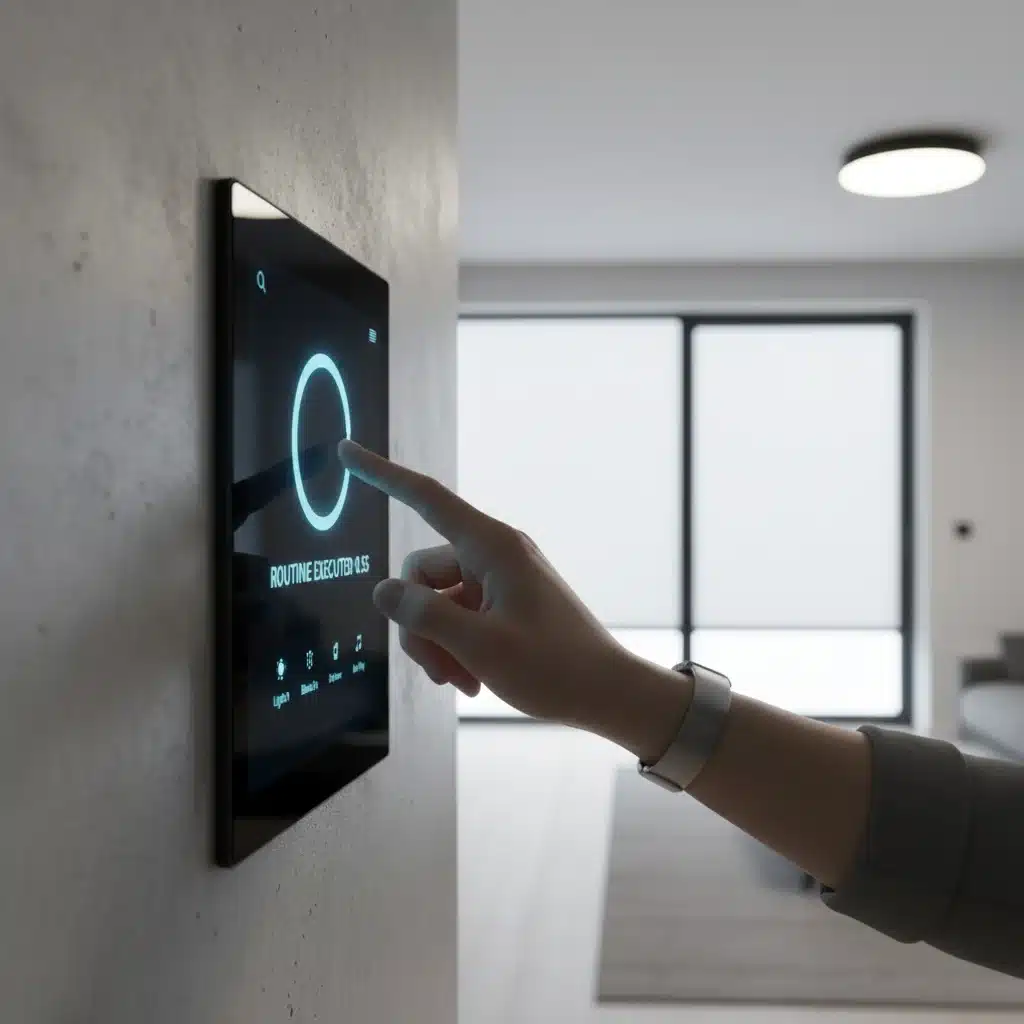
Many smart home platforms allow you to pre-configure ‘scenes’ (e.g., ‘Movie Night Scene’ that dims lights, closes blinds, turns on the TV). When you activate a scene, the hub often sends a single command to activate the pre-defined state, rather than sending individual commands to each device in sequence. This can be significantly faster than executing multiple individual actions within a routine. This is a powerful tactic for home automation optimization.
Monitoring and Troubleshooting: Maintaining Peak Performance
Achieving 15% faster response times isn’t a one-time setup; it’s an ongoing process of monitoring and refinement. Even with the best initial configuration, issues can arise.
Utilizing Smart Home Performance Analytics
Many advanced smart home hubs and platforms (e.g., Home Assistant, Hubitat) offer detailed logging and performance analytics. Regularly review these logs to identify routines that are taking longer than expected or devices that frequently drop offline. These insights are invaluable for pinpointing bottlenecks and areas for further home automation optimization.
Testing and Benchmarking
Periodically test your critical routines and benchmark their response times. Use a stopwatch or a logging feature to measure the delay between trigger and action. Document these times. When you make changes (e.g., update firmware, add a new device), re-test to see the impact. This empirical approach helps you verify that your optimization efforts are yielding the desired 15% improvement.
Addressing Device Health
Ensure all your smart devices have strong signal strength to their respective hubs or network access points. Weak signals lead to retries and increased latency. For battery-powered devices, regularly check battery levels; low batteries can sometimes cause devices to respond slowly or become unresponsive.
Network Diagnostics
If you suspect network issues, use network diagnostic tools. Ping your smart home hub and critical devices to check for packet loss and high latency. This can help identify underlying network problems that are impacting your smart home’s responsiveness.
The Future is Fast: What to Expect Beyond 2026
The journey of home automation optimization doesn’t end in 2026. The pace of innovation in IoT is relentless. We can anticipate even more sophisticated advancements:
- Hyper-Local AI: AI models becoming even smaller and more efficient, capable of running complex inferences on tiny, low-power devices.
- Pervasive Sensing: Integration of more advanced and discrete sensors (e.g., radar-based presence detection, environmental quality sensors) that provide richer, more accurate data for automation.
- Energy Harvesting: Devices that can power themselves from ambient energy, eliminating battery changes and ensuring constant, reliable operation.
- Quantum-Resistant Cryptography: Enhanced security protocols to protect smart homes from future cyber threats, ensuring that speed doesn’t come at the cost of vulnerability.
- Self-Optimizing Networks: Smart home networks that can autonomously detect and resolve congestion, interference, and other performance issues without user intervention.
These future developments promise to push response times even further down, making our smart homes not just fast, but truly predictive and seamlessly integrated into our lives.
Conclusion: Your Path to a 15% Faster Smart Home
Achieving a 15% faster response time in your home automation routines is an ambitious yet entirely attainable goal. By focusing on the latest 2026 protocols like Matter 2.0 and Wi-Fi 7, strategically optimizing your network, ensuring device compatibility, and employing advanced configuration techniques, you can transform your smart home from merely functional to truly exceptional.
The benefits extend beyond mere speed. A more responsive smart home is more reliable, more energy-efficient (as devices react precisely when needed), and ultimately, more enjoyable to live in. It removes the subtle frustrations of lag, making your interactions with technology feel natural and intuitive. Embrace these strategies for home automation optimization, and step into a future where your home anticipates your needs with unparalleled swiftness.
Start by evaluating your current setup, identifying areas for improvement, and gradually implementing the recommendations outlined in this guide. The journey to a hyper-responsive smart home is an exciting one, promising a level of comfort, convenience, and control that was once the stuff of science fiction. The future of home automation is fast, and it’s within your reach.