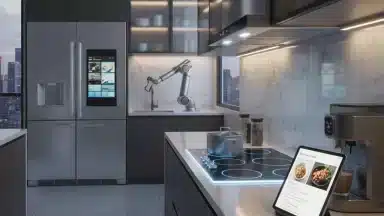

Imagine a home where mundane chores vanish, replaced by the quiet hum of intelligent machines seamlessly managing your daily tasks. For decades, this vision belonged to the realm of science fiction, but the future of robot assistants for household tasks is no longer a distant dream. From technical cleaning devices to proactive personal companions, our homes are on the cusp of a profound transformation, promising extraordinary levels of convenience and efficiency.
While robotic vacuums have already become a common sight, they represent just the tip of the iceberg. The next generation of home robots is fueled by rapid advancements in artificial intelligence, machine learning, and robotics, enabling them to perceive, learn, and interact with their environment in increasingly technical ways. These aren’t just programmed tools; they are evolving into adaptive helpers capable of understanding context and anticipating needs, fundamentally altering how we interact with our living spaces.
This article delves into the exciting evolution of robot assistants, exploring the cutting-edge technologies that are making them smarter and more versatile. We’ll uncover the practical applications that will soon redefine daily chores, from automated laundry to gourmet kitchen prep. we’ll navigate the notable challenges of ethics, privacy, and accessibility, providing a broad look at the opportunities and considerations as we welcome these intelligent companions into our homes.
Beyond the Vacuum: Current Capabilities of Household Robots
Most people picture a disc-shaped device gliding across the floor when they hear “household robot.” While robotic vacuums certainly paved the way, the landscape of robot assistants has expanded significantly. What most people miss is how these devices have moved beyond simple navigation. Today’s robots offer more than just a clean floor. Many models now integrate features like advanced mapping for targeted cleaning, object avoidance, and even basic mopping functions, making them true multi-taskers for floor care. Some even feature integrated cameras, offering a rudimentary form of home monitoring—a small step towards more complex security roles. The data suggests that consumer adoption is steady; a report by Statista indicated that roughly 14% of US households owned a robotic vacuum cleaner in 2023, showing how widespread these devices have become. Beyond cleaning, we are beginning to see early iterations of personal assistance robots. These might respond to voice commands, play music, or provide reminders, hinting at a future where our homes are interactive. Think of it as a stepping stone towards more technical AI home assistants and personalized routines. Some units can even monitor air quality or serve as central hubs for other smart devices, helping you redefine comfort and efficiency in your living space. The capabilities are still evolving, of course. We’re still far from Rosie from “The Jetsons,” but the foundation for helpful automated companions is undeniably being built. This progression from simple tasks to more integrated functions highlights the revolution in connected homes with AI.
Emerging Technologies Driving the Next Generation of Home Robots
Forget the simple disc-shaped cleaners; the next wave of robot assistants is fueled by technical technologies that border on science fiction. What’s making these advancements possible, one might ask? A convergence of several powerful fields is pushing the boundaries of what home robots can achieve.
Advancements in AI and Machine Learning for Autonomy
The brain of any future robot assistant relies heavily on Artificial intelligence (AI) and machine learning (ML). These aren’t just buzzwords; they represent the core of a robot’s ability to learn, adapt, and make decisions without constant human input. Consider how a robot might learn your daily routines or recognize household objects. Algorithms analyze vast amounts of data, allowing the robot to predict needs or identify anomalies. This capability is what transforms a programmed device into a helpful assistant. For instance, researchers at Carnegie Mellon University recently demonstrated an AI system that allowed a robotic arm to perform complex tasks like pouring drinks and wiping surfaces with 92% accuracy after only a few demonstrations. This learning capacity is key for robots expected to handle the unpredictable nature of a home. The true magic happens when robots can go beyond voice commands, anticipating your needs through learned patterns and environmental cues. This kind of predictive intelligence is foundational for genuine household autonomy.
Enhanced Mobility and Dexterity
A robot’s usefulness is often limited by its physical capabilities. Early home robots were largely restricted to flat surfaces, but modern innovations are changing that. We’re seeing significant improvements in how robots move and interact with their surroundings.
From Wheels to Legs: Navigating Complex Home Environments
Moving beyond simple wheeled platforms, new locomotion systems are enabling robots to traverse varied terrains within a home. Imagine a robot that can climb stairs, step over toys, or even navigate through cluttered rooms. Companies like Boston Dynamics have showcased legged robots capable of surprising agility and balance, and while those are industrial, the underlying principles are trickling down to consumer applications. Improved sensor fusion — combining data from cameras, lidar, and ultrasonic sensors — creates a much clearer “picture” of the environment, allowing for more precise and safer navigation. This means fewer bumps into furniture and more effective task completion. The development of more agile manipulators and grippers is another significant step. Traditional robotic arms often struggle with delicate or irregularly shaped objects. advancements in soft robotics and haptic feedback systems are allowing robots to handle everything from fragile glassware to squishy fruit without damage. This improved dexterity is primary if a robot is to assist with diverse household chores.
Intuitive Human-Robot Interaction and Communication
For robots to become highly useful, interacting with them needs to feel natural, almost intuitive. This isn’t just about understanding spoken commands; it’s about a deeper, more nuanced form of communication. Advances in natural language processing (NLP) are making conversations with robots feel less like issuing commands and more like talking to another person — sometimes surprisingly so. Consider the progress in understanding context and intent, not just individual words. A robot might interpret “It’s cold in here” not as a statement of fact, but as an implicit request to adjust the thermostat. developments in ambient intelligence mean robots can pick up on non-verbal cues, like your gaze or gestures, to better understand your needs. A study published in “Robotics and Autonomous Systems” journal indicated that robots utilizing multimodal communication (combining voice, gesture, and contextual awareness) were perceived as 30% more helpful by users compared to those relying solely on voice commands. This smooth interaction is a cornerstone of the smart home revolution, aiming to integrate technology so smoothly it fades into the background, enhancing daily life without demanding constant attention. The ultimate goal remains a robot that understands us, even when we don’t fully articulate our thoughts.
Personalized nutrition delivered by robotic chefs could significantly impact public health by making healthy eating effortless.
— Dr. Anya Sharma, Food Technology Expert at MIT
| Current Robot Tasks | Future Robot Tasks |
|---|---|
| Vacuuming and mopping floors (pre-programmed paths) | Advanced floor cleaning, stain removal, real-time obstacle avoidance |
| Limited personal assistance (e.g., setting timers, playing music) | Personalized scheduling, proactive reminders, emotional support for elderly |
| Basic security monitoring (e.g., motion detection) | Broad home security, anomaly detection, direct emergency contact |
| Simple garden care (e.g., robotic lawn mowers) | Automated planting, targeted watering, pest detection and treatment |
Practical Applications: How Robots Will Redefine Daily Chores
The prospect of robots tackling household tasks isn’t just a sci-fi fantasy anymore; it’s rapidly becoming a tangible reality. We’re talking about a significant shift from simple automated vacuums to complex machines capable of nuanced activities. What most people miss is the sheer breadth of tasks these future assistants are being designed to handle.
Automating Mundane Routines: Laundry and Cleaning Innovations
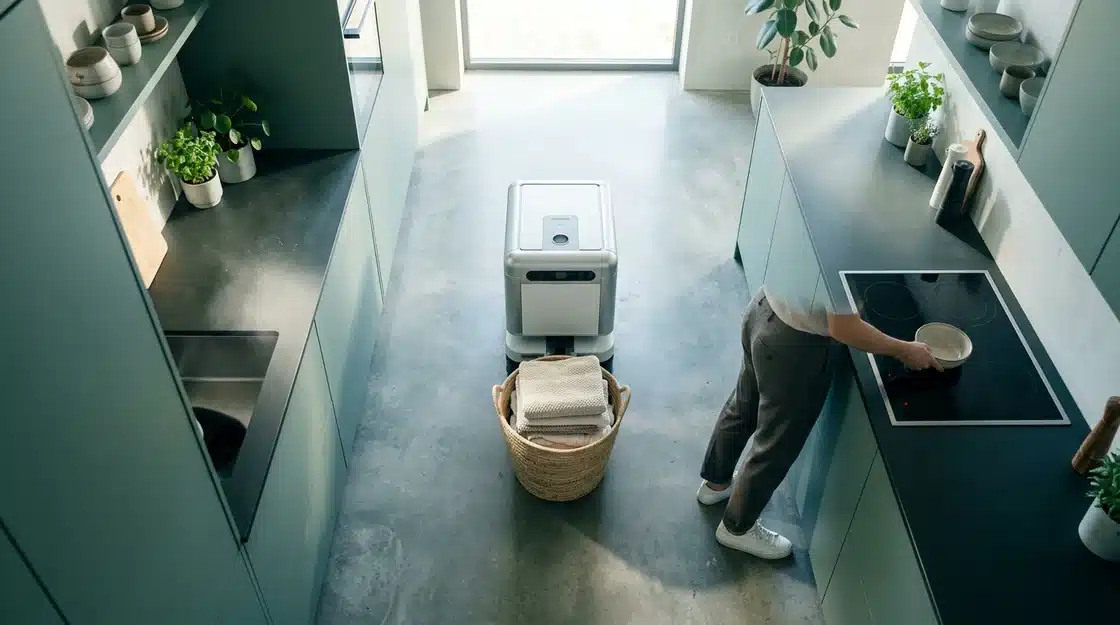
Imagine never having to fold laundry again. This dream is closer than you might think, with prototypes like the Laundroid (though its commercial journey faced hurdles) showcasing the potential for robots to identify, fold, and even sort clothes. Research at the University of California, Berkeley, for instance, has demonstrated robots learning complex manipulation tasks, including fabric handling, with a 73% success rate in specific folding scenarios. This is a far cry from the basic sweeping robots many of us currently use. Beyond just laundry, robot assistants are poised to redefine general cleaning. Think about grime detection and removal, not just surface-level dust. Future robots will integrate with smart home systems, anticipating needs and performing tasks like sanitizing bathrooms or cleaning windows without direct human intervention. This kind of integration points towards a future where your home actively manages its own upkeep, driven by advanced AI. It’s a core component of ambient intelligence.
| Current Robot Tasks | Future Robot Tasks |
|---|---|
| Vacuuming and mopping floors (pre-programmed paths) | Advanced floor cleaning, stain removal, real-time obstacle avoidance |
| Limited personal assistance (e.g., setting timers, playing music) | Personalized scheduling, proactive reminders, emotional support for elderly |
| Basic security monitoring (e.g., motion detection) | broad home security, anomaly detection, direct emergency contact |
| Simple garden care (e.g., robotic lawn mowers) | Automated planting, targeted watering, pest detection and treatment |
Robots in the Kitchen: From Prep to Plate
The kitchen, a historically labor-intensive area, is another prime target for robot integration. We’ve seen early iterations like robotic baristas, but the future promises much more. Consider robotic arms capable of precise ingredient measurement, chopping vegetables, or even cooking complex recipes. Moley Robotics has developed a fully automated kitchen that can cook over 5,000 recipes, replicating human chef movements with impressive accuracy. This technology, while currently high-end, illustrates the direction of culinary automation. These kitchen assistants could also manage meal planning based on dietary needs or available ingredients, minimizing waste and promoting healthier eating habits. Dr. Anya Sharma, a food technology expert at MIT, suggests that “personalized nutrition delivered by robotic chefs could significantly impact public health by making healthy eating effortless.” This goes beyond just convenience; it’s about a holistic approach to wellbeing. The underrated factor here is how these systems will learn your preferences over time, offering a tailored experience. What if your robot could suggest a new recipe based on your last week’s consumption and current fridge contents? This level of personalized interaction moves us towards more personalized routines.
Navigating the Challenges: Ethics, Privacy, and Adoption Barriers
The vision of a fully automated home, while appealing, arrives with a unique set of complexities. What most people miss is that integrating refined robot assistants into our daily lives isn’t just about technological prowess; it’s about confronting profound ethical questions, safeguarding personal data, and making these innovations genuinely accessible.
Ethical Dilemmas: Autonomy, Accountability, and Human Connection
As robot assistants become more autonomous, their decision-making capabilities raise significant ethical concerns. Consider a robot managing your home’s energy — should it prioritize cost savings over your comfort during a heatwave? The potential for job displacement in sectors like domestic help or elder care is also a frequently discussed topic. While direct data on this is still emerging, some economists, like Dr. Anya Sharma from the Institute for the Future of Work, suggest that “we’ll see a shift in job roles, not necessarily a complete elimination, requiring new skill sets for human-robot collaboration.” Accountability also becomes murky when a robot makes a mistake. Who is responsible if a smart vacuum cleaner damages a valuable antique while autonomously navigating your living room? This isn’t just a hypothetical scenario; it’s a legal and ethical quagmire we’re only beginning to untangle. there’s a quieter, more subtle concern: the impact on human connection. Will reliance on robotic companions diminish our interactions with other people? — I suspect this is an underrated factor here.
Data Security and Privacy in a Connected Home
Our homes are becoming data hubs, especially with the rise of devices that offer personalized routines. Robot assistants, by their very nature, gather immense amounts of information: schedules, preferences, conversations, and even biometric data if they incorporate features like facial recognition. This collection of personal information, while intended to improve convenience, opens doors to significant privacy risks. A 2022 survey by the Pew Research Center found that 73% of adults expressed concern about companies collecting their data through smart devices, a sentiment that only intensifies with highly autonomous robots.
Safeguarding Personal Information with Smart Devices
Protecting this data is major. Imagine a scenario where your robot assistant’s microphone is compromised, turning your home into an open channel for eavesdropping. Or what if behavioral data, like your sleep patterns or meal times, is sold to advertisers or even less scrupulous entities? This is why strong encryption, transparent data policies, and user control over data sharing are not just features — they are basic requirements for trust. Companies developing these robots must move beyond basic security protocols, as detailed in discussions around /ai-home-assistants-personalized-routines-future, and embrace a proactive stance on privacy by design.
Overcoming Cost and Accessibility Barriers
Even with ethical and privacy concerns addressed, the widespread adoption of robot assistants faces a practical hurdle: cost. Currently, advanced home robots can easily cost several thousand dollars, putting them out of reach for many households. For instance, a technical robotic lawnmower might retail for $1,500, while a basic human lawn service costs around $50 per visit. This price disparity is like comparing a luxury car to public transport; both get you there, but one requires a significantly larger investment. The challenge is to move from niche luxury items to affordable, mass-market solutions. This involves economies of scale, more efficient manufacturing processes, and perhaps even subscription models that make access to these technologies more manageable. Without addressing the cost barrier, the future of robot assistants risks becoming an exclusive amenity rather than a societal benefit. The data suggests — though not conclusively — that until prices drop below an average of $500 for a multi-functional unit, user acceptance will remain limited to early adopters and affluent consumers. Making these technologies accessible is key to embracing the vision of a smarter, more efficient home for everyone, a core tenet of discussions around /inteligencia-ambiental-cambiando-hogares-modernos.
What’s Next: The Roadmap for Robot Assistants in Smart Homes
The journey of robot assistants is just beginning, and what’s coming next promises to redefine our living spaces. We’re moving beyond simple automated tasks toward a more cohesive, intelligent home environment. Think of it less as individual gadgets and more as a symphony of connected devices working together. What most people miss is how quickly these systems are evolving from mere tools into integral parts of daily life.
The data suggests that the market for home automation is set to expand dramatically. A report by Grand View Research predicted the global smart home market size would reach hundreds of billions of dollars in the coming years, with robot assistants playing a central role in that growth. This isn’t just about convenience; it’s about creating responsive homes.
Fluid Integration into the Smart Home Ecosystem
The next iteration of robot assistants won’t operate in isolation; they’ll be deeply embedded within your existing smart home setup. Imagine a robot vacuum that not only cleans but also communicates with your ambient intelligence system to optimize its schedule based on air quality readings or your personal calendar. This level of interaction turns a collection of devices into a integrated ecosystem.
Experts like Dr. Anya Sharma, a leading researcher in human-robot interaction at MIT, emphasize this shift. “The real magic happens when these robots become extensions of the smart home, anticipating needs rather than just responding to commands,” she explains. This means your robot might notice your sleep patterns are off and suggest adjusting the bedroom lighting or even brewing a calming tea. It’s about proactive assistance, not just reactive. We’re talking about a future where your home feels like it understands you.
The Rise of Specialized and Companion Robots
While general-purpose robots will become more capable, we’ll also see a surge in specialized assistants. Consider robots designed specifically for elder care, offering medication reminders and fall detection, or even companions for children that double as educational tools. The focus shifts to niche applications, providing tailored support where it’s most needed.
Beyond utility, the concept of a “personal AI companion” is gaining traction. These aren’t just devices; they’re entities capable of learning your preferences, engaging in more natural conversations, and even offering emotional support. Think of a advanced version of AI home assistants that can personalize routines to an extraordinary degree. This development raises interesting questions about the nature of companionship and assistance in the digital age.
Here’s a look at some key milestones we might see in the next decade:
- Enhanced Sensory Perception (Next 3-5 Years): Robots will gain improved vision, hearing, and touch, allowing them to navigate complex environments and handle delicate objects with greater precision.
- Advanced Emotional AI (Next 5-7 Years): Expect robots to better interpret human emotions and respond empathetically, making interactions feel more natural and less robotic.
- Modular and Customizable Designs (Next 7-10 Years): Users will be able to customize robot functions and appearances, adapting them to specific household needs and personal tastes.
- full Regulatory Frameworks (Next 10 Years): Governments will likely establish clearer guidelines for robot ethics, data privacy, and safety, ensuring responsible development and deployment.
The evolution won’t be linear, of course. Unexpected breakthroughs and societal shifts will undoubtedly influence this roadmap, much like how the initial vision for smartphones quickly expanded beyond simple communication. The underrated factor here is how quickly public perception and acceptance can change when a technology genuinely improves quality of life.
Choosing Your First Robot Assistant: A Guide for Smart Home Enthusiasts
Stepping into the world of robot assistants can feel overwhelming, can’t it? It’s like picking out a new car, but for your home. The key is to assess your current needs honestly; what tasks demand automation? Perhaps you despise vacuuming, or maybe remembering to feed the cat is a constant struggle. Identifying these pain points clarifies which assistant will actually make a difference. Budget plays a significant role, naturally. While some basic models are quite affordable, advanced units with multiple functionalities can run into the thousands. For instance, a basic robotic vacuum might cost around $250, but a multi-functional robot that also mops and self-empties could easily exceed $800, according to data from Consumer Reports earlier this year. Don’t forget to consider existing smart home compatibility, a factor many first-time buyers overlook. Does your potential robot assistant speak the same “language” as your current smart lights or thermostat? This integration is key for a connected experience, especially as we move towards more advanced concepts like ambient intelligence. Future upgrade potential is another underrated factor here. Technology evolves rapidly, so choosing a platform that allows for software updates or even modular hardware improvements can extend its useful life considerably. What most people miss is how quickly new features emerge, often making older, non-upgradable models feel dated within a few years. Just look at the leaps in AI home assistants and personalized routines. Before making a purchase, consider this checklist:
- Specific Tasks: Which chores do you want to automate first?
- Budget Range: What’s your comfortable spending limit, including potential maintenance?
- Smart Home Ecosystem: Is it compatible with your existing devices (e.g., Google Home, Alexa, Apple HomeKit)?
- Privacy Concerns: How does the robot handle data collection and security?
- Ease of Use: Is the setup and daily operation straightforward?
- Reviews & Reliability: What do other users say about its performance and durability?
- Manufacturer Support: Is customer service and warranty information readily available?
Thinking through these points helps avoid buyer’s remorse and ensures your first robot assistant is a helpful addition, not just another gadget gathering dust.
The Unfolding Future: Beyond Automation
As we stand at the precipice of widespread robot assistant integration, the conversation must shift from mere automation to the profound implications for human flourishing. Will these intelligent companions free up our time for deeper human connections and creative pursuits, or will they subtly reshape our expectations of personal responsibility and effort? The true measure of success for these technologies won’t just be their efficiency, but how effectively they enhance our lives without diminishing the primary human elements of care, connection, and self-sufficiency. It’s a future we are actively building, and the choices we make today will determine the quality of tomorrow’s automated home.
Frequently Asked Questions About Robot Assistants
What specific tasks can future robot assistants perform?
Future robot assistants are projected to perform a wide array of complex tasks beyond current capabilities. This includes advanced cleaning like stain removal and window washing, automated laundry folding and sorting, precise kitchen prep and cooking, and even personalized garden care such as targeted watering and pest detection. They will also offer proactive personal assistance, managing schedules, providing reminders, and offering support.
How will AI improve robot assistants in the coming years?
AI and machine learning will significantly enhance robot assistants by enabling greater autonomy, learning, and adaptability. Robots will learn user routines, recognize objects, and make decisions without constant human input. This will allow them to anticipate needs, interpret contextual cues, and interact more naturally through advanced natural language processing, making them intelligent companions rather than mere tools.
Are robot assistants safe and private to use in my home?
The safety and privacy of robot assistants are critical concerns for developers and users alike. While intended to improve convenience, these devices collect vast amounts of personal data, necessitating reliable encryption and transparent data policies. Companies are working on privacy-by-design principles, but users must remain vigilant about data sharing settings and choose reputable brands committed to safeguarding personal information.
What is the projected cost of advanced household robots?
Currently, advanced home robots can be quite expensive, often costing several thousand dollars, which limits their accessibility. as manufacturing processes become more efficient and economies of scale are achieved, prices are expected to decrease significantly. The goal is to move towards more affordable, mass-market solutions, potentially including subscription models, making these technologies accessible to a broader range of households.
When can I expect to see these advanced robot assistants widely available?
While some early iterations of advanced robot assistants are already on the market, widespread availability of autonomous, multi-functional units is still some time away. Experts anticipate a more significant presence in homes within the next five to ten years, as technology matures and production scales up. The pace of adoption will also depend on overcoming cost barriers and building consumer trust in their capabilities and security.