
The quest for sustainable living and reduced household expenses has never been more urgent. As we look towards 2026, one technology stands out as a beacon of hope for homeowners grappling with escalating energy bills: advanced geothermal heating systems. Imagine cutting your heating and cooling costs by a staggering 40% – this isn’t a distant dream, but a tangible reality within reach. This comprehensive guide will delve into how geothermal technology, specifically engineered for the demands of 2026 and beyond, offers an unparalleled opportunity to achieve significant geothermal heating savings, enhance your home’s comfort, and contribute to a greener planet.
The Promise of Geothermal Heating Systems in 2026
For decades, geothermal technology has been recognized for its efficiency, but recent advancements have propelled it into a league of its own. By 2026, we anticipate even greater refinements in system design, installation techniques, and smart home integration, making geothermal heating savings more accessible and impactful than ever before. These systems harness the stable temperature of the Earth to provide heating in winter and cooling in summer, operating with remarkable efficiency that far surpasses traditional HVAC units.
The core principle is elegantly simple: the Earth’s subsurface maintains a relatively constant temperature year-round, typically between 45-75°F (7-24°C), depending on your geographic location. Geothermal heat pumps leverage this natural thermal reservoir. In winter, they extract heat from the ground and transfer it into your home. In summer, they reverse the process, moving heat from your home back into the cooler earth. This continuous exchange makes them incredibly efficient, as they are merely moving heat, not generating it through combustion.
Why 2026 is a Pivotal Year for Geothermal Adoption
Several factors converge to make 2026 a significant year for the widespread adoption of geothermal heating systems:
- Technological Maturation: Heat pump technology has evolved, becoming more compact, quieter, and more powerful. Advanced compressors, variable-speed motors, and sophisticated control algorithms mean higher Coefficient of Performance (COP) and Energy Efficiency Ratio (EER) ratings.
- Policy and Incentives: Governments worldwide are increasingly recognizing the importance of renewable energy. By 2026, it’s highly probable that federal, state, and local incentives, tax credits, and rebates will be even more robust, significantly reducing the initial investment barrier for homeowners.
- Environmental Imperative: With growing concerns about climate change, homeowners are actively seeking ways to reduce their carbon footprint. Geothermal systems offer a compelling solution, eliminating on-site fossil fuel combustion and drastically lowering greenhouse gas emissions.
- Energy Security: Reliance on fluctuating fossil fuel prices can lead to unpredictable utility bills. Geothermal energy offers a degree of energy independence, as the ‘fuel’ – the Earth’s stable temperature – is always available and free.
Understanding these drivers helps underscore why now is the ideal time to explore the potential of geothermal heating savings for your home.
The Mechanics of Geothermal Heating: How it Works
To fully appreciate the cost-saving potential, it’s essential to understand the basic components and operational principles of a geothermal heating system. There are three primary parts:
- The Earth Loop (Ground Heat Exchanger): This is the system’s most crucial component, consisting of a network of pipes buried underground. These pipes contain a circulating fluid (typically water or a water-antifreeze solution) that absorbs or dissipates heat from the Earth.
- The Geothermal Heat Pump: Located inside your home, this unit is similar to a conventional air conditioner or furnace, but it exchanges heat with the ground loop instead of the outside air. It compresses the absorbed heat to a higher temperature for distribution throughout your home or extracts heat from your home to be dissipated into the ground.
- The Heat Distribution System: This typically involves your home’s existing ductwork, which distributes the conditioned air. Geothermal systems can also integrate with radiant floor heating or hot water systems.
Types of Earth Loops: Tailoring to Your Property
The configuration of the earth loop is critical and depends on factors like available land, soil conditions, and budget. The main types include:
- Closed-Loop Systems: These are the most common. The fluid circulates in a sealed, continuous loop.
- Horizontal Loops: Ideal for properties with ample land. Pipes are buried horizontally in trenches about 4-6 feet deep. This is often the most cost-effective installation for new construction or properties with large yards.
- Vertical Loops: Suited for smaller lots or properties where minimal landscape disruption is desired. Boreholes are drilled deep into the ground (150-400 feet per bore), and U-shaped pipes are inserted.
- Pond/Lake Loops: If a body of water is nearby and deep enough, pipes can be submerged at the bottom. This is highly efficient due to water’s excellent heat transfer properties.
- Open-Loop Systems: These systems use an open water source (like a well or pond) as the heat exchange medium. Water is drawn from the source, heat is extracted or added, and then the water is discharged back into the source or a separate discharge well. While highly efficient, they require a suitable water source and adherence to local regulations regarding water discharge.
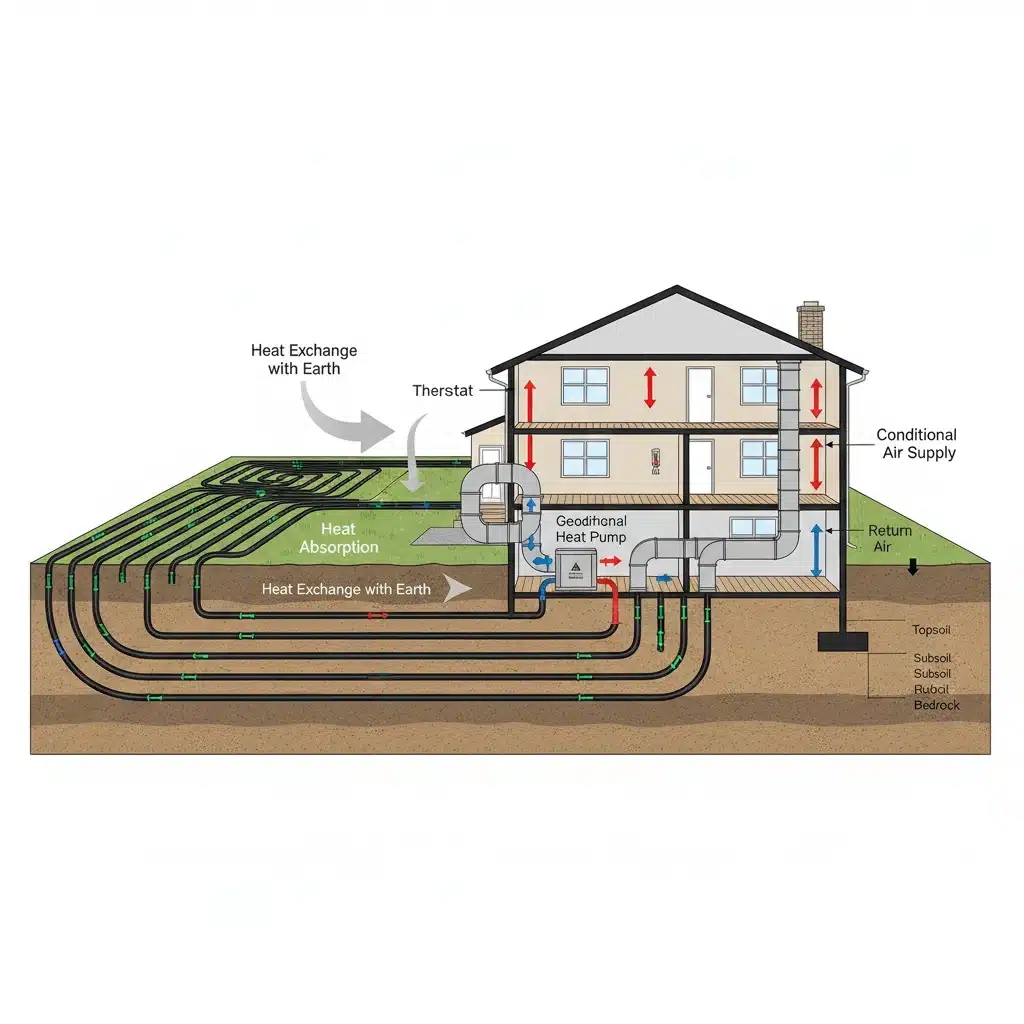
By selecting the appropriate loop configuration, homeowners can optimize their geothermal heating savings based on their specific site conditions.
Unlocking 40% Heating Cost Reduction: The Economics
The claim of reducing heating and cooling costs by 40% (or even more, with some estimates reaching 70% for heating and 50% for cooling compared to conventional systems) is not hyperbole. It’s rooted in the fundamental efficiency of geothermal technology. Traditional furnaces generate heat by burning fuel, which is inherently less efficient. Air-source heat pumps are more efficient than furnaces but struggle in extreme temperatures as they exchange heat with the volatile outdoor air.
Geothermal systems, however, benefit from the Earth’s stable temperature. This means they don’t have to work as hard to extract or dissipate heat, leading to significantly less energy consumption. The primary energy input for a geothermal system is the electricity required to run the compressor, fan, and pump – and this electricity is used with incredible efficiency.
Factors Contributing to Significant Geothermal Heating Savings
- Superior Energy Efficiency: Geothermal heat pumps typically have COPs of 3.0-5.0, meaning for every unit of electricity consumed, they deliver 3 to 5 units of heating energy. Traditional furnaces rarely exceed 0.95 (95% efficiency).
- Reduced Maintenance: Since the outdoor unit (earth loop) is underground, it’s protected from wear and tear due to weather, vandalism, and dirt, leading to a longer lifespan and fewer maintenance issues compared to exposed air-source units.
- Longer Lifespan: The underground loop system can last 50+ years, while the indoor heat pump unit typically lasts 20-25 years, often outliving conventional HVAC systems by a decade or more. This reduces replacement costs over the long term.
- Potential for Hot Water Generation: Many geothermal systems can be equipped with a ‘desuperheater’ that provides free or highly efficient domestic hot water, further contributing to overall geothermal heating savings.
- Stable Operating Costs: While electricity prices can fluctuate, the efficiency of geothermal systems means you’re using less of it, making your energy bills more predictable and less susceptible to market volatility compared to fossil fuels.
When you combine these operational efficiencies with potential incentives and the elimination of fuel delivery costs, the 40% (or greater) reduction in heating and cooling expenses becomes a clear, achievable target for homeowners in 2026.
Technological Advancements Shaping Geothermal in 2026
The geothermal landscape is not static. Continuous innovation is making these systems even more appealing and effective. Here’s what to expect by 2026:
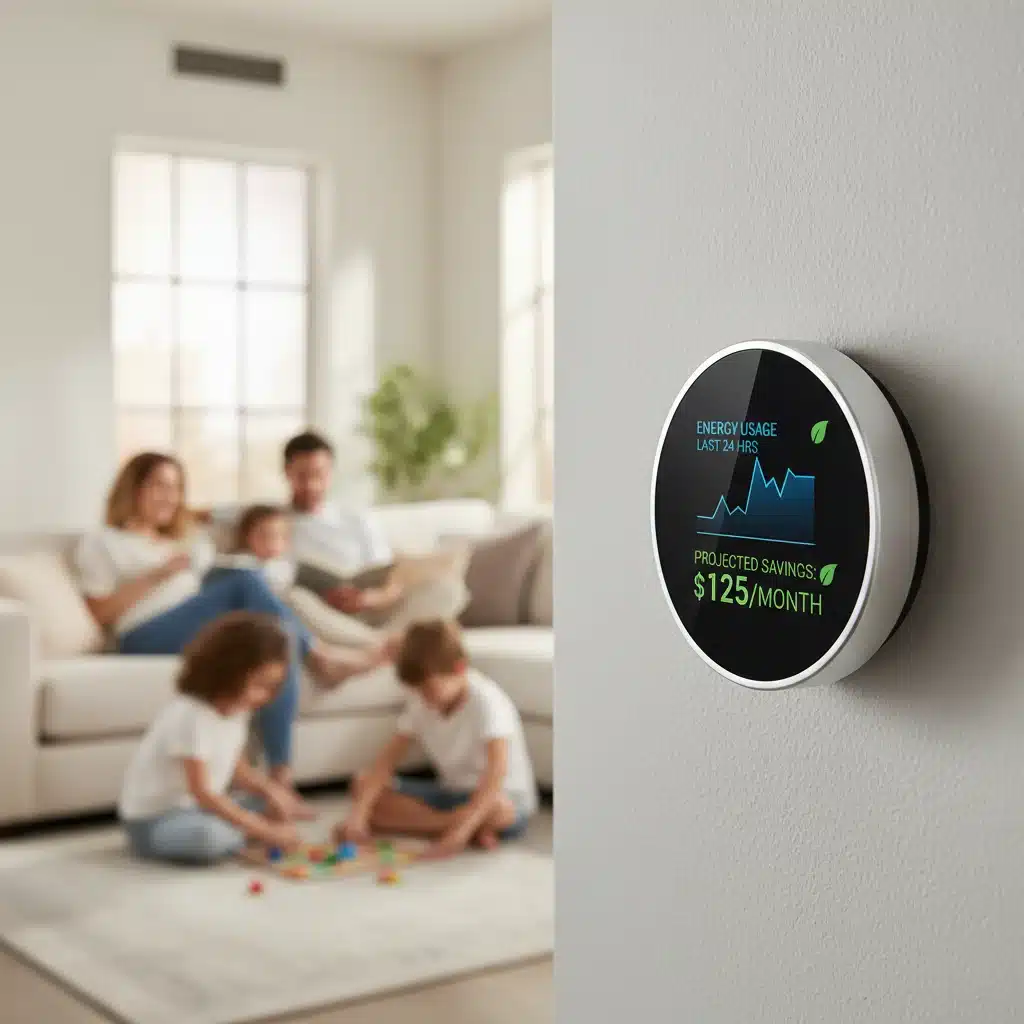
- Smart Home Integration: Geothermal systems are increasingly becoming integral parts of smart home ecosystems. Advanced thermostats and control systems will offer predictive analytics, learning your preferences and optimizing operation based on weather forecasts, occupancy patterns, and real-time energy prices. This intelligent control will maximize geothermal heating savings.
- Improved Compressor Technology: Variable-speed compressors and fans are becoming standard, allowing the system to modulate its output precisely to meet demand, rather than running at full capacity all the time. This leads to quieter operation, enhanced comfort, and even greater efficiency.
- Advanced Refrigerants: Research into new, environmentally friendly refrigerants with lower Global Warming Potential (GWP) is ongoing, ensuring that geothermal systems remain at the forefront of sustainable HVAC solutions.
- Enhanced Installation Techniques: Innovations in drilling technology and pipe materials are making installations quicker, less disruptive, and more cost-effective. Modular loop systems are also emerging, simplifying design and deployment.
- Hybrid Systems: The integration of geothermal with other renewable sources, such as solar PV to power the heat pump, or with supplemental traditional furnaces for peak demand in extremely cold climates, offers even greater flexibility and efficiency.
These advancements ensure that a geothermal heating system installed in 2026 will be more efficient, smarter, and more tailored to individual home needs than ever before.
Installation and Investment: What Homeowners Need to Know
The initial investment for a geothermal system is generally higher than for traditional HVAC systems. However, it’s crucial to view this as a long-term investment with significant returns. The upfront cost is offset by substantial operational savings, extended system lifespan, and available incentives.
The Installation Process
A typical geothermal installation involves several steps:
- Site Assessment: A qualified installer will evaluate your property, soil conditions, heating and cooling loads, and available space to determine the optimal system design and loop type.
- Drilling/Trenching: This is the most significant part of the installation. For vertical loops, boreholes are drilled. For horizontal loops, trenches are dug.
- Loop Installation: The polyethylene pipes are laid into the boreholes or trenches and then fused together to create a sealed loop.
- Heat Pump Installation: The indoor heat pump unit is installed, often in a basement, utility closet, or garage, and connected to the earth loop and your home’s distribution system.
- System Commissioning: The system is filled with circulating fluid, tested for leaks, and thoroughly commissioned to ensure optimal performance.
Understanding the Costs and Incentives
While costs vary widely based on system size, loop type, and regional labor rates, a typical residential geothermal system can range from $20,000 to $45,000 or more before incentives. However, this is where the geothermal heating savings truly begin to materialize.
- Federal Tax Credits: In the United States, homeowners can currently claim a significant federal tax credit for installing geothermal heat pumps. By 2026, these credits are expected to remain robust, covering a substantial portion of the installation cost.
- State and Local Rebates: Many states, municipalities, and even local utility companies offer additional incentives, grants, and rebates specifically for geothermal installations. These can further reduce your out-of-pocket expenses.
- Financing Options: Specialized financing programs, including low-interest loans for energy-efficient home improvements, are often available, making the initial investment more manageable.
- Payback Period: While the initial cost is higher, the substantial monthly energy savings mean that geothermal systems typically have a payback period of 5-10 years, sometimes even less when generous incentives are applied. After the payback period, the savings are pure profit for the homeowner.
It’s crucial to work with a reputable, certified geothermal installer who can provide a detailed cost estimate, explain all available incentives, and ensure a proper, efficient installation that maximizes your long-term geothermal heating savings.
Beyond Cost Savings: Additional Benefits of Geothermal Systems
While the prospect of reducing heating costs by 40% is compelling, geothermal heating systems offer a plethora of other benefits that contribute to a higher quality of life and increased property value.
Environmental Impact
- Reduced Carbon Footprint: Geothermal systems produce zero on-site greenhouse gas emissions. By relying on the Earth’s natural heat, they significantly lower your home’s contribution to climate change.
- Renewable Energy Source: The Earth’s heat is a continuously replenished, sustainable energy source, unlike finite fossil fuels.
- Reduced Demand on Power Grids: By operating efficiently and reducing overall energy consumption, geothermal systems ease the burden on electrical grids, especially during peak demand periods.
Enhanced Home Comfort
- Consistent Temperatures: Geothermal systems provide very even heating and cooling throughout your home, eliminating the hot and cold spots often associated with traditional systems.
- Quiet Operation: With the noisy components (compressor and fan) located indoors and the primary heat exchange underground, geothermal systems are remarkably quiet. You won’t hear the loud hum of an outdoor AC unit.
- Improved Indoor Air Quality: Geothermal systems don’t involve combustion, eliminating the risk of carbon monoxide leaks. They also help maintain optimal humidity levels and can be integrated with advanced air filtration systems.
Increased Property Value
Homes equipped with geothermal systems are increasingly viewed as premium properties. Buyers are often willing to pay more for homes with lower utility bills, reduced environmental impact, and modern, efficient HVAC. The long lifespan of the system also means less worry about future replacement costs, making it an attractive selling point.
Low Maintenance and High Reliability
As mentioned, the underground components are extremely durable and require virtually no maintenance. The indoor unit, while needing periodic filter changes and routine checks, is also built for longevity. This translates to fewer service calls and greater peace of mind for the homeowner, further enhancing the overall geothermal heating savings equation.
Addressing Common Concerns and Misconceptions
Despite their numerous advantages, some homeowners still have reservations about geothermal systems. Let’s address a few common concerns:
- High Upfront Cost: While the initial investment is higher, it’s crucial to factor in the long-term operational savings, extended lifespan, and available incentives. When amortized over the system’s life, geothermal often proves to be the most cost-effective option.
- Installation Disruption: The drilling or trenching process can be disruptive, but experienced installers work efficiently to minimize impact. For existing homes, vertical loops can often be installed with minimal landscape disturbance.
- Suitability for All Homes: Almost any home, new or existing, can be retrofitted with a geothermal system. The key is proper sizing and design by a qualified professional. Even in challenging soil conditions or small lots, solutions like vertical loops or specialized drilling techniques can be employed.
- Dependence on Electricity: Geothermal heat pumps do require electricity to operate the compressor, fan, and pump. However, they use this electricity with extreme efficiency. Furthermore, they can be paired with solar PV systems to achieve a net-zero energy home.
By 2026, many of these perceived barriers are being further eroded by technological advancements and more widespread understanding of the technology. The benefits of geothermal heating savings and environmental stewardship far outweigh these initial considerations.
The Future is Geothermal: A 2026 Outlook
Looking ahead to 2026 and beyond, the trajectory for geothermal heating systems is one of continued growth and innovation. As energy costs continue their upward trend and environmental regulations become stricter, the value proposition of geothermal only strengthens. We can anticipate:
- Increased Market Penetration: Geothermal will move from a niche solution to a more mainstream HVAC option, especially in new construction and major renovation projects.
- Greater Standardization: As the industry matures, installation practices, equipment standards, and certification programs will become more uniform, ensuring higher quality and reliability.
- Integration with Community Energy Systems: We may see more district geothermal systems, where multiple homes or even entire communities share a centralized ground loop, further optimizing efficiency and reducing individual costs.
- Enhanced Data Analytics: AI and machine learning will play a larger role in optimizing geothermal system performance, predicting maintenance needs, and providing homeowners with actionable insights into their energy consumption and geothermal heating savings.
The vision of a home powered by clean, reliable, and affordable energy is not a distant fantasy. With the advancements in geothermal heating systems, a 40% reduction in heating costs is not just achievable; it’s becoming the new standard for energy-conscious homeowners by 2026.
Conclusion: Embrace the Future of Home Heating
The opportunity to significantly reduce your heating and cooling costs by 40% with a geothermal heating system by 2026 is a compelling proposition. Beyond the substantial financial savings, you’re investing in unparalleled home comfort, a drastically reduced carbon footprint, and a reliable, long-lasting HVAC solution. The initial investment, while notable, is increasingly offset by robust incentives and the system’s extended lifespan, making the long-term economics undeniably attractive.
As technology continues to evolve and societal priorities shift towards sustainability, geothermal energy stands ready to redefine how we heat and cool our homes. Take the first step towards a greener, more affordable future by exploring how a geothermal heating system can transform your living space and your energy bills. The time to invest in smart, sustainable home energy is now, and 2026 promises to be the year these systems truly shine.