
Solar Panel Efficiency 2026: Maximizing Your Home’s Energy Production by 18%
The sun, an inexhaustible source of energy, has long been a beacon of hope for a sustainable future. As we edge closer to 2026, the advancements in solar technology are nothing short of revolutionary, promising unprecedented levels of solar panel efficiency. For homeowners, this means a tangible opportunity to not only reduce electricity bills but also to significantly contribute to a greener planet. Imagine boosting your home’s energy production by a remarkable 18% – a goal that is now well within reach thanks to cutting-edge innovations and strategic planning.
The journey towards enhanced solar panel efficiency is a dynamic one, driven by continuous research and development. From novel materials to sophisticated energy management systems, every component plays a crucial role in harnessing more power from the sun. This comprehensive guide will delve into the exciting landscape of solar technology in 2026, offering insights into what homeowners can expect and how they can prepare to optimize their solar investments. We will explore the latest trends, break down complex concepts, and provide actionable advice to ensure you are at the forefront of the solar revolution.
Understanding the nuances of solar panel efficiency is paramount for making informed decisions. It’s not just about installing panels; it’s about selecting the right technology, optimizing their placement, and integrating them with smart home systems to create a truly efficient energy ecosystem. As the world shifts towards renewable energy, staying updated on the latest advancements is key to maximizing your home’s energy independence and financial savings. Let’s embark on this enlightening exploration of the future of solar power.
The Current State of Solar Panel Efficiency: A Baseline for Growth
Before we project into 2026, it’s essential to understand where we stand today regarding solar panel efficiency. Traditional silicon-based photovoltaic (PV) panels have been the workhorse of the solar industry for decades, steadily improving their efficiency rates. In recent years, commercially available panels typically offer efficiency ratings between 17% and 20%, with premium models reaching up to 22-23%. These figures represent the percentage of sunlight hitting the panel that is converted into usable electricity.
However, several factors influence real-world performance, including temperature, shading, and the angle of installation. While lab conditions often showcase higher theoretical efficiencies, the practical application often sees a slight reduction. This gap between theoretical and real-world performance is a key area of focus for researchers and manufacturers, aiming to bridge it through better materials and design. The ongoing drive to reduce manufacturing costs while simultaneously boosting performance has been a significant catalyst for innovation in the solar sector. This foundational understanding helps us appreciate the magnitude of the advancements anticipated in the coming years, particularly in enhancing overall system solar panel efficiency.
The market has also seen a rise in different types of solar panels, each with its own advantages and disadvantages. Monocrystalline panels, known for their higher efficiency and sleek appearance, remain a popular choice. Polycrystalline panels, while slightly less efficient, offer a more cost-effective solution. Thin-film solar cells, on the other hand, are flexible and lightweight, making them suitable for niche applications where traditional panels might not fit. The diversity in panel types caters to a wide range of consumer needs and budgetary considerations, further fueling the widespread adoption of solar energy. As we look ahead, the evolution of these technologies will continue to redefine what is possible in terms of solar panel efficiency.
Breakthrough Technologies Driving 18% Efficiency Gains in 2026
The ambitious goal of increasing home energy production by 18% through enhanced solar panel efficiency in 2026 is underpinned by several groundbreaking technologies. These innovations are not mere incremental improvements but represent significant leaps forward in how we capture and convert solar energy. Understanding these advancements is crucial for homeowners looking to future-proof their solar investments.
Perovskite Solar Cells: The Next-Generation Material
One of the most exciting developments is the emergence of perovskite solar cells. These materials boast exceptional light-absorbing properties and have demonstrated laboratory efficiencies exceeding 25%, rapidly approaching and even surpassing traditional silicon. Their potential lies in their low manufacturing cost and tunable properties, allowing for flexibility in application. While commercialization is still in its early stages, by 2026, we can expect to see perovskite-silicon tandem cells becoming more prevalent. These hybrid panels combine the strengths of both materials, with perovskite layers capturing higher energy photons and silicon handling the lower energy spectrum, leading to a substantial boost in overall solar panel efficiency.
The rapid progress in perovskite research is truly remarkable. Scientists are continually refining their stability and durability, which are critical factors for widespread adoption. The ability to print perovskite cells using roll-to-roll manufacturing processes could drastically reduce production costs, making high-efficiency solar power more accessible to the average homeowner. This scalability, combined with their superior performance, positions perovskites as a game-changer in the quest for higher solar panel efficiency. As these technologies mature, their integration into residential solar systems will undoubtedly contribute significantly to the projected 18% increase in energy production.
Tandem Junction Solar Cells: Stacking for Success
Beyond perovskite-silicon tandems, the concept of multi-junction or tandem cells is gaining traction across various material combinations. These cells are designed with multiple layers, each optimized to absorb a different part of the solar spectrum. By stacking these layers, a much broader range of sunlight can be converted into electricity, pushing theoretical efficiency limits far beyond what single-junction cells can achieve. While initially developed for specialized applications like space exploration, advancements in manufacturing are making them viable for residential use. This layered approach is a direct pathway to significantly higher solar panel efficiency.
Imagine a panel that can capture not just the visible light but also infrared and ultraviolet wavelengths with high efficacy. That’s the promise of tandem junction technology. Research into III-V semiconductors and other exotic materials continues to yield impressive results, with lab efficiencies reaching upwards of 30-40% in some experimental setups. While these ultra-high efficiencies might take a bit longer to reach mass market, the principles derived from their development are already influencing the design of more attainable high-performance panels. The fundamental idea of maximizing spectral utilization is a core driver behind the future of solar panel efficiency.

Quantum Dot Solar Cells: Harnessing Nanotechnology
Another fascinating area of research is quantum dot solar cells. Quantum dots are semiconductor nanocrystals that can absorb light and emit it at a different wavelength. When incorporated into solar cells, they can essentially ‘tune’ the incoming light to match the optimal absorption spectrum of the cell, thereby reducing energy loss. This nanotechnology approach holds the potential to unlock new levels of solar panel efficiency, especially in diffuse light conditions or when dealing with varying solar spectrums throughout the day.
The ability of quantum dots to manipulate photons offers exciting possibilities for improving the performance of existing silicon panels. By adding a layer of quantum dots, older or less efficient panels could potentially see a performance boost. Furthermore, quantum dot technology is amenable to flexible and transparent applications, opening up new architectural integrations for solar power beyond traditional rooftop installations. As manufacturing processes become more refined and cost-effective, quantum dot technology could become a standard feature in high-performance solar panels, contributing meaningfully to the 18% efficiency target and redefining what’s possible for solar panel efficiency.
Beyond the Panel: System-Level Optimizations for Maximum Output
Achieving an 18% increase in your home’s energy production isn’t solely dependent on individual solar panel efficiency. A holistic approach that considers the entire solar energy system is crucial. By 2026, advancements in complementary technologies and smart integration will play an equally significant role in maximizing your solar investment.
Advanced Inverters and Microinverters
Inverters are the brain of your solar system, converting the direct current (DC) electricity generated by panels into alternating current (AC) usable by your home. Traditional string inverters connect multiple panels in a series, meaning if one panel is shaded or underperforming, it can affect the output of the entire string. Microinverters, on the other hand, are installed on each individual panel, allowing each panel to operate independently at its peak efficiency. This localized optimization significantly boosts overall system solar panel efficiency, especially in complex roof layouts or areas prone to partial shading.
By 2026, we can expect even smarter inverters with enhanced grid interaction capabilities, predictive analytics for weather patterns, and seamless integration with home energy management systems. These advanced inverters will not only improve conversion efficiency but also provide greater control and visibility over your energy production and consumption, further enhancing the overall solar panel efficiency of your setup.
Smart Energy Storage Solutions (Batteries)
The intermittency of solar power has historically been a challenge. The sun doesn’t always shine, but energy demand can be constant. This is where smart energy storage solutions come into play. By 2026, home battery technology will be more affordable, efficient, and integrated than ever before. These batteries store excess solar energy generated during the day for use at night or during peak demand periods, reducing reliance on the grid and maximizing self-consumption. This greatly enhances the practical solar panel efficiency of your system by ensuring more of the generated power is actually used by your home.
Moreover, bidirectional charging capabilities and vehicle-to-grid (V2G) technology will allow electric vehicles (EVs) to act as mobile power banks, further increasing the flexibility and resilience of home energy systems. The synergy between solar panels and advanced battery storage will be a cornerstone of achieving the 18% energy production boost, transforming homes into self-sufficient energy hubs.
Intelligent Energy Management Systems (HEMS)
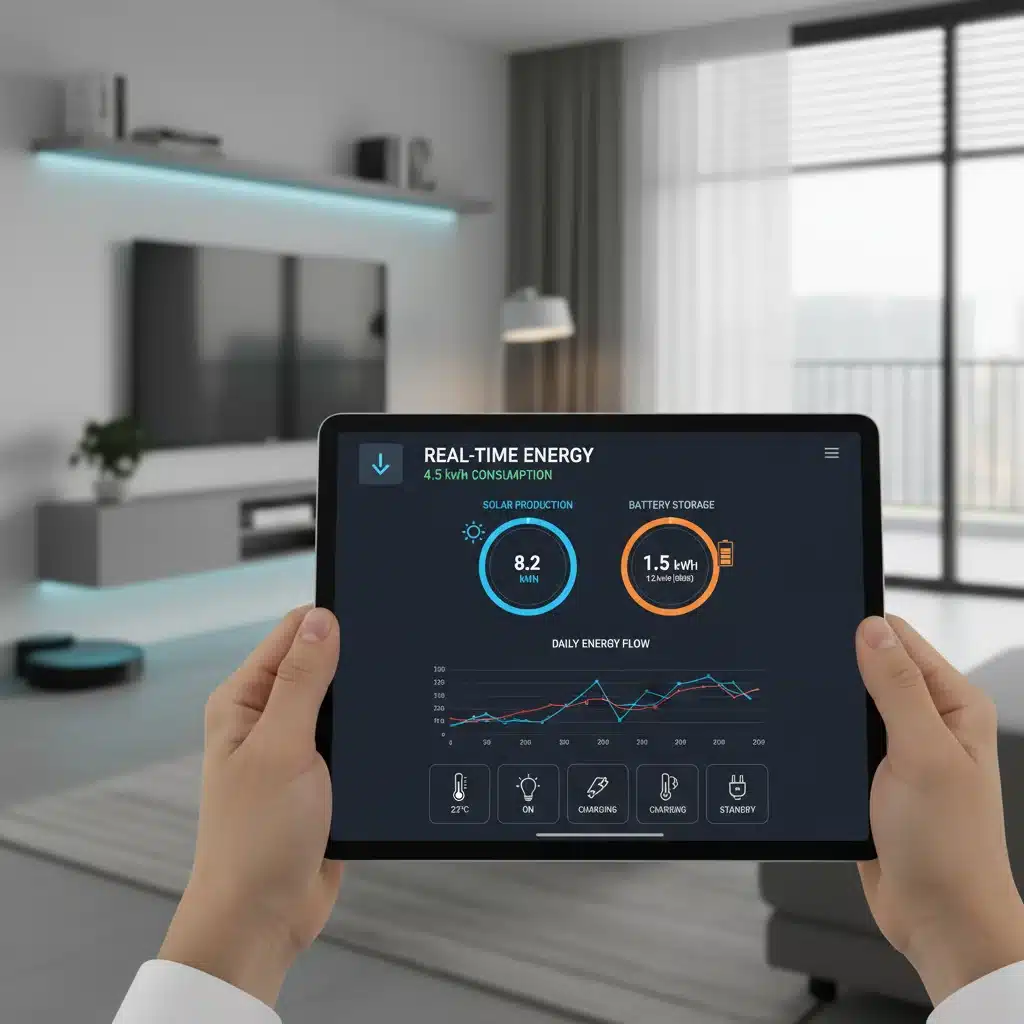
To truly unlock the full potential of your solar array and achieve superior solar panel efficiency, an intelligent Home Energy Management System (HEMS) is indispensable. These systems use AI and machine learning to monitor, analyze, and optimize energy flow within your home. They can predict energy needs, automate appliance usage to align with solar production, and even interact with the grid to sell excess power when prices are high or draw from it when rates are low. This dynamic optimization ensures that every watt generated by your solar panels is utilized in the most effective way.
By 2026, HEMS will be more sophisticated, user-friendly, and capable of integrating a wider array of smart home devices, from thermostats to EV chargers. This level of granular control and predictive intelligence will be key to squeezing every last drop of efficiency from your solar investment, playing a critical role in reaching and exceeding the 18% energy production increase through optimized solar panel efficiency management.
The Role of Installation and Maintenance in Sustaining High Solar Panel Efficiency
While advanced technology forms the backbone of enhanced solar panel efficiency, the quality of installation and ongoing maintenance are equally critical for sustained high performance. Even the most efficient panels will underperform if not installed correctly or if neglected over time. Homeowners must understand these practical aspects to ensure their systems consistently deliver the promised energy boost.
Optimal Panel Placement and Orientation
The angle and direction of your solar panels significantly impact their output. In most Northern Hemisphere locations, south-facing roofs with an optimal tilt angle (often matching your latitude) will capture the most sunlight throughout the year. However, with bifacial panels (which capture light from both sides) and advanced modeling software, installers can now optimize layouts even on less-than-ideal roof orientations. Professional site assessment is crucial to identify and mitigate potential shading issues from trees, chimneys, or neighboring buildings, which can drastically reduce solar panel efficiency.
By 2026, advanced LiDAR and drone technology will make site surveys even more precise, allowing for highly accurate simulations of solar production under various conditions. This precision in planning will ensure that every panel is positioned to maximize its individual output, contributing to the overall system’s 18% energy production increase and reinforcing the importance of meticulous installation for peak solar panel efficiency.
Regular Cleaning and Inspections
Dust, dirt, pollen, and bird droppings can accumulate on solar panels, blocking sunlight and reducing their efficiency. While rain can help, regular cleaning, especially in dry or dusty climates, is essential. Homeowners should consider professional cleaning services or follow manufacturer guidelines for safe self-cleaning. Beyond cleaning, periodic professional inspections are vital to check for loose wiring, damaged panels, or inverter malfunctions. Early detection of issues can prevent significant drops in solar panel efficiency and costly repairs down the line.
Many modern solar systems come with monitoring apps that provide real-time data on panel performance, allowing homeowners to quickly identify any anomalies. Leveraging these tools, combined with scheduled maintenance, ensures that your solar investment continues to operate at its peak, safeguarding the enhanced solar panel efficiency you’ve invested in. Proactive maintenance is not just about repairs; it’s about preserving the optimal performance that leads to significant energy savings.
Durability and Warranties
As solar technology advances, so does the durability of the components. By 2026, panels will be engineered to withstand harsher weather conditions, offering even longer lifespans. It’s crucial for homeowners to pay close attention to product and performance warranties. A good performance warranty guarantees a certain percentage of the initial power output over 20-25 years, providing peace of mind and protecting your investment in high solar panel efficiency.
Understanding the terms of these warranties and choosing reputable manufacturers are key steps in ensuring the long-term reliability and efficiency of your solar system. A robust warranty reflects a manufacturer’s confidence in their product’s ability to maintain high solar panel efficiency over its operational life, which is a critical consideration for any homeowner looking to maximize their energy production for decades to come.
Economic and Environmental Benefits of Enhanced Solar Panel Efficiency
The pursuit of higher solar panel efficiency is not just a technological challenge; it’s an economic and environmental imperative. Achieving an 18% boost in home energy production has far-reaching benefits for individual homeowners and the planet as a whole.
Significant Cost Savings
For homeowners, the most immediate and tangible benefit is substantial savings on electricity bills. With an 18% increase in energy production, you’ll be generating more of your own power, reducing your reliance on grid electricity and shielding yourself from rising utility costs. This enhanced self-sufficiency translates into quicker payback periods for your solar investment and greater long-term financial benefits. The higher the solar panel efficiency, the faster you recoup your initial outlay and start enjoying pure savings.
Furthermore, increased energy production can also lead to higher revenues through net metering programs, where you sell excess electricity back to the grid. As solar technology becomes more efficient and affordable, the economic case for going solar becomes increasingly compelling, making it a wise financial decision for many households. The combination of reduced bills and potential earnings makes optimizing solar panel efficiency a cornerstone of smart home economics.
Reduced Carbon Footprint
Environmentally, every kilowatt-hour generated by solar panels displaces electricity produced from fossil fuels, leading to a direct reduction in carbon emissions. An 18% increase in home solar energy production means a significantly smaller carbon footprint for your household. This contribution to combating climate change is a powerful motivator for many homeowners, aligning personal values with practical action. Higher solar panel efficiency directly translates to a greater positive environmental impact.
By embracing advanced solar technology, you’re not just saving money; you’re actively participating in the global transition to a sustainable energy future. The collective impact of millions of homes adopting high-efficiency solar systems can dramatically accelerate the shift away from fossil fuels, creating a cleaner, healthier planet for future generations. This environmental stewardship is a profound benefit of investing in enhanced solar panel efficiency.
Increased Home Value and Energy Independence
Installing a high-efficiency solar system can significantly increase your home’s market value. Buyers are increasingly seeking properties with lower operating costs and a smaller environmental impact. A state-of-the-art solar array with advanced solar panel efficiency is a major selling point, making your home more attractive and competitive in the real estate market.
Beyond monetary value, energy independence offers invaluable peace of mind. With your own power source, you’re less susceptible to grid outages and price fluctuations. This sense of security and control over your energy supply is a growing priority for many homeowners. The journey towards higher solar panel efficiency is ultimately a journey towards greater autonomy and resilience for your home.
Preparing Your Home for 2026: Actionable Steps for Homeowners
As we look forward to 2026 and the exciting advancements in solar panel efficiency, homeowners can take several proactive steps now to prepare for and capitalize on these upcoming innovations. Early planning can ensure you’re ready to integrate the latest technologies and maximize your home’s energy production by an impressive 18%.
Consult with Solar Professionals
The first and most crucial step is to engage with reputable solar energy consultants and installers. Seek out professionals who stay abreast of the latest technological developments and can provide tailored advice based on your specific home, energy consumption patterns, and future goals. A detailed energy audit and site assessment will help determine the optimal system size and configuration for your needs. Discuss future-proofing options, such as inverter systems that are easily upgradeable or compatible with emerging battery technologies, to ensure your initial investment supports future enhancements in solar panel efficiency.
Don’t hesitate to ask about their experience with different panel types, battery storage solutions, and smart home integration. A knowledgeable professional can guide you through the complexities of incentives, permits, and installation, making the transition to solar smooth and efficient. Their expertise will be invaluable in designing a system that truly leverages the advancements in solar panel efficiency expected by 2026.
Evaluate Your Current Energy Consumption
Before investing in a new solar system, take the time to understand your home’s energy consumption habits. Identify energy vampires, upgrade to energy-efficient appliances, and consider improving your home’s insulation. Reducing your overall energy demand means you’ll need a smaller, more cost-effective solar system to achieve energy independence. This foundational step enhances the effective solar panel efficiency by ensuring that the energy you produce is used as wisely as possible.
Many utility companies offer free or low-cost energy audits that can pinpoint areas for improvement. Implementing these recommendations can significantly reduce your energy baseline, making your solar investment go further and allowing the projected 18% increase in production from enhanced solar panel efficiency to have an even greater impact on your bills and carbon footprint.
Stay Informed About Incentives and Policies
Government incentives, such as tax credits, rebates, and feed-in tariffs, play a significant role in making solar power more affordable. These policies can vary by region and often change, so staying informed about current and upcoming programs is essential. By 2026, new incentives might emerge to support the adoption of high-efficiency solar technologies, further sweetening the deal for homeowners. Leverage these financial mechanisms to reduce the upfront cost of your solar installation and maximize the return on your investment in advanced solar panel efficiency.
Your solar professional can often help navigate these complex incentive landscapes, ensuring you take advantage of every available opportunity. Understanding the policy environment is just as important as understanding the technology when planning your solar journey, as it directly impacts the financial viability and overall attractiveness of investing in improved solar panel efficiency.
Conclusion: Embracing a Brighter, More Efficient Solar Future
The future of home energy production is undeniably bright, with 2026 poised to be a landmark year for solar panel efficiency. The convergence of revolutionary materials like perovskites, sophisticated system-level optimizations, and intelligent energy management promises an unprecedented opportunity for homeowners to boost their energy output by 18%. This isn’t just about technological marvels; it’s about realizing significant economic savings, dramatically reducing your environmental footprint, and achieving true energy independence.
By understanding the advancements, planning strategically with solar professionals, and maintaining your system diligently, you can ensure your home is at the forefront of this sustainable energy revolution. The journey to maximizing your home’s energy production by 18% through enhanced solar panel efficiency is an investment in a smarter, greener, and more resilient future. The sun’s power is limitless; with these innovations, our ability to harness it is becoming equally boundless. Embrace the future, embrace solar, and empower your home with the energy it deserves.