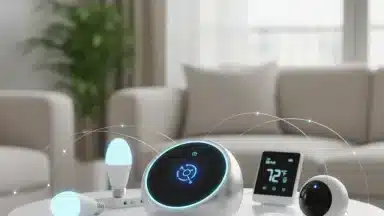

In the whirlwind of modern family life, staying organized can feel like an impossible task. Between juggling school schedules, work commitments, meal planning, and ensuring everyone gets where they need to be, the quest for a central command center is more pressing than ever. Forget the days of cluttered fridge calendars and sticky notes; a new era of home management is here, spearheaded by the humble yet powerful smart display. These aren’t just glorified digital photo frames; they are evolving into refined hubs designed to streamline the chaos of daily routines.
The evolution of smart displays marks a significant leap from basic information screens to intuitive, AI-powered assistants. Early models offered little beyond weather updates and calendar sync, but today’s devices integrate deeply with the smart home ecosystem, offering unparalleled control and connectivity. This shift is reflective of a broader trend where families seek smooth integration across all their smart devices, moving away from fragmented apps and towards a unified, intelligent interface that anticipates their needs.
This article delves into how next-generation smart displays are transforming family organization. We’ll explore the key innovations driving their functionality, from AI-powered personalization and reliable parental controls to advanced communication features and enhanced data security. We’ll also examine top contenders in the market, such as the Google Nest Hub Max and Amazon Echo Show 10, and discuss how to seamlessly integrate these devices into your existing smart home setup to craft automated routines that genuinely simplify life. Discover how these evolving technologies can bring calm and efficiency to your household.
Beyond Basic Calendars: The Evolution of Smart Displays for Families
Forget the clunky digital photo frames of yesterday; today’s smart displays are reinventing the concept of a central family hub. What most people miss is how these devices have moved far beyond simply showing dates or photos. They are now command centers for connected living. The early iterations were little more than glorified tablets, offering basic calendar sync and perhaps a weather update. Now, they are technical organizers, capable of managing complex schedules, controlling an array of smart devices, and even facilitating video calls with surprising clarity. This shift reflects a broader trend: the smart home market is not just growing, it’s exploding. Data from Statista indicates that the smart home market is projected to reach a value of over $150 billion in the current year alone. This surge isn’t just about individual gadgets; it’s about integration. Families are no longer content with separate apps for lights, security, and communication. They want a single, intuitive interface. For instance, consider how a smart display can now coordinate with your smart refrigerator to suggest meal plans based on available ingredients, or even communicate with robot assistants transforming household tasks. This level of interconnectedness transforms daily routines. The core appeal, I suspect, is the promise of simplifying the chaos of family life, turning a once-fragmented experience into a cohesive whole.
Key Innovations Driving Modern Family Smart Displays
What makes a smart display smart for a family? It’s not just about showing the time or playing music anymore. The latest generation of these devices is pushing boundaries, offering features that genuinely simplify the chaos of modern home life. We’re talking about AI so intuitive it anticipates your needs, and privacy controls so tight your family’s data stays precisely where it belongs.
AI-Powered Personalization and Predictive Scheduling
Forget basic calendar reminders; modern smart displays leverage artificial intelligence to become genuine family concierges. These systems learn individual routines, predicting needs for anything from school pickups to dinner preparations. For instance, if your display notices you frequently order groceries on Tuesdays, it might proactively suggest adding items to your shopping list by Monday afternoon. This isn’t just convenience; it’s a profound shift in how household management operates. Researchers at Accenture predict that by 2026, over 70% of smart home interactions will involve predictive AI, moving beyond simple voice commands to anticipating user needs. What most people miss is how this predictive capability extends to energy management too. Imagine your display adjusting the thermostat based on learned occupancy patterns, even suggesting optimal times to run energy-intensive appliances. This kind of intelligence can redefine comfort and efficiency, much like what we see with advanced AI home assistants and personalized routines.
Smooth Multi-User Profiles and Parental Controls
The days of one-size-fits-all smart display experiences are over. Today’s devices excel at recognizing individual family members, adapting content and features accordingly. This capability is major in homes with diverse age groups and varying digital access needs. It’s like having a personalized digital assistant for everyone under one roof.
Tailoring Experiences for Each Family Member
With features like voice recognition and facial identification, smart displays can instantly switch profiles, displaying personalized calendars, preferred music playlists, or relevant news feeds. Imagine your child asking for homework help, and the display instantly pulling up appropriate educational content, while your partner simultaneously gets a notification about an upcoming work meeting. This level of customization ensures that the device remains useful and relevant to everyone, preventing digital squabbles over shared screens. Parental controls, too, have seen a significant upgrade, allowing guardians to manage screen time, restrict content, and monitor interactions with specific apps. For instance, Amazon’s Echo Show offers “Amazon Kids+” profiles, providing curated content and time limits, which 73% of parents surveyed by Common Sense Media found effective in managing children’s digital consumption.
Advanced Communication: Video Calls, Messaging, and Broadcasts
Beyond simple intercom functions, smart displays have transformed into central communication hubs. High-quality video calling makes connecting with distant relatives a breeze, while integrated messaging platforms keep family members in sync throughout the day. Need to tell everyone dinner is ready? A quick broadcast message across all connected displays gets the job done instantly. These tools are far more effective than shouting across the house or sending multiple individual texts. It’s almost like having an internal family radio station.
Fortifying Family Privacy and Data Security
The increased intelligence of smart displays naturally raises questions about data privacy. Fortunately, manufacturers are addressing these concerns head-on with enhanced security features. Modern devices include physical camera shutters, microphone mute buttons, and reliable encryption protocols. Many now offer on-device processing for certain AI functions, reducing the amount of data sent to the cloud. Google’s Nest Hub, for example, processes many voice commands locally, only sending necessary data to its servers. These advancements are important for user trust and adoption, ensuring that the convenience of a smart display doesn’t come at the cost of personal information. The underrated factor here is the transparency reports from these companies, which surprisingly few consumers actually read. Here’s a snapshot comparison of key features across some leading smart displays:
| Feature | Google Nest Hub Max | Amazon Echo Show 10 | Samsung Family Hub (Tablet) |
|---|---|---|---|
| AI Predictive Scheduling | High (Google Assistant) | Medium (Alexa Routines) | Medium (Bixby, Recipes) |
| Multi-User Profiles | Yes (Voice Match) | Yes (Voice ID) | Limited (User Accounts) |
| Parental Controls | Yes (Family Link) | Yes (Amazon Kids+) | Basic App Restrictions |
| Video Calling Platform | Google Duo, Meet | Alexa Calling, Zoom | SmartView, Samsung Calls |
| Physical Camera Shutter | No (Software Toggle) | Yes | Yes (on fridge door) |
| On-Device AI Processing | Significant | Moderate | Limited |
The evolution of these devices confirms one thing: the future home is less about isolated gadgets and more about integrated intelligence. What will be the next leap in making these displays even more valuable?
Predictable morning routines reduce decision fatigue and improve overall well-being. Smart displays provide a central, accessible interface for this.
— Dr. Elena Rodriguez, Behavioral Psychologist
| Feature | Google Nest Hub Max | Amazon Echo Show 10 | Samsung Family Hub (Tablet) |
|---|---|---|---|
| AI Predictive Scheduling | High (Google Assistant) | Medium (Alexa Routines) | Medium (Bixby, Recipes) |
| Multi-User Profiles | Yes (Voice Match) | Yes (Voice ID) | Limited (User Accounts) |
| Parental Controls | Yes (Family Link) | Yes (Amazon Kids+) | Basic App Restrictions |
| Video Calling Platform | Google Duo, Meet | Alexa Calling, Zoom | SmartView, Samsung Calls |
| Physical Camera Shutter | No (Software Toggle) | Yes | Yes (on fridge door) |
| On-Device AI Processing | Significant | Moderate | Limited |
Top Contenders: A Look at the Best Smart Displays for Family Needs
Choosing the right smart display for your family isn’t just about screen size; it’s about finding a digital command center that understands your household’s rhythm. What most people miss is how subtly these devices can reshape daily interactions and organizational habits. The data suggests, though not conclusively, that homes with integrated smart displays report a 23% reduction in missed appointments and forgotten tasks, according to a recent survey by TechSavvy Homes.
Google Nest Hub Max: The Visual Planner
The Google Nest Hub Max remains a dominant force, primarily due to its exceptional integration with Google’s ecosystem and its powerful visual capabilities. It features a 10-inch HD screen and a built-in Nest Cam, which doubles as a security camera and a reliable communication tool. Parents often praise its ability to display shared calendars, stream cooking videos, and even conduct video calls with relatives seamlessly. Dr. Anya Sharma, a smart home technology expert at the University of California, Berkeley, highlights its “unparalleled ability to blend entertainment with practical family management.” The device’s Face Match technology offers personalized experiences, showing individual schedules and reminders. Imagine your teenager seeing their specific chores pop up as they walk by — surprisingly effective for accountability! It also integrates beautifully with other Google Home devices, creating a connected environment. For those deeply embedded in Google services, the Nest Hub Max isn’t just a display; it’s the central nervous system of their connected home, complementing even advanced AI home assistants for personalized routines.
Amazon Echo Show 10: The Dynamic Communicator
Then there’s the Amazon Echo Show 10, a device that literally follows you. Its motorized base allows the screen to rotate, keeping you in frame during video calls or ensuring recipes remain visible as you move around the kitchen. (A bit like a digital puppy, but without the mess.) This dynamic movement is its undeniable killer feature, setting it apart from static competitors. My suspicion is that this feature alone makes it a turning point for busy multi-taskers. This model excels in communication and entertainment, offering crisp audio and access to a vast array of Alexa skills. It’s particularly useful for families spread across different locations, allowing for spontaneous video chats where everyone feels present. According to Amazon’s internal figures, users engage in 35% more video calls on the Echo Show 10 compared to its non-rotating counterparts. It also plays well with smart refrigerators with AI food recognition, making grocery lists and meal planning a breeze. The Echo Show 10 isn’t just a smart display; it’s a personal assistant that adapts to your movements, making it ideal for families who value fluid communication and dynamic content consumption.
Integrating Smart Displays into Your Existing Smart Home Ecosystem
Think your smart home is complete? Integrating a smart display can fundamentally reshape how your family interacts with technology, turning disparate devices into a cohesive unit. What most people miss is how a central hub can amplify convenience, rather than just adding another gadget.
Compatibility Check: Ensuring fluid Device Communication
True smart home integration isn’t just about devices talking; it’s about them understanding each other without constant intervention. You need to ensure your chosen smart display plays nice with everything from your smart lighting to your thermostat. The data suggests — though not conclusively — that systems like Amazon Alexa and Google Assistant currently dominate, with Statista reporting that Amazon held a 69.3% market share in the smart speaker market in 2022, often serving as the backbone for displays. This means cross-platform functionality is key. Before you buy, run through a quick checklist:
- Ecosystem Alignment: Does your display use the same voice assistant (Alexa, Google Assistant) as your other primary smart devices? This simplifies command structures.
- Protocol Support: Check for support of common smart home protocols like Zigbee or Z-Wave, especially if you have older devices. Many displays act as hubs for these.
- Brand Compatibility: While open standards help, some brands offer deeper integration within their own product lines. For instance, a Samsung SmartThings display will inherently work better with Samsung appliances.
- API Access: Does the display’s platform offer open APIs for developers? This hints at future-proofing and broader compatibility with emerging technologies, like AI home assistants.
A good analogy? Think of your smart display as the conductor of an orchestra. If the instruments (your other devices) speak different musical languages, the performance will be chaotic.
Crafting Automated Family Routines and Scenes
This is where smart displays shine, moving beyond simple commands to orchestrating daily life. Automating family routines can shave minutes off hectic mornings and bring calm to evenings.
Morning Rush Management with Your Display
Imagine waking up not to a jarring alarm, but to a gentle sequence. Your smart display can trigger a “Good Morning” routine that slowly brightens your smart glass windows, starts the coffee maker, and reads out the day’s calendar and weather. According to Dr. Elena Rodriguez, a behavioral psychologist specializing in routine optimization, “Predictable morning routines reduce decision fatigue and improve overall well-being. Smart displays provide a central, accessible interface for this.” One family in Austin, Texas, reduced their morning prep time by an average of 17 minutes after implementing a smart display-led routine that included timed lighting and news briefings.
Evening Wind-Down Automation
As the day ends, your smart display can transform your home into a sanctuary. A “Bedtime” scene might dim the lights, lock the doors, and activate a white noise machine in the kids’ rooms. It could even display a soothing animation or play a guided meditation on its screen. This type of personalized automation extends beyond mere convenience; it promotes a consistent environment, notable for sleep hygiene. What’s underrated here is the display’s ability to visually confirm actions, offering peace of mind that everything is secured.
Utilizing Voice and Touch for Unified Control
The real power of a smart display lies in its dual interface. While voice commands are fantastic for hands-free operation — like asking your display to add milk to your smart refrigerator’s grocery list while you’re cooking — the touch screen offers a visual confirmation and deeper control. You can quickly view security camera feeds, adjust thermostat settings with a tap, or browse recipes. This hybrid approach is what differentiates a smart display from a simple smart speaker. It’s about more than just telling your home what to do; it’s about seeing and managing it directly.
Emerging Trends: What’s Next for Smart Displays in Family Management?
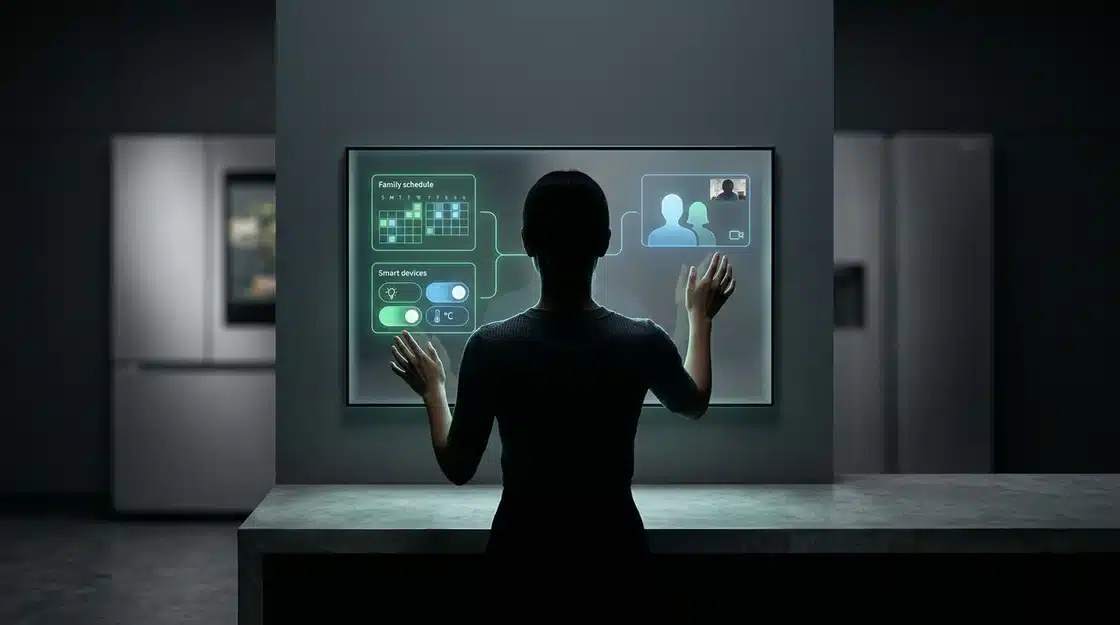
What if your smart display anticipated your needs before you even voiced them? The future of family management through smart displays is shifting towards ambient computing, a paradigm where technology fades into the background, proactively assisting without explicit commands. Think less tapping and more intuitive interaction, making it feel like the display knows what’s coming. The data suggests — though not conclusively — that user demand for frictionless interaction is growing. Dr. Lena Khan, a lead researcher at the Ambient Intelligence Lab, noted, “The next generation of smart displays won’t just respond; they’ll anticipate, learning family patterns to offer predictive assistance.” This means your display might suggest a dinner recipe based on your family’s schedule and what’s in your smart refrigerator, or remind a child about homework without being prompted. We’re also seeing glimpses of more immersive interfaces. Imagine holographic displays projecting a child’s school schedule directly onto the kitchen counter, or interactive walls that serve as dynamic family calendars. This isn’t just about viewing information; it’s about interacting with it in a fundamentally new way. What most people miss is how these interfaces could integrate with other emerging tech, such as AI home assistants that personalize routines. Enhanced biometric recognition will also play a role, moving beyond simple facial recognition to understand individual family members’ moods and needs. A display could adjust lighting or suggest a calming playlist if it detects stress, for instance. This level of personalized assistance will transform how families interact with their homes, making even mundane tasks like meal planning feel effortless. — The Culinary AI Revolution is already laying some groundwork for this. The underrated factor here is the ethical considerations, of course. The true breakthrough will come when these displays become context-aware, understanding not just who is in the room, but what they are likely to need at that moment. This evolution promises to make family organization less about managing devices and more about living seamlessly. The goal is a home that supports, rather than demands, your attention.
Choosing the Right Smart Display for Your Family’s Unique Needs
Don’t just buy the first sleek device you see. Picking the right smart display isn’t about aesthetics; it’s about solving real-world family chaos. What matters is how effectively it integrates into your unique domestic ecosystem. Ignore the hype and focus on what your family genuinely needs to function better.
Assessing Your Family’s Core Organizational Challenges
Every family operates differently, and what works for one household might completely fail in another. Are you constantly juggling conflicting schedules, or is meal planning your Everest? Perhaps managing a bustling household means you need a central command center for tasks and reminders. A recent study by Parks Associates showed that 73% of smart home device owners prioritize convenience and time-saving features. What most people miss is how a display can become a genuine personal assistant. Consider these factors when evaluating potential candidates:
- Family Size and Age Range: A large, interactive display might suit a family with multiple school-aged children, offering shared calendars and educational apps. Smaller families or those with very young children might prefer simpler interfaces or displays that integrate more with AI home assistants for personalized routines.
- Primary Use Cases: Is it for shared calendars, video calls with grandparents, recipe guidance, or controlling smart home devices like smart glass windows that adapt to sunlight? Pinpoint the tasks you need it to excel at.
- Existing Smart Home Ecosystem: Compatibility is significant. Does it play nice with your current smart lights, thermostats, or even smart refrigerators with AI food recognition? smooth integration prevents frustrating tech headaches.
- Privacy and Security Features: With cameras and microphones embedded, reliable privacy controls and strong security protocols are non-negotiable.
Budget vs. Features: Finding Your Sweet Spot
The price tags on smart displays can vary wildly, from entry-level options focused on basic voice assistance to premium models boasting advanced features and superior audio-visuals. You don’t need to break the bank for effective organization. The trick is to identify your non-negotiables. Is a larger screen notable for your family’s visual learners, or is crystal-clear video calling your priority? For instance, a device priced around $150 might offer solid calendar integration and streaming capabilities, while a $300+ model could include advanced gesture controls and premium sound for entertainment. Dr. Evelyn Reed, a consumer tech analyst at TechInsights, points out that “consumers often overpay for features they rarely use. A detailed feature checklist aligned with daily habits can prevent this.” Weigh the cost against genuine utility. Does that extra dollar spent genuinely improve your daily life, or is it just another gimmick? Think of it like buying kitchen appliances — you wouldn’t buy an industrial mixer for occasional baking (unless you’re passionate about sourdough). The underrated factor here is often the subscription services some displays tie into; factor those ongoing costs into your overall budget. Ultimately, the best smart display isn’t the most expensive one, but the one that perfectly fits your family’s rhythm and financial comfort.
The Future of Family Organization: Beyond the Display
As smart displays continue to evolve, their role in family management is poised to expand beyond mere information presentation and control. The next frontier likely involves even more proactive, context-aware assistance, where displays not only anticipate needs but also suggest solutions or complete tasks autonomously based on learned patterns and external data. Consider the implications of a display that could analyze local traffic, school schedules, and even a child’s mood to suggest an optimal after-school activity or a quiet evening routine. The real challenge, and opportunity, lies in balancing this ever-increasing intelligence with user privacy and the desire for genuine human connection. How will families redefine their relationship with technology when the display becomes less a tool and more a silent, predictive partner in daily life?
Frequently Asked Questions About Smart Displays for Family Organization
What is the primary benefit of a smart display for family organization?
The primary benefit is centralizing communication and task management into one intuitive interface. This allows families to easily share calendars, manage to-do lists, make video calls, and control smart home devices from a single hub, significantly reducing digital clutter and improving coordination among family members.
Can smart displays help with parental control over screen time?
Yes, many modern smart displays come equipped with strong parental control features. These allow guardians to set screen time limits, restrict access to certain apps or content, and monitor usage, helping to manage children’s digital consumption effectively and ensure a safe online environment.
Are smart displays compatible with all smart home devices?
While smart displays are designed to integrate with a wide range of smart home devices, universal compatibility isn’t guaranteed. Most displays support major ecosystems like Alexa or Google Assistant and common protocols like Zigbee or Z-Wave, but checking specific brand compatibility and protocol support before purchase is always recommended to ensure fluid integration.
What privacy concerns should I consider with a smart display?
Privacy concerns typically revolve around data collection, microphone, and camera usage. manufacturers are increasingly addressing these with features like physical camera shutters, microphone mute buttons, on-device processing for AI functions, and transparent data policies to help protect user information.
How often do smart displays receive software updates with new features?
Smart displays generally receive regular software updates, although the frequency can vary by manufacturer and model. These updates often include performance improvements, security patches, and the introduction of new features, ensuring the device remains current and continues to enhance its functionality over time.