Maximize Your 2026 Energy Savings: Top 5 Smart Thermostats Delivering 15% Bill Reduction
In an era where energy costs are constantly fluctuating and environmental consciousness is at an all-time high, optimizing your home’s energy consumption isn’t just a smart move – it’s a necessity. For many homeowners, a significant portion of their utility bills can be attributed to heating and cooling. This is where the power of smart thermostat savings comes into play, offering a sophisticated yet easy-to-implement solution to drastically reduce your energy footprint and, more importantly, your monthly expenses.
As we look towards 2026, the technology behind smart thermostats continues to evolve, offering more intuitive controls, advanced learning capabilities, and seamless integration with other smart home devices. The promise of cutting your energy bills by up to 15% is no longer a distant dream but a tangible reality, thanks to these innovative gadgets. This comprehensive guide will delve into the top 5 smart thermostats poised to deliver exceptional smart thermostat savings in 2026, helping you make an informed decision for a more efficient and comfortable home.
The Evolution of Thermostats: From Manual to Intelligent
Gone are the days of simple dial thermostats that offered little more than on/off functionality. The journey from basic temperature control to intelligent, self-learning devices has been remarkable. Traditional programmable thermostats were a step forward, allowing users to set schedules. However, they often fell short in adapting to real-time changes in weather, occupancy, or personal preferences. This led to wasted energy, as heating or cooling systems would run unnecessarily.
Smart thermostats, on the other hand, represent a paradigm shift. They leverage advanced sensors, Wi-Fi connectivity, and artificial intelligence to learn your habits, understand your home’s unique energy profile, and even adapt to local weather forecasts. This proactive approach to climate control is the cornerstone of achieving significant smart thermostat savings. By ensuring your HVAC system operates only when needed and at optimal efficiency, these devices prevent energy waste, contributing directly to lower utility bills.
Why Smart Thermostats Are Essential for 2026 Energy Efficiency
The year 2026 brings with it a heightened awareness of sustainable living and the increasing cost of energy. Investing in a smart thermostat is not just about convenience; it’s a strategic financial and environmental decision. Here’s why these devices are indispensable for modern homes:
- Personalized Comfort: Smart thermostats learn your preferred temperatures and schedules, ensuring your home is always comfortable when you’re there, without you having to constantly adjust settings.
- Remote Control: Manage your home’s climate from anywhere using your smartphone. Forgot to turn down the heat before leaving for vacation? No problem. This feature alone can lead to substantial smart thermostat savings.
- Energy Monitoring and Insights: Most smart thermostats provide detailed reports on your energy usage, helping you identify patterns and areas for further optimization. This data-driven approach empowers you to make smarter energy choices.
- Geofencing: Some models use your phone’s location to know when you’re coming and going, automatically adjusting the temperature to save energy when you’re away and ensuring comfort upon your return.
- Integration with Smart Home Ecosystems: Seamlessly connect with other smart devices like smart lighting, voice assistants, and security systems for a fully integrated and automated home experience.
- HVAC System Protection: Many smart thermostats can monitor your HVAC system’s health, alerting you to potential issues before they become costly breakdowns, further contributing to long-term savings.
Understanding How Smart Thermostats Deliver 15% Bill Reduction
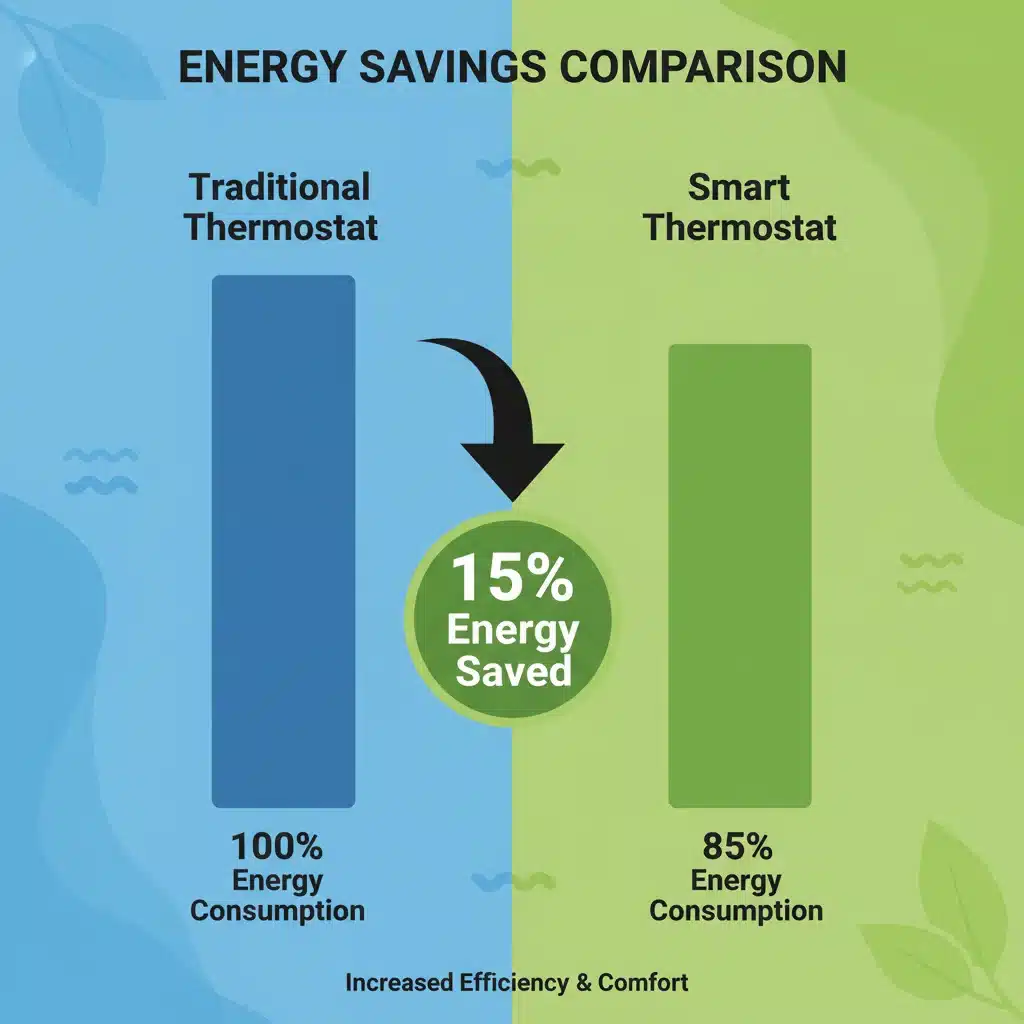
The claim of a 15% bill reduction isn’t an exaggeration; it’s a realistic outcome for many households. This level of smart thermostat savings is achieved through a combination of sophisticated features:
Learning Algorithms
The most advanced smart thermostats employ machine learning to understand your daily routines and temperature preferences. Over time, they build a personalized schedule that optimizes heating and cooling based on when you’re home, when you’re asleep, and when you’re away. This automatic adjustment prevents the system from running when it’s not needed, which is a significant source of energy waste for traditional thermostats.
Occupancy Sensors
Some smart thermostats incorporate occupancy sensors that detect whether anyone is home. If the house is empty, the thermostat can automatically adjust the temperature to a more energy-efficient setting, only resuming your preferred comfort level when it detects movement. This real-time adaptation is crucial for maximizing smart thermostat savings, especially for households with unpredictable schedules.
Weather Responsiveness
By connecting to local weather forecasts, smart thermostats can preemptively adjust your home’s climate. For instance, if a significant drop in temperature is expected, the thermostat might slightly pre-heat your home to maintain comfort without overworking the system later. Conversely, if a sunny day is predicted, it might slightly reduce heating to account for solar gain. This intelligent anticipation prevents unnecessary energy expenditure.
Zoning Capabilities
For homes with multiple zones, smart thermostats can manage each zone independently. This means you can heat or cool only the areas of your home that are in use, rather than maintaining a consistent temperature throughout the entire house. This targeted approach to climate control significantly boosts smart thermostat savings by reducing energy consumption in unoccupied areas.
Detailed Energy Reports
Knowledge is power, especially when it comes to energy consumption. Smart thermostats provide users with comprehensive reports detailing their energy usage patterns. These insights allow homeowners to identify periods of high consumption, understand the impact of their settings, and make informed adjustments to further optimize their energy use. This transparency is a key component in achieving and maintaining substantial smart thermostat savings.
Top 5 Smart Thermostats for Maximizing 2026 Energy Savings
Choosing the right smart thermostat can feel overwhelming with the myriad of options available. To simplify your decision, we’ve identified the top 5 smart thermostats that excel in delivering smart thermostat savings, user-friendliness, and advanced features for 2026.
1. Ecobee SmartThermostat with Voice Control
The Ecobee SmartThermostat continues to be a frontrunner in the smart thermostat market, and for good reason. Its standout feature is the inclusion of remote sensors, which can be placed in different rooms to ensure an even temperature throughout your home, addressing hot and cold spots effectively. This intelligent room sensing prevents the system from overworking in one area while another remains uncomfortable.
- Key Features: Voice control with built-in Alexa, remote sensors, ecobee Haven security integration, smart home/away, geofencing, detailed energy reports.
- Savings Potential: Users consistently report significant smart thermostat savings, often exceeding 15%, due to its precise temperature management and occupancy detection.
- Why it’s a Top Pick: Its ability to average temperatures across multiple rooms for optimal comfort and efficiency is unparalleled. The integrated Alexa functionality adds a layer of convenience, making it a central hub for smart home control.
2. Google Nest Learning Thermostat (3rd Generation)
The Nest Learning Thermostat pioneered the concept of a self-learning device, and its 3rd generation model remains a powerhouse for energy efficiency. It learns your schedule and temperature preferences within a week, then programs itself. This intuitive learning process is at the heart of its ability to generate substantial smart thermostat savings.
- Key Features: Auto-scheduling, Farsight (displays temperature/time when you approach), Home/Away Assist (geofencing and occupancy sensing), energy history and reports, integration with Google Home ecosystem.
- Savings Potential: Google claims an average saving of 10-12% on heating and 15% on cooling, directly translating to impressive smart thermostat savings for homeowners.
- Why it’s a Top Pick: Its iconic design, ease of use, and proven learning capabilities make it a favorite. The Farsight feature is surprisingly useful, providing quick glance information.
3. Honeywell Home T9 Smart Thermostat with Smart Room Sensors
Honeywell, a long-standing name in home climate control, has embraced smart technology with its T9 Smart Thermostat. This model stands out for its robust smart room sensors that can detect both temperature and humidity, as well as occupancy. This comprehensive data allows for highly accurate and efficient climate management, leading to considerable smart thermostat savings.
- Key Features: Smart Room Sensors (temperature, humidity, occupancy), geofencing, flexible scheduling, voice control compatibility (Alexa, Google Assistant), energy usage reports.
- Savings Potential: With its precise room-by-room control and occupancy detection, the T9 is excellent at preventing energy waste in unoccupied spaces, contributing significantly to reduced bills.
- Why it’s a Top Pick: The T9 offers a fantastic balance of traditional thermostat reliability with cutting-edge smart features. Its focus on individual room comfort and efficiency is a major draw.
4. Emerson Sensi Touch Smart Thermostat
The Emerson Sensi Touch Smart Thermostat offers a compelling blend of affordability, ease of installation, and powerful features that contribute to excellent smart thermostat savings. It’s designed to work with most HVAC systems, making it a versatile choice for many homes.
- Key Features: Large color touchscreen, remote access, extensive compatibility (no C-wire required for many systems), geofencing, flexible scheduling, usage reports, compatibility with major smart home platforms (Alexa, Google Assistant, Apple HomeKit).
- Savings Potential: Its precise temperature control and flexible scheduling options empower users to optimize their energy use effectively, leading to noticeable reductions in utility costs.
- Why it’s a Top Pick: For those seeking a budget-friendly yet feature-rich smart thermostat, the Sensi Touch is an exceptional option. Its broad compatibility and straightforward installation are major advantages.
5. Carrier Côr Smart Thermostat
While often requiring professional installation, the Carrier Côr Smart Thermostat is a premium option that integrates deeply with Carrier and Bryant HVAC systems, unlocking their full efficiency potential. It’s designed to optimize the performance of compatible systems, leading to some of the most significant smart thermostat savings possible.
- Key Features: Energy reports, smart setback, Wi-Fi connectivity, remote access, intuitive touchscreen, humidity control, compatibility with Carrier/Bryant systems for optimized performance.
- Savings Potential: Carrier claims potential savings of up to 20% when paired with a compatible HVAC system, making it a top contender for maximum smart thermostat savings.
- Why it’s a Top Pick: If you have a Carrier or Bryant HVAC system, the Côr offers unparalleled integration and optimization, ensuring your system runs at peak efficiency. It’s an investment that pays off in long-term savings and comfort.
Installation and Compatibility: What You Need to Know
Before purchasing a smart thermostat, it’s crucial to check its compatibility with your existing HVAC system. Most smart thermostats require a C-wire (common wire) to provide continuous power. If your current thermostat doesn’t have a C-wire, you might need to install one or choose a model that can operate without it (some include an adapter kit).
Installation can range from a simple DIY project for tech-savvy individuals to requiring professional assistance, especially for more complex systems or if a C-wire needs to be run. Always refer to the manufacturer’s instructions and consider professional installation if you’re unsure. Proper installation ensures optimal performance and maximizes your potential for smart thermostat savings.
Maximizing Your Smart Thermostat Savings: Best Practices
Simply installing a smart thermostat isn’t enough; to truly unlock its potential for 15% or more in bill reductions, you need to use it effectively. Here are some best practices:
- Utilize Learning Features: Allow your thermostat to learn your schedule. Resist the urge to constantly override its settings during the initial learning phase.
- Embrace Geofencing: If your thermostat has geofencing, enable it. This feature is incredibly effective at saving energy when you’re away.
- Strategically Place Sensors: If your model supports remote sensors, place them in rooms you use most often to ensure accurate temperature readings and balanced comfort.
- Review Energy Reports: Regularly check the energy usage reports provided by your thermostat’s app. This data can reveal patterns and help you fine-tune your settings for greater efficiency.
- Integrate with Other Smart Devices: Connect your smart thermostat with other smart home devices, such as smart blinds or ceiling fans, to create a more cohesive and energy-efficient environment.
- Set Realistic Temperatures: While smart thermostats optimize, setting your home to extreme temperatures (e.g., very cold in summer, very hot in winter) will still consume more energy. Aim for comfortable yet energy-conscious settings.
- Perform HVAC Maintenance: A well-maintained HVAC system works more efficiently, allowing your smart thermostat to perform at its best. Regular filter changes and professional tune-ups are crucial.
Beyond the Thermostat: A Holistic Approach to Energy Savings
While smart thermostats are powerful tools for achieving smart thermostat savings, they are part of a larger ecosystem of home energy efficiency. To maximize your savings and environmental impact, consider these additional measures:
- Insulation and Air Sealing: Proper insulation in your attic, walls, and floors, along with sealing air leaks around windows and doors, prevents conditioned air from escaping, reducing the workload on your HVAC system.
- Energy-Efficient Windows: Upgrading to double-pane or low-emissivity (Low-E) windows can significantly reduce heat transfer, keeping your home cooler in summer and warmer in winter.
- HVAC System Upgrades: If your HVAC system is old, consider upgrading to a newer, more energy-efficient model. Paired with a smart thermostat, this can lead to even greater savings.
- Smart Lighting: Implementing smart lights and smart plugs allows you to control lighting and appliances more efficiently, ensuring they are only on when needed.
- Appliance Efficiency: Choose energy-efficient appliances with ENERGY STAR ratings when replacing old ones.
- Behavioral Changes: Simple habits like closing blinds on hot days, opening them on cold sunny days, and using ceiling fans can complement your smart thermostat’s efforts.
The Future of Smart Thermostat Savings: What to Expect Post-2026
The trajectory of smart home technology suggests even more advanced features for smart thermostats in the years to come. We can anticipate deeper integration with grid optimization programs, allowing thermostats to adjust energy consumption based on peak demand times and lower electricity rates. Predictive analytics will likely become even more sophisticated, anticipating your needs and external factors with greater accuracy.
Furthermore, expect enhanced interoperability with an even wider array of smart home devices and services, creating truly autonomous and hyper-efficient home environments. The focus will remain on user comfort combined with maximal smart thermostat savings, making smart thermostats an indispensable component of the modern, sustainable home.
Conclusion: Invest in Smart Thermostat Savings Today
As we navigate the complexities of energy consumption in 2026 and beyond, the role of smart thermostats in achieving significant smart thermostat savings cannot be overstated. By intelligently managing your home’s heating and cooling, these devices offer a tangible path to reduced utility bills, enhanced comfort, and a smaller carbon footprint.
Whether you opt for the multi-sensor intelligence of Ecobee, the intuitive learning of Nest, the robust room control of Honeywell, the accessible efficiency of Emerson, or the deep system integration of Carrier, investing in a smart thermostat is a decision that pays dividends. It’s not just about a gadget; it’s about embracing a smarter, more sustainable way of living. Make the switch today and start enjoying the comfort and considerable smart thermostat savings that these cutting-edge devices offer.